Introduction
A balcony garden is one of the most rewarding ways to bring nature into compact living spaces. Whether you live in an apartment or a small urban home, your balcony can transform into a thriving green ecosystem with the right setup strategies. The difference between a struggling balcony garden and a lush, productive one often comes down to planning, layering, and plant psychology—how plants interact with light, air, containers, and each other.
This guide explores 7 powerful balcony garden setup tricks that go beyond basic plant care. Each trick is designed to help you maximize space, boost plant health, and create a visually rich environment even in the smallest balcony.
Along the way, you’ll find practical tables, structured layouts, and real-world planting logic you can apply immediately.
Trick 1: Vertical Layering System for Maximum Green Density
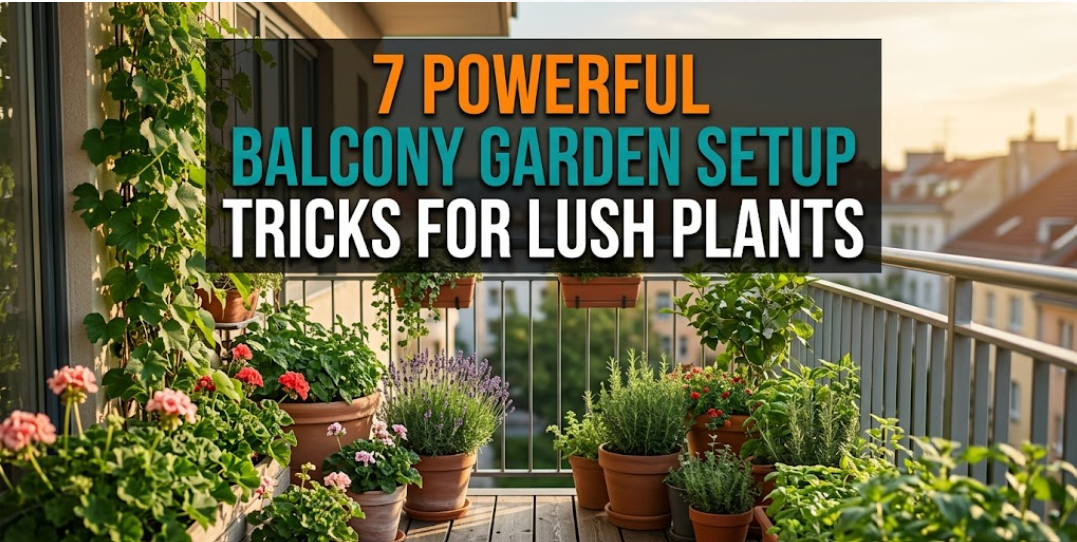
One of the biggest mistakes in balcony gardening is thinking only in floor space. The secret to a lush look is vertical layering—stacking plants at multiple heights so you multiply your growing area without increasing footprint.
Instead of placing pots only on the ground, think in three layers:
- Upper layer (hanging plants, climbers)
- Middle layer (shelves, railing planters)
- Lower layer (large pots, herbs, vegetables)
Vertical Layering Structure Table
| Layer | Plant Type | Purpose | Examples |
|---|---|---|---|
| Upper | Hanging / trailing plants | Shade, visual flow | Money plant, ivy, petunias |
| Middle | Medium pots / railing planters | Main display | Basil, mint, marigold |
| Lower | Large containers | Root-heavy plants | Tomato, chili, dwarf citrus |
Why it works:
- Maximizes sunlight exposure at different levels
- Creates microclimates (cooler below, warmer above)
- Improves visual fullness instantly
Pro tip: Use wall hooks or tension rods if drilling is not allowed in your balcony.
Trick 2: Microclimate Zoning for Healthier Growth
Not all parts of your balcony behave the same. Some areas are windy, some are shaded, and some get intense afternoon sun. Treating the balcony as a single uniform space is a major reason plants fail.
Instead, divide your balcony into microclimate zones.
Microclimate Breakdown Chart
| Zone | Condition | Best Plant Type |
|---|---|---|
| Hot Sun Zone | 5–7 hours direct sunlight | Tomatoes, chilies, rosemary |
| Partial Shade Zone | 2–4 hours sunlight | Mint, coriander, ferns |
| Shade Zone | Indirect light | Snake plant, pothos, peace lily |
| Windy Edge | High airflow | Hardy succulents, herbs |
How to apply this trick:
- Observe sunlight for 2–3 days
- Map your balcony like a small garden grid
- Assign plants based on tolerance, not preference alone
This alone can increase plant survival rates dramatically.
Trick 3: Smart Container Selection for Root Control
Plants in balconies don’t fail due to leaves—they fail due to root issues. Choosing the right container size, shape, and material is critical.
Container Type Performance Table
| Container Type | Pros | Cons | Best Use |
|---|---|---|---|
| Plastic pots | Lightweight, cheap | Overheating risk | Herbs, small plants |
| Clay pots | Breathable, natural cooling | Heavy, fragile | Flowers, vegetables |
| Grow bags | Excellent drainage | Less aesthetic | Tomatoes, potatoes |
| Ceramic pots | Decorative | Expensive, heavy | Indoor-outdoor plants |
| Hanging baskets | Space-saving | Dry quickly | Trailing plants |
Root space rule:
- Herbs: 6–8 inches depth
- Leafy greens: 8–12 inches
- Fruiting plants: 12–18+ inches
Important insight:
A slightly larger pot always outperforms a tight pot. Restricted roots = weak plants.
Trick 4: Soil Layer Engineering for Continuous Nutrition
Most balcony gardeners use plain potting soil and expect long-term growth. That’s not enough. Plants need layered soil systems that mimic natural ecosystems.
Soil Layer Structure
Bottom layer:
- Pebbles or broken clay pieces (drainage)
Middle layer:
- Compost + coco peat + garden soil mix
Top layer:
- Mulch (dry leaves, husk, wood chips)
Soil Composition Table
| Component | Function | Ratio |
|---|---|---|
| Coco peat | Moisture retention | 30% |
| Compost | Nutrients | 30% |
| Garden soil | Structure | 30% |
| Sand/perlite | Drainage | 10% |
Benefits:
- Prevents root rot
- Maintains moisture balance
- Reduces watering frequency
- Encourages microbial life
Pro trick: Add banana peel compost or eggshell powder monthly for slow nutrient release.
Trick 5: Smart Watering Strategy (Not Daily Guesswork)
Overwatering kills more balcony plants than neglect. Instead of watering on habit, use a moisture-based system.
Watering Logic Table
| Condition | Action |
|---|---|
| Top soil dry + 2 cm below dry | Water immediately |
| Slight moisture present | Wait 1 day |
| Soil dark and wet | Do not water |
| Leaves drooping + dry soil | Deep watering needed |
Best watering techniques:
- Morning watering (best absorption)
- Bottom watering for sensitive plants
- Spray misting for humidity lovers
Advanced tip:
Stick your finger or a wooden stick into soil. If it comes out clean and dry, water is needed.
Trick 6: Companion Planting for Natural Growth Boost
Plants grow better when paired correctly. Some combinations protect each other, while others compete for nutrients.
Companion Planting Table
| Plant A | Plant B | Benefit |
|---|---|---|
| Tomato | Basil | Pest control + flavor boost |
| Chili | Marigold | Insect repellent |
| Mint | Cabbage | Pest masking |
| Spinach | Onion | Space efficiency |
| Rose | Garlic | Fungal resistance |
Avoid pairing:
- Mint with most plants (overgrowth)
- Deep-rooted + shallow-rooted in same pot
Why it matters:
Balanced plant partnerships reduce pesticide needs and increase yield naturally.
Trick 7: Light Optimization Using Reflective Surfaces
Balconies often suffer from uneven light distribution. One side gets sun while the other stays shaded. You can fix this using reflection and repositioning techniques.
Light Boost Methods Table
| Method | Effect |
|---|---|
| White walls | Reflect sunlight |
| Mirrors (small angled) | Redirect light |
| Aluminum foil behind plants | Boost lower leaf light |
| Rotating pots weekly | Even growth |
Placement strategy:
- Sun-loving plants at railings
- Shade plants behind reflective surfaces
- Rotate every 5–7 days for symmetry
This trick alone can increase growth speed noticeably in low-light balconies.
Bonus System: Weekly Balcony Garden Maintenance Flow
| Day | Task |
|---|---|
| Monday | Water check + pruning |
| Wednesday | Pest inspection |
| Friday | Fertilizer rotation |
| Sunday | Full balcony cleaning + rotation |
Consistency matters more than intensity. Small weekly actions outperform irregular heavy maintenance.
Common Mistakes to Avoid
- Overcrowding plants in one pot
- Ignoring sunlight direction changes
- Using same soil for all plants
- Over-fertilizing thinking it boosts growth
- Not rotating plants
A balcony garden is not static—it behaves like a living system that evolves daily.
Conclusion
Creating a lush balcony garden is not about having more space or expensive tools. It is about designing systems: vertical structure, soil layering, light control, watering logic, and plant partnerships.
When these 7 setup tricks are combined, even a small balcony can transform into a dense, productive green space that feels alive, balanced, and self-sustaining.
The real secret is not gardening harder—but gardening smarter with structure.
FAQs
- How often should I water balcony plants?
It depends on weather and soil type, but usually every 2–3 days in warm climates. Always check soil moisture instead of following a fixed schedule. - Which plants are best for beginners in balcony gardening?
Mint, basil, money plant, aloe vera, and marigold are highly forgiving and grow well in most balcony conditions. - What is the biggest mistake in balcony gardening?
Overwatering and ignoring sunlight direction are the two most common reasons plants fail. - Can vegetables grow well in a small balcony?
Yes, tomatoes, chilies, spinach, and coriander grow extremely well if containers and sunlight are managed properly. - How do I make my balcony garden look fuller quickly?
Use vertical layering, hanging plants, and fast-growing climbers to instantly increase visual density. - Do balcony gardens need fertilizer often?
Light fertilization every 2–4 weeks is enough. Over-fertilizing can damage roots and reduce plant health.