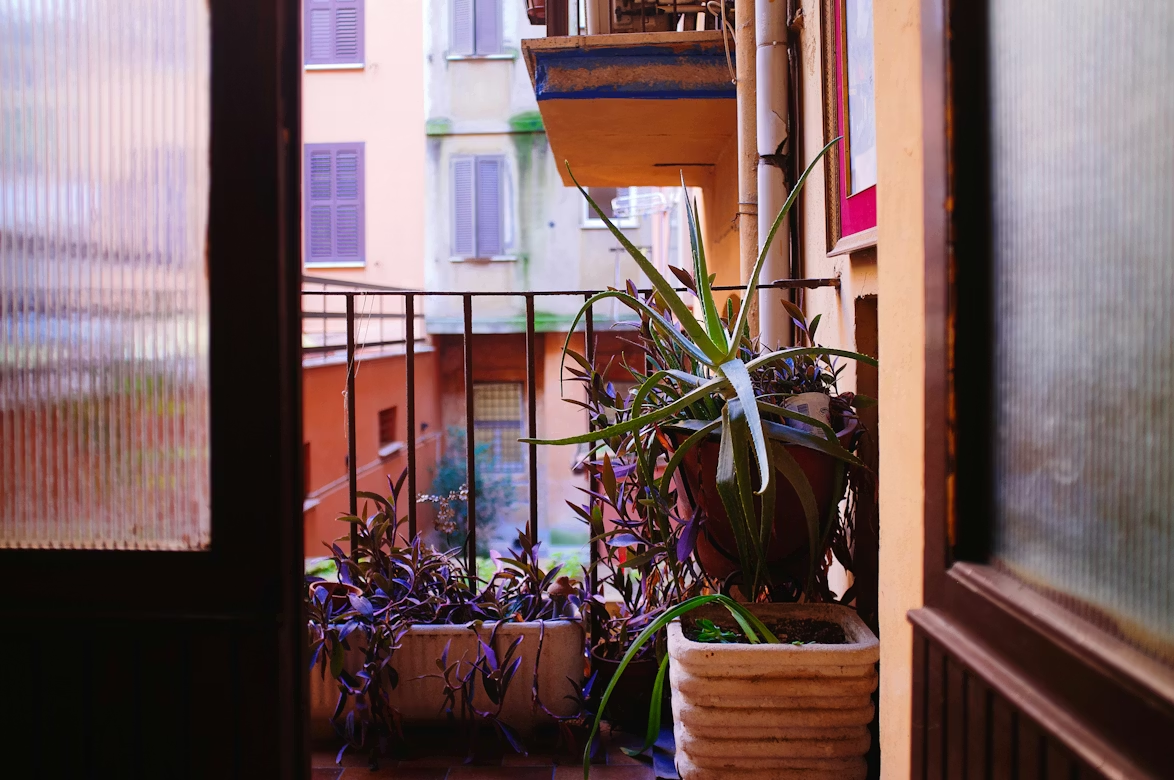
I still remember standing on my tiny balcony the first summer I moved into my apartment, staring at roughly 6 feet of concrete and thinking — this is it? I had big dreams of herbs, tomatoes, maybe even a little flower corner. But the space felt so cramped and sad that I almost gave up before I started.
Then I started experimenting. Moving things around, trying vertical setups, playing with colors and containers. And slowly — almost magically — that same balcony started feeling twice as big. Not because anything physically changed, but because I figured out how to use the space smarter.
If you’re working with a small balcony right now and feeling that same frustration, stick with me. These 7 tricks genuinely changed my little outdoor corner, and they’ll work for you too.
1. Go Vertical — Your Walls Are Free Real Estate
Most people think horizontally when they garden. Pots on the floor, planters along the railing. But the moment I started looking up, everything shifted.
Wall-mounted planters, pegboard systems, hanging pockets — these tools take your garden off the ground and free up walking space instantly. My balcony felt 30% more open just by moving three floor pots to the wall.
What actually works:
- Freestanding vertical towers — great for herbs and strawberries
- Wall-mounted pocket planters — cheap, lightweight, surprisingly sturdy
- Ladder shelves — you can lean them against the wall without drilling anything
If you want to go deeper on this, I wrote a whole breakdown on 12 vertical gardens to smarten up any space that covers different vertical setups depending on your wall type.
The one mistake I made early on? I overloaded my wall planters without checking the weight limit. A pocket planter with wet soil is heavy. Always check the load rating before mounting anything.
2. Use Light-Colored Pots and Containers
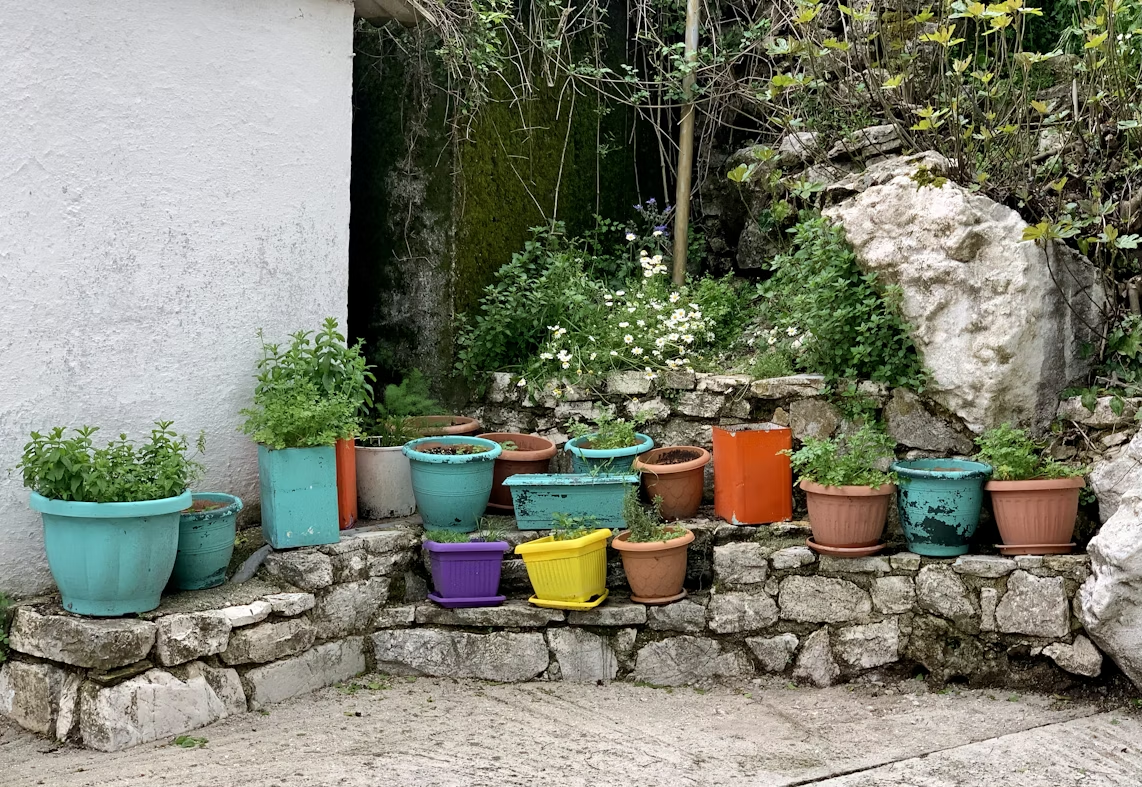
This one sounds almost too simple, but it’s backed by the same logic interior designers use. Dark colors absorb light and make spaces feel smaller. Light colors — whites, creams, soft grays — reflect light and open things up visually.
When I swapped my old dark terracotta pots for white and off-white containers, people visiting my balcony started commenting that it felt “airier.” Nothing else had changed. Just the pot colors.
Quick comparison I noticed personally:
| Container Color | Visual Effect | Heat Effect on Roots |
|---|---|---|
| Dark terracotta/black | Makes space feel dense | Absorbs more heat (bad for roots in summer) |
| White/cream ceramic | Opens up the space | Reflects heat (better for plants) |
| Soft gray or blush | Modern, light feel | Neutral |
| Natural wicker/jute | Warm, organic feel | Good airflow |
The bonus? Light-colored pots also keep roots cooler in summer heat — which matters a lot if you’re in a warm climate like I am.
3. Choose the Right Plants — Size and Shape Matter More Than You Think
I made the classic beginner mistake of buying what looked cool at the nursery without thinking about how it would grow. A huge bushy tomato plant in a tiny balcony corner just swallows the space.
The plants that make a balcony feel bigger are the ones with structure and airiness — not volume.
Plants that open up space visually:
- Tall, slender plants like bamboo or ornamental grasses — draw the eye upward
- Trailing plants like sweet potato vine or string of pearls — create flow without bulk
- Fine-leaf herbs like dill, fennel, or chives — delicate texture, not heavy
- Climbing plants on a small trellis — use vertical space without hogging floor area
Plants to avoid if space is tight:
- Large-leafed tropicals (they’re stunning but dominate everything)
- Bushy peppers or tomatoes without staking
- Anything that spreads aggressively sideways
I learned this the hard way with a mint plant. Mint seems harmless. It is not. It will stage a hostile takeover of every container within reach.
4. Create Zones — Even Tiny Spaces Can Have “Rooms”
This is the trick that honestly surprised me the most. I thought zoning was for big gardens or fancy patios. But creating a small defined “seating zone” and a “garden zone” on my balcony made the whole space feel intentional and bigger.
The psychological reason this works: when a space looks organized and purposeful, your brain reads it as larger. Clutter and randomness make small spaces feel suffocating.
How to zone a tiny balcony:
- Define the seating area first — even a folding chair and a small side table count
- Keep the garden along one wall or railing — don’t scatter pots everywhere
- Use a small outdoor rug to visually anchor the sitting zone
- Add one focal point — a statement plant, a lantern, a piece of wall art
I used a simple striped outdoor rug from a home store. It cost almost nothing. But it transformed my balcony from “storage area with plants” to “actual outdoor living space.”
For more layout inspiration, the 10 balcony layout ideas for a smarter outdoor space article is genuinely packed with real setups you can steal.
5. Rail Planters Are Underused and Underrated
Your balcony railing is doing nothing right now except… being a railing. Rail-mounted planters clip or hang onto the railing and grow outward, not inward — which means they add greenery without eating into your floor space at all.
I added four rail planters along my balcony edge and gained what felt like a full extra foot of usable floor space. The plants spill out over the outside of the railing, giving you that lush, overflowing look from both inside and outside.
Tips for making rail planters work:
- Match the planter size to your railing width — measure before you buy
- Use lightweight plants like petunias, nasturtiums, or herbs (heavier = more stress on railing)
- Mix trailing plants (spill outward) with upright plants (fill the center)
- Water carefully — rail planters dry out faster than floor pots
One thing to always check: your building’s rules about external modifications. Some apartments don’t allow anything attached to the outside of the railing. Check before you drill or clamp anything.
6. Mirror the Illusion — Reflective Surfaces Are Your Secret Weapon
Okay, this is the trick that gets the most “wait, seriously?” reactions when I tell people.
An outdoor mirror on your balcony wall creates the illusion of depth. Your brain processes the reflection as additional space, and suddenly a 6-foot balcony looks like it extends much further. Interior designers have used this in small rooms forever — it works just as well outdoors.
How to do this safely:
- Use an acrylic or shatterproof mirror designed for outdoor use — regular glass mirrors outside are a safety risk and can also create dangerous focused sunlight
- Mount it on a solid wall, not near the railing
- Angle it slightly so it reflects the garden, not the sky (reflecting greenery amplifies the garden effect beautifully)
- Add climbing plants or a trailing vine around the frame for a romantic, secret-garden feel
I found a simple acrylic panel at a hardware store and mounted it with outdoor adhesive strips. The difference was immediate and a little eerie — like my balcony suddenly had an extra room.
7. Lighting Changes Everything After Sunset
Most people think about their balcony in daylight. But smart lighting can visually expand your space at night and make even the smallest balcony feel like a destination.
The trick is to use layered, low lighting rather than one overhead light. Overhead lights flatten everything. Ground-level and mid-level lights create depth, dimension, and visual layers that make the space feel larger.
My balcony lighting setup:
- String lights along the railing — warm white, not cool white
- Solar stake lights tucked among the plants — create glow at ground level
- A small lantern on the table or floor — adds a focal point
This matters more than people realize. On summer evenings I spend more time on my balcony than anywhere else in my apartment. Good lighting made it feel like an actual room, not just a corridor.
For more on setting up your overall balcony space smartly, the 7 hacks you need for an essential balcony setup covers a lot of the foundational moves I wish I’d known from day one.
Common Mistakes That Make Small Balconies Feel Even Smaller
I’ve made most of these myself, so no judgment here.
1. Too many pots on the floor Floor clutter is the fastest way to shrink a small space. If more than half your plants are on the floor, you need to go vertical.
2. Random, mismatched containers A chaotic mix of sizes and colors reads as clutter. A cohesive palette — even just two or three colors — makes everything look intentional.
3. Ignoring the ceiling Hanging baskets from a ceiling hook or overhead railing use space most people never think about. It draws the eye up and adds dimension.
4. Blocking the view Don’t build walls of greenery that block your sightline outward. That view — even if it’s just the street — is a free visual extension of your space. Keep the eye line open.
5. Over-planting everything at once I know the urge. You want it lush immediately. But overcrowded plants look messy and make the space feel smaller. Give things room to grow.
A Real Before-and-After (No Photos Needed)
Here’s a rough breakdown of my balcony transformation:
| Element | Before | After |
|---|---|---|
| Pots | 8 on the floor, scattered | 3 on floor, 6 on wall, 4 on rail |
| Colors | Mix of dark terracotta, black, green | Unified white and natural tones |
| Lighting | One overhead light | String lights + solar stakes + lantern |
| Seating | Folding chair pushed in corner | Defined zone with rug and side table |
| Mirror | None | One acrylic panel on back wall |
| Vibe | Storage area | Actual outdoor room |
The time investment? A couple of weekends and some online research. The cost? Far less than I expected — most of the changes were about rearranging rather than buying new things.
Wrapping Up
A small balcony isn’t a limitation — it’s just a puzzle that needs the right approach. Going vertical, creating zones, choosing the right plants, and using smart design tricks like mirrors and lighting can genuinely transform even the tiniest outdoor strip into something you actually want to spend time in.
The biggest thing I’d tell my past self? Stop treating the balcony like an afterthought. It’s a room. Decorate it like one.
Start with just one of these tricks this weekend — maybe move a couple of floor pots to the wall, or add a rail planter — and watch how quickly your mindset about the space shifts.