The first year I tried balcony gardening, I killed four basil plants in six weeks. Not from neglect. From the opposite. I watered them every single morning like I was following some invisible rulebook, and by week three they were sitting in soggy, oxygen-starved soil with roots that had basically given up. I remember standing there with an empty pot wondering how something so simple had gone so wrong.
That mistake taught me more than any of the successful plants did. So if you’re standing on your own balcony right now wondering where to even begin, I want to save you that particular disaster.
1. Start With What Your Balcony Actually Gives You
Before you buy a single pot, spend two or three days just watching your balcony. Not doing anything to it. Watching it.
How many hours of direct sun does it get, and at what time of day? A balcony that faces south will bake by early afternoon. One facing north might get almost no direct sun at all, which rules out tomatoes but opens the door to a surprising number of leafy greens. This single observation will save you more wasted money than any product review.
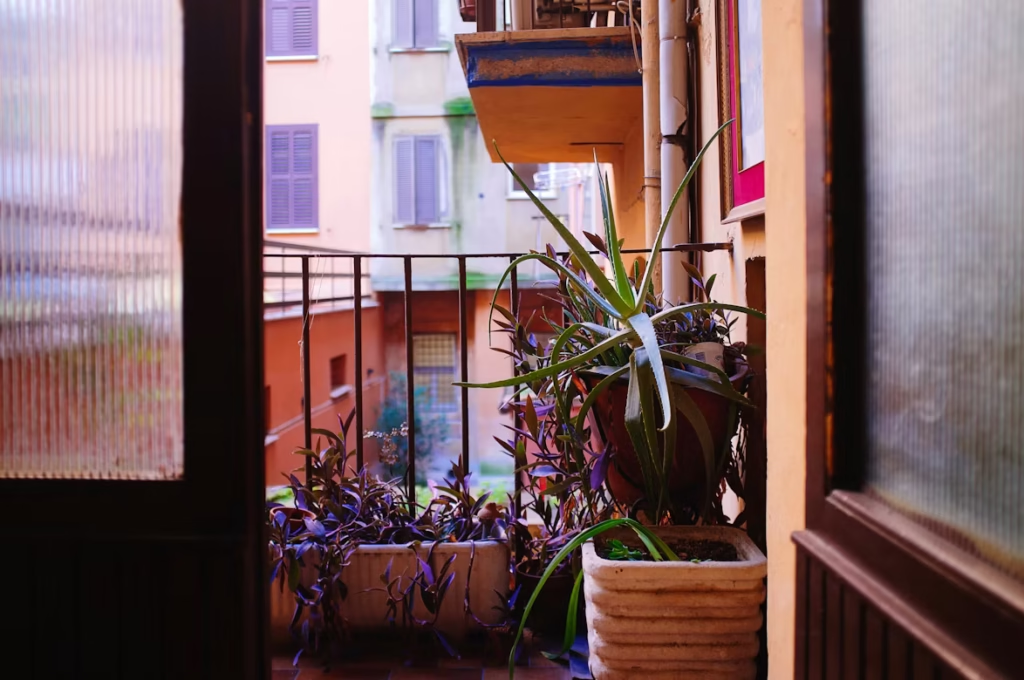
Wind matters too, and it’s the thing beginners forget most often. Balconies several floors up often get gusts that ground-level gardens never deal with. If yours is exposed, tall, top-heavy plants in lightweight pots will topple constantly, and you’ll spend more time picking soil off the floor than actually gardening.
2. Choose Containers Before You Choose Plants
This order matters more than people expect. Most beginners fall in love with a plant first, then scramble for a container, and end up with something too small, too shallow, or without proper drainage.
Drainage holes are non-negotiable. Extension horticulturists commonly point out that container plants demand more attention than plants growing directly in the ground, mostly because water and nutrients move through them so much faster. Without drainage, that extra attention turns into root rot, and root rot is where most balcony gardens quietly die.
Weight is the other thing nobody warns you about. A large container filled with damp soil is far heavier than it looks, and if you’re gardening on a rented balcony with weight restrictions, this is worth checking before you fill six pots with wet potting mix and can’t move any of them.
Here’s a rough starting chart for container sizing, the kind I’d sketch on a napkin for a client:
| Plant Type | Minimum Container Depth | Sun Needed | Beginner Difficulty |
|---|---|---|---|
| Herbs (basil, thyme, chives) | 6-8 inches | 4-6 hrs | Easy |
| Leafy greens (lettuce, spinach) | 6-8 inches | 3-5 hrs | Easy |
| Cherry tomatoes | 12-16 inches | 6-8 hrs | Moderate |
| Peppers | 12-14 inches | 6-8 hrs | Moderate |
| Dwarf citrus or small shrubs | 18+ inches | 6+ hrs | Advanced |
3. Use Potting Mix, Not Garden Soil
This one trips up more beginners than anything else on this list. Garden soil compacts in a container. It holds water in all the wrong ways and starves roots of oxygen, which is exactly what happened to my basil.
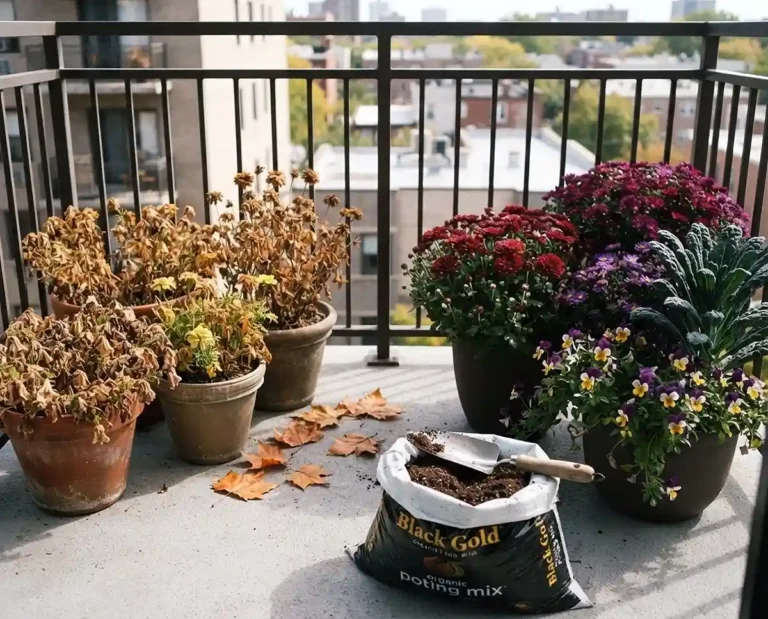
Potting mix is engineered differently. It’s lighter, drains properly, and gives roots room to breathe even in a confined space. It costs a little more than bagged garden soil, and it’s worth every bit of that difference. Buy the mix before you buy anything else on your list.
Where people usually go wrong here is assuming any bag labeled “soil” will do the job. It won’t, not for containers. Read the bag. If it says potting mix or container mix, you’re fine.
4. Pick Plants That Forgive Mistakes
Your first season isn’t about growing the most impressive things you can find. It’s about learning your balcony’s rhythm without losing your motivation halfway through July.
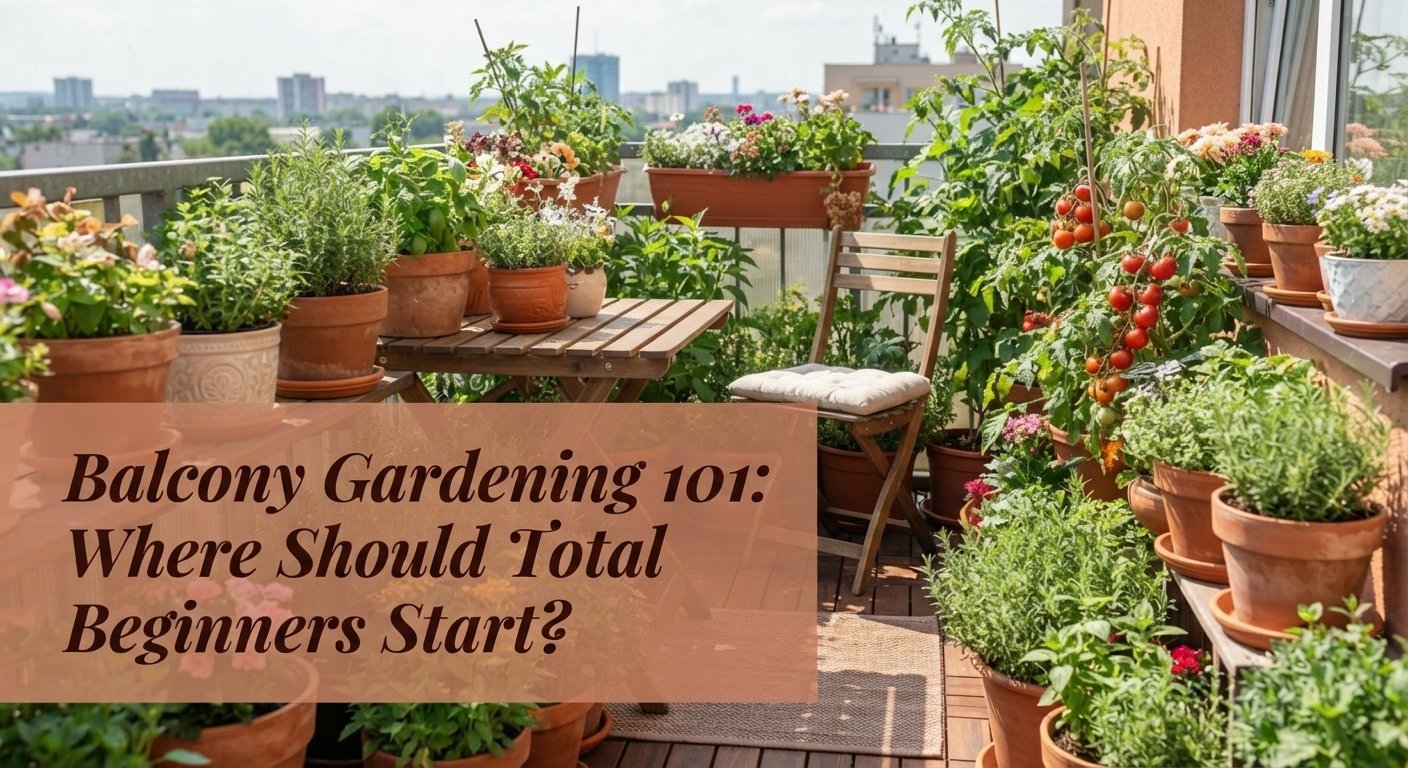
Herbs like basil, thyme, and parsley are genuinely forgiving, and they reward you fast enough to keep you interested. For a first-timer, these tend to be the easy wins, and cherry tomatoes, lettuce, and peppers do well in pots too, giving you something to actually eat for your effort. Start with two or three of these rather than ten different species. It’s tempting to fill every inch of railing space in week one. Don’t. You’ll learn more from three well-tended pots than from twelve you can’t keep up with.
And if you want color rather than food, marigolds and petunias are close to indestructible and will tell you clearly, through wilting, when they need water. They’re a good early-warning system while you’re still learning to read your plants.
5. Watering Is Not a Schedule, It’s a Response
I’ll say this plainly because it’s the mistake I made and the one I see repeated constantly: don’t water on a calendar. Water based on what the soil is actually telling you.
Stick a finger an inch into the pot. If it’s dry, water. If it’s still damp, leave it. Sun exposure, container size, wind, and even the material of the pot itself all change how fast soil dries out, so a fixed daily routine will either drown your plants or starve them depending on the week.
During hot stretches, some containers genuinely do need water once or even twice a day. That’s not overwatering, that’s just physics on a small scale, since containers heat up and dry out faster than ground soil does.
This is something I go into more depth on over on small balcony garden online, where I’ve broken down watering schedules for different container materials, because terra cotta and plastic behave very differently in the sun.
Common Mistakes Worth Naming Directly
A few patterns come up again and again with new balcony gardeners, and it’s worth being specific rather than vague about them:
- Buying decorative pots with no drainage holes, then drilling badly or not at all
- Crowding too many plants into one container because the empty space looks wasteful
- Fertilizing heavily in week one, before roots have even established
- Assuming a shaded balcony means “no plants,” when it actually just means different plants
- Giving up after one failed pot instead of adjusting one variable at a time
If I had to pick the single most common one, it’s the drainage issue. It’s invisible until it isn’t, and by the time you notice the smell of stagnant soil, the roots are usually already compromised.
A Quick Word on Fertilizer
Container plants use up nutrients faster than plants in the ground, simply because there’s less soil volume to draw from. A diluted liquid fertilizer every two to three weeks during the growing season is usually enough for most beginner setups. Skip the urge to fertilize right after planting. Let roots settle first.
I’ve written more on organic feeding options for small containers on the site if you want to go deeper on that particular rabbit hole. It connects with a lot of what I talk about regarding soil health generally on small balcony garden online, since healthy roots really do start below the surface, not above it.
Balcony gardening, once you get past that first wobbly season, has a way of becoming the calmest part of your day. Mine still is, most mornings, coffee in hand, checking soil with a finger before I check my phone.
FAQs
Do I need a special permit to garden on my apartment balcony? Usually not, but weight limits and HOA or building rules sometimes restrict what you can place on a balcony railing. It’s worth a quick check with your building management before investing in large containers.
Can I grow vegetables on a balcony that only gets morning sun? Yes, though your options shift toward cool-season crops. Lettuce, spinach, and most leafy greens do fine with three to five hours of direct sun, while tomatoes and peppers really do need the fuller six to eight hours.
Why do my container plants dry out so much faster than in-ground plants? Containers are exposed to air on all sides, including the bottom in many cases, so they lose moisture faster than soil that’s insulated underground. Smaller pots dry out faster than larger ones for the same reason.
Is it too late to start a balcony garden if it’s already midsummer? No, though your plant choices narrow a bit. Fast-growing herbs and leafy greens can still give you a full harvest before the season ends, even if tomatoes are a stretch at that point.
How many pots should a total beginner start with? Three to five is a realistic number. Enough to feel like a real garden, few enough that you’re not overwhelmed by watering and troubleshooting in week one.
For a deeper technical breakdown of container sizing and drainage, the University of Maryland Extension’s guide on growing vegetables in containers is worth a look.