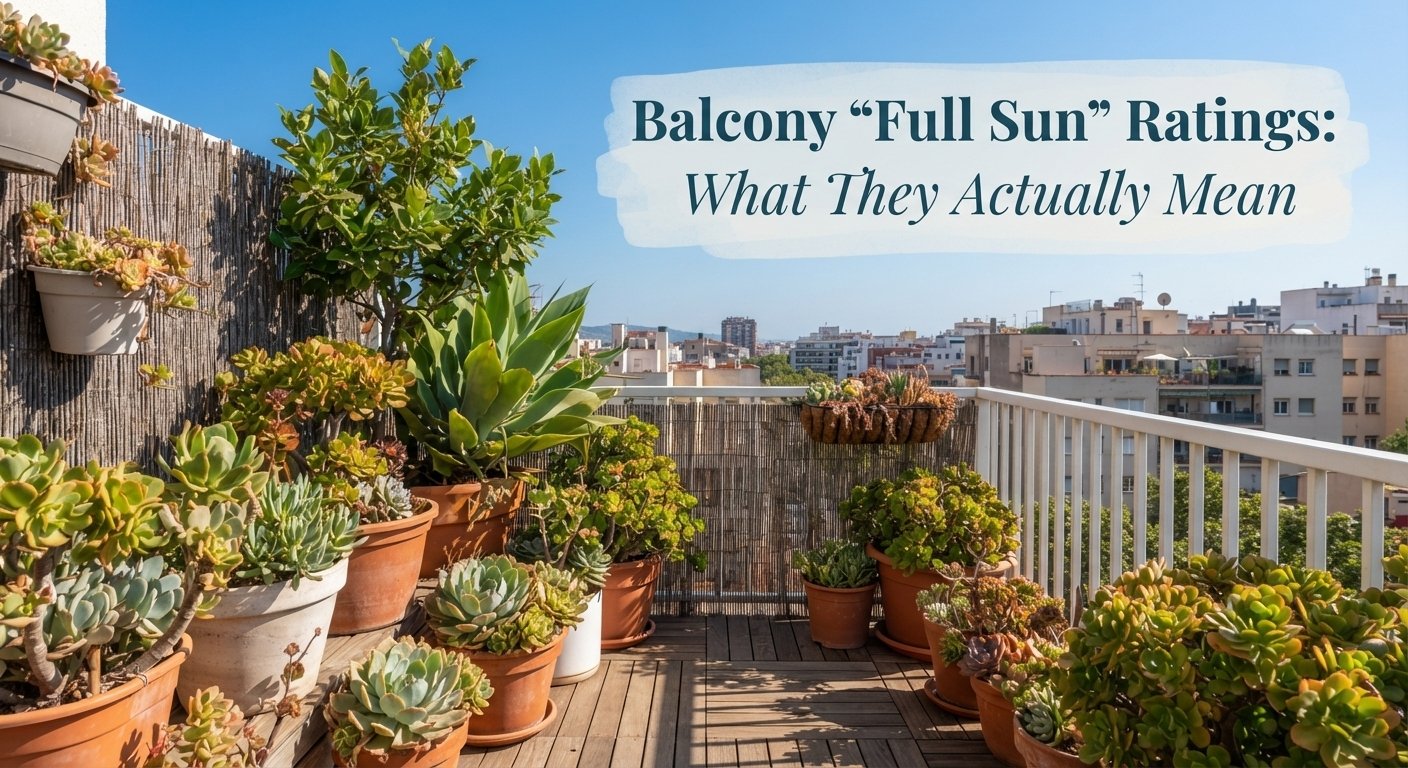
A plant tag that says “full sun” is not really talking about your balcony. It was written for someone with a backyard, unobstructed sky, and no concrete wall radiating heat back at 6 p.m. Balconies change the math, and most of the frustration people run into with container gardening traces back to this one mismatch between what the label promises and what the space actually delivers.
Here’s what full sun is supposed to mean, what it means once you’re three floors up with a railing and a wall involved, and how to figure out what your specific balcony can support.
1. What “Full Sun” Is Defined As
In horticultural terms, full sun means six or more hours of direct, unobstructed sunlight per day. That’s the standard used on plant tags, seed packets, and most gardening references. Partial sun or partial shade usually means three to six hours, and full shade means less than three hours of direct light, though it can still receive plenty of bright ambient light.
That six-hour figure assumes the light is continuous or close to it, and that nothing is bouncing extra heat back onto the plant. It also assumes ground-level growing conditions, where soil temperature stays relatively stable and roots aren’t confined to a few liters of potting mix.
None of those assumptions hold on a balcony.
2. Why Balconies Break the Standard Rating
Three things change once a plant is in a container on a balcony instead of in a garden bed.
Reflected and radiated heat is the biggest one. A south- or west-facing wall, especially if it’s brick, stucco, or dark-painted, absorbs heat all day and releases it well after direct sun has moved off the plant. A pot sitting against that wall can experience effective heat exposure for hours longer than the light itself suggests. This is why a “full sun” tomato that would be perfectly happy in a garden can scorch and stress on a balcony that gets the same six hours of direct light.
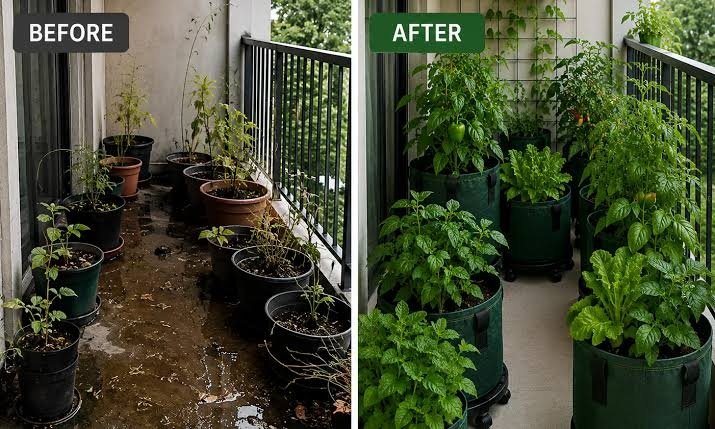
Wind exposure is the second factor, and it’s the one most people underestimate. Balconies, particularly above the third or fourth floor, get wind that a ground-level garden never sees. Wind increases water loss from both the soil and the leaves, which means a full-sun-rated plant that would tolerate six hours of light just fine in the ground can dry out and wilt on a windy balcony even with regular watering.
Container volume is the third. Pots heat up faster than garden soil and hold far less water in reserve. A 5-liter container in direct afternoon sun can see soil temperatures 10 to 15 degrees higher than the ambient air temperature, which affects root health long before the leaves show visible stress.
Put those together and you get the real situation: a balcony that receives six hours of direct light is not equivalent to a garden bed that receives six hours of direct light. The balcony version is hotter, drier, and harder on roots.
3. Where People Usually Go Wrong
The most common mistake is choosing plants based purely on the “full sun” label without accounting for direction and wall material. A west-facing balcony gets its six-plus hours in the hottest part of the day, and if there’s a dark wall behind the pots, that heat compounds. A plant that would thrive on a full-sun east-facing balcony, where the light comes in the cooler morning hours, can genuinely struggle in the same light duration facing west.
The second common mistake is not testing the actual light before planting. People count hours based on assumption (“it’s south-facing, so obviously it’s full sun”) rather than watching what happens over a full day. A neighboring building, an overhang, or even a railing with closely spaced balusters can cut real light hours by a third or more.
4. How to Actually Test Your Balcony’s Light
This takes one day and settles the argument for good.
Pick a clear day and check the space every hour from sunrise to sunset. Mark down whether the specific spot you’re planning to use is in direct sun, dappled light, or shade at each check. Add up the direct-sun hours at the end. That number, not the compass direction of your balcony, is what determines your actual rating.
| Direct Sun Hours | Rating | What This Means on a Balcony |
|---|---|---|
| 6+ hours, morning-heavy | True full sun | Most full-sun plants will do well with attentive watering |
| 6+ hours, afternoon-heavy | Full sun, high stress | Choose heat-tolerant varieties; expect faster drying |
| 4–6 hours | Partial sun | Good for partial-sun plants; some full-sun plants will underperform |
| 2–4 hours | Partial shade | Leafy greens, herbs like mint and parsley, shade-tolerant flowers |
| Under 2 hours | Full shade | Ferns, hostas, and other true shade plants only |
Do this test in the season you’ll actually be growing in. Spring sun angles are lower than summer ones, and a balcony that gets four hours in April can get seven in July as the sun moves higher and stays visible longer over neighboring rooflines.
5. Adjusting for What You Learn
Once you know your real number, a few practical adjustments matter more than plant selection alone.
If your balcony is true full sun and west- or south-facing, move pots a few inches off the wall if space allows. Even a two-inch gap breaks up direct heat transfer from the surface. Light-colored pots also help; a white or pale terracotta container runs noticeably cooler than a dark glazed one in the same spot.
If wind is a factor, and on most balconies above the ground floor it is, group pots together rather than spacing them out. Plants sheltering each other reduces individual water loss, and a cluster of containers creates its own slightly more humid microclimate than a single isolated pot.
Watering frequency should be based on what you observe, not a fixed schedule. A full-sun balcony pot in July might need water daily, sometimes twice on a hot, windy day, while the same plant in a garden bed might go two or three days between waterings. Check soil moisture with a finger an inch down rather than going by calendar days.
And if a plant that’s rated for full sun is consistently wilting by early afternoon despite adequate watering, that’s usually a heat problem rather than a light or water problem. Afternoon shade, even just from a shade cloth or an umbrella for a few hours, often solves it without moving the plant at all.
Frequently Asked Questions
Does a full-sun balcony need different soil than a garden bed? Yes, generally. Container mix needs to drain faster and hold structure longer than garden soil, since pots dry out and compact faster. A quality potting mix with perlite or coarse sand added handles full-sun balcony conditions better than plain garden soil transferred into a container.
Can I still grow full-sun vegetables like tomatoes and peppers on a partial-sun balcony? You can, but expect reduced yield and slower fruiting. Four to five hours of direct sun with bright reflected light for the rest of the day will often still produce a workable, if smaller, harvest. Under four hours, focus energy on leafy greens and herbs instead.
Why do my full-sun plants look worse on my balcony than a friend’s identical plants in their garden? It’s almost always heat and wind, not light duration. Compare wall color, pot material, and how exposed the balcony is to wind before assuming the plant itself is the problem.
Does a glass railing count as blocking light? Clear glass usually doesn’t reduce light hours meaningfully, but tinted or frosted glass can cut effective light by a noticeable margin. Solid railings or closely spaced balusters block more than people expect, especially for pots placed low.
How often should I retest my balcony’s light exposure? At least once per season, since sun angle changes throughout the year. A balcony that measured as partial sun in early spring can shift into full sun territory by midsummer as the sun’s path rises higher in the sky.
If you’re setting up a new balcony garden this season, start with the light test before buying a single plant. It costs nothing but a day of attention, and it will save you from the most common and most avoidable balcony gardening failure: buying full-sun plants for a space that was never going to give them what the label promised.