A woman messaged me last spring with a photo of six dead basil plants lined up like a small funeral procession. Her balcony faced south, she told me, so she figured full sun was a given. What she hadn’t accounted for was the building across the street, which shaded her railing until almost noon, then let in blistering afternoon heat that cooked everything by three. She’d been watering the plants for a shade garden while feeding them like they lived in a desert.
That’s the thing about balconies. A compass direction tells you almost nothing on its own.
1. Why “South-Facing” Doesn’t Mean What You Think
Most planting guides start with orientation. North, south, east, west. And orientation matters, but it’s the least useful piece of information you have, because it assumes a flat, unobstructed horizon. Your balcony isn’t standing in an open field. It’s tucked between other buildings, under an overhang, possibly next to a tree that leafs out in May and changes everything about your light by June.
I’ve seen north-facing balconies that got more usable light than south-facing ones two floors down, simply because of what was blocking the sun and when. A balcony that’s technically south-facing but sits under a deep roof overhang might only catch two or three hours of direct light a day, all of it in the middle of the afternoon when the angle finally clears the roofline.
So before you buy a single seedling, forget the compass for a moment. You need actual observed hours, not theoretical ones.
2. How to Actually Track Your Light (Without Overthinking It)
This part doesn’t need an app, though apps exist if you want one. A notebook and a phone alarm work fine.
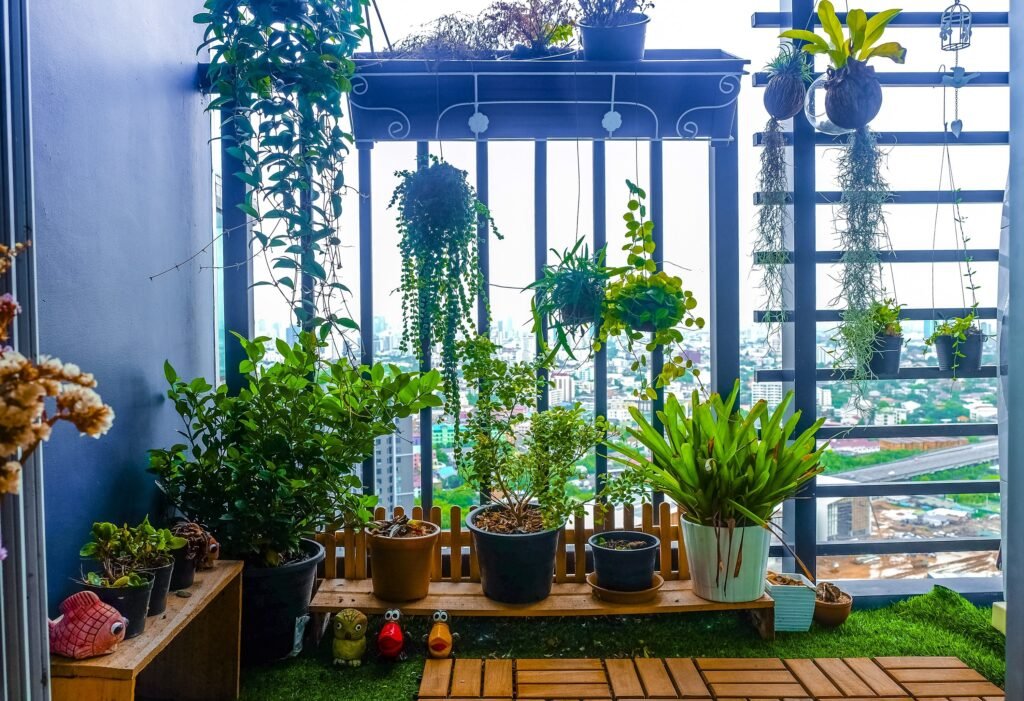
Pick a day that’s reasonably clear, not a heavy overcast one, and check your balcony every hour from sunrise to sunset. Note whether it’s in direct sun, dappled light, or full shade at that moment. Do this for one full day, ideally in the season you’re about to plant for, since light patterns shift a lot between March and July.
A rough log looks something like this:
| Time | Light Condition | Notes |
|---|---|---|
| 7 AM | Full shade | Building blocks sunrise |
| 9 AM | Direct sun | Strong and low-angle |
| 11 AM | Direct sun | Full exposure |
| 1 PM | Dappled | Tree branches from neighbor’s yard |
| 3 PM | Direct sun | Hottest stretch |
| 5 PM | Full shade | Blocked by adjacent building |
Add up your direct-sun hours. Six or more puts you solidly in full-sun territory, where tomatoes, peppers, and most flowering annuals will actually perform. Four to six is what I’d call part sun, and a lot of herbs and leafy greens are happy there. Under four hours means you’re working with shade-tolerant plants, and trying to force sun-lovers into that spot usually ends the way that basil did.
3. Reading the Quality of Light, Not Just the Quantity
Hours matter, but so does intensity, and this is where a lot of balcony gardeners get tripped up. A balcony on the twelfth floor with nothing but sky in front of it gets harsher, hotter light than a ground-floor patio with the same number of daily sun hours, because there’s no humidity buffer and often more wind pulling moisture out of the soil faster.
Reflected light is another factor people miss entirely. A white or light-colored wall behind your balcony can bounce enough extra light onto your plants to shift a partial-shade spot into something closer to full sun, especially in the afternoon. I’ve had readers assume their east-facing balcony was mild and gentle, not realizing the white stucco wall next to it was doubling their actual light exposure.
Glass railings do something similar but with heat. They can magnify temperature on a balcony significantly, which matters for choosing pots and for how often you’ll need to water, even if it doesn’t change your light hours on paper.
Here’s where people usually go wrong: they treat all “six hours of sun” as identical, when six hours of gentle, filtered morning light on a shaded ground floor behaves nothing like six hours of blazing reflected afternoon light nineteen stories up.
4. Matching Plants to What You Actually Found
Once you’ve got real data instead of a guess based on compass direction, matching plants gets a lot easier.
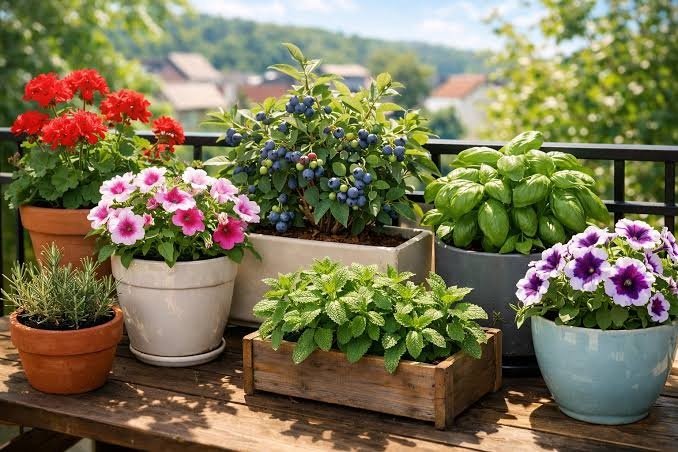
For full sun with six-plus hours, tomatoes, peppers, zucchini, and most flowering annuals like petunias and zinnias will do well, assuming you’re also managing water and pot size, which is a separate conversation. For four to six hours of part sun, lean into herbs like parsley, mint, and cilantro, along with leafy greens such as lettuce and spinach, which actually prefer to avoid the harshest midday heat anyway.
Under four hours puts you in genuine shade-gardening territory. Ferns, hostas, and many houseplants that get relegated outdoors for summer will manage here, and there’s more you can grow in low light than most people assume, it’s just a different plant list entirely and pretending otherwise wastes a season.
If you’re working out container sizing once you’ve settled on plants, our guide on choosing the right pot depth for balcony vegetables walks through that in more detail, and it pairs well with this light assessment since pot material and color also affect how hot your soil gets in direct sun.
5. Reassessing Through the Seasons
One thing I’ll mention because it catches even experienced gardeners off guard. Your light reading from a March afternoon will not hold true in July. Deciduous trees leaf out, the sun’s angle climbs higher in the sky through summer, and a balcony that felt like full shade in early spring can become surprisingly bright by midsummer, or the reverse, depending on what’s blocking it.
If you’re gardening year-round, or even just spring through fall, it’s worth doing a shorter version of the light log again around the solstice. You don’t need the full sunrise-to-sunset tracking a second time. Just spot-check a few hours around midday and compare it to your original notes.
And honestly, this is where a lot of the fun is. Learning your specific balcony, not a generic one from a gardening blog, but the actual patch of railing and floor space you’ve got, with its particular quirks and blind spots and reflected light off a neighbor’s window. That knowledge doesn’t come from a chart. It comes from watching it for a season.
For anyone starting from scratch, our piece on building a balcony garden layout that works with tight space is a natural next step once you know your light conditions, and it covers how to arrange containers so taller plants don’t shade out the shorter ones you’ve placed nearby.
Common Questions
Do I really need to track light for a full day, or can I just guess based on which way my balcony faces? You can guess, but the guess will likely be wrong in some meaningful way, especially if there are trees, overhangs, or neighboring buildings involved. A single day of hourly checking gives you real numbers instead of an assumption, and it takes less effort than replacing a round of dead plants.
What if my light readings change a lot depending on the day I check? Some variation is normal, especially with cloud cover, but if you’re seeing wildly different results, try checking on two or three different clear days and average them. Consistent overcast conditions will always read lower than they would on a sunny day, so weight your notes accordingly.
Can reflected light from a wall or window really make that much difference? Yes, and it’s one of the most underestimated factors in balcony gardening. A bright wall behind your plants can meaningfully increase the light they receive, sometimes enough to shift a plant from struggling to thriving.
My balcony gets a lot of wind along with sun. Does that change anything? It changes your watering schedule more than your plant selection. Wind dries out containers faster than ground soil, so a full-sun, high-wind balcony will need more frequent watering than the same light conditions somewhere sheltered.
Is four hours of morning sun the same as four hours of afternoon sun for plant health? Not quite. Morning sun tends to be gentler and cooler, which many leafy greens and herbs prefer, while afternoon sun is more intense and better suited to heat-loving plants like tomatoes and peppers, assuming they’re getting enough water to handle it.
If you want a second opinion on your readings before you commit to a full round of planting, the Old Farmer’s Almanac sun exposure guide is a solid reference for cross-checking what “full sun” and “part shade” actually mean in practical terms.