
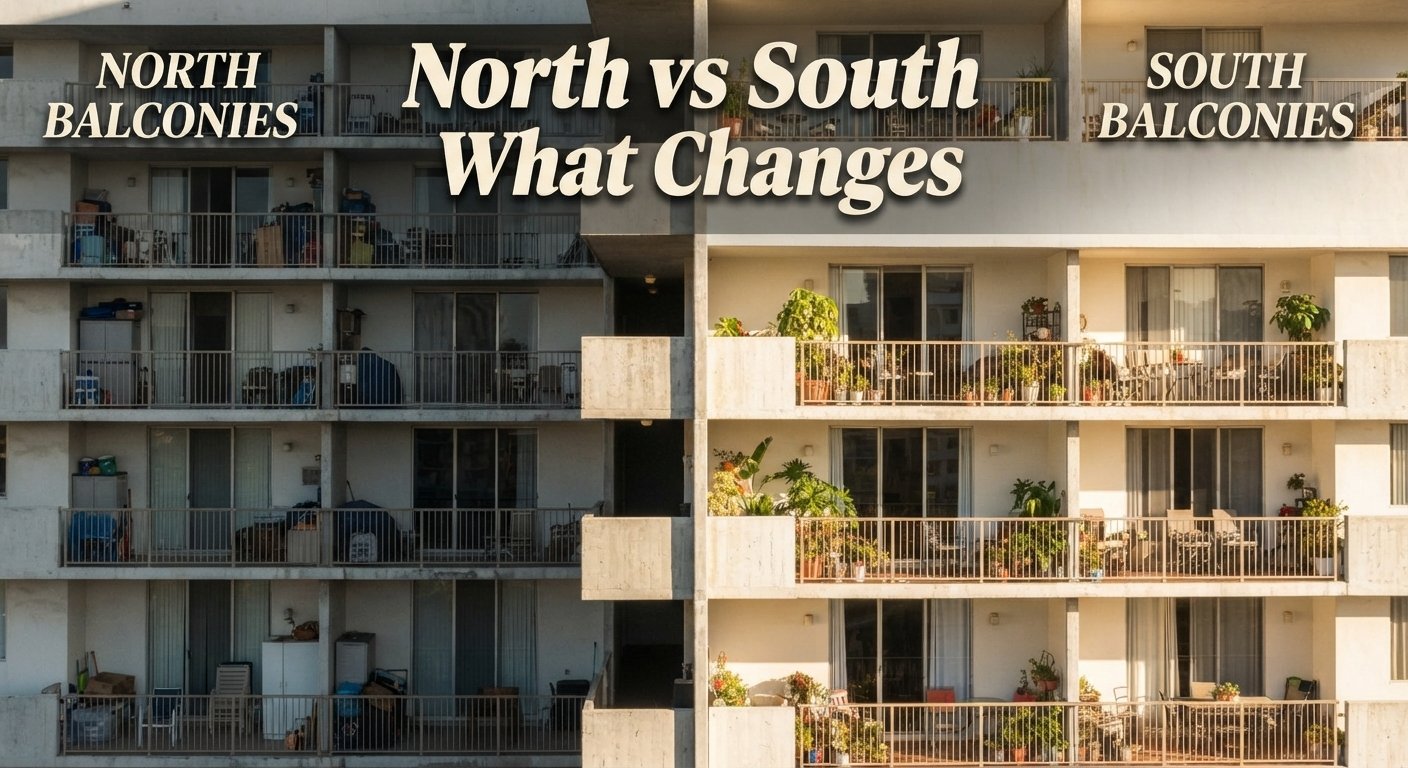
A north-facing balcony and a south-facing balcony aren’t just two versions of the same growing space. They’re basically two different climates separated by a few feet of railing. Give the same pot of basil to each one, and within three weeks you’ll have two plants that barely look related.
Before going further, one thing has to be sorted out first, because it trips up a lot of people: this article assumes you’re in the Northern Hemisphere, where south-facing means more sun and north-facing means less. If you’re gardening in Australia, South Africa, or anywhere south of the equator, flip everything. Your north-facing balcony is the sunny one. Same physics, opposite direction.
1. Light Is the Whole Story, and It’s Not Subtle
A south-facing balcony in the Northern Hemisphere tracks the sun for most of the daylight hours. Depending on the season and how tall the surrounding buildings are, that can mean six to ten hours of direct light in summer. A north-facing balcony, by contrast, rarely sees direct sun at all. What it gets instead is bright, indirect light bouncing off the sky and nearby surfaces, which sounds like a consolation prize but actually supports more plants than people assume.
This is the single biggest factor determining what will thrive and what will sulk. Tomatoes, peppers, and most flowering annuals want that direct south light. Ferns, many herbs like mint and parsley, hostas, and most houseplants people bring outdoors for summer are actually happier on a north balcony, where they’re not getting scorched by midday sun through a hot railing.
Where people usually go wrong here is assuming “north-facing” means “no light for anything.” It doesn’t. It means no direct light. Bright shade is still a real growing condition, and quite a few edible and ornamental plants prefer it.
2. Heat Behaves Completely Differently in the Two Spots
South-facing balconies don’t just get more light, they get more heat, and the heat compounds. Concrete floors, metal railings, and brick walls absorb solar energy all day and release it slowly into the evening. A pot sitting against a south-facing wall can be five to ten degrees warmer at the root zone than the surrounding air temperature suggests. That’s often the real reason plants wilt in the afternoon even when they were watered that morning. It’s not thirst exactly. It’s heat stress on the roots.
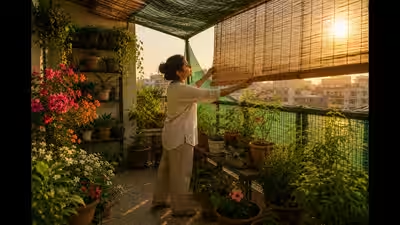
North balconies stay noticeably cooler and more stable. Soil temperature doesn’t swing nearly as much between morning and evening, which is part of why they’re gentler on delicate root systems and why leafy greens tend to bolt to seed later there in early summer.
Wind matters too, though it’s less obvious. Higher floors and open exposures on either orientation dry pots out faster regardless of sun, but a hot south balcony combined with wind is a genuinely tough combination for anything in a small pot.
3. Watering Schedules Aren’t Even Close
This is where the theory turns into daily reality. A south-facing balcony in July might need watering once, sometimes twice, a day for anything in a pot under two gallons. Terracotta makes this worse since it wicks moisture out through the sides. A north-facing balcony with the same size pot might go two or three days between waterings without anyone noticing a difference in the plant.
| Factor | South-Facing Balcony | North-Facing Balcony |
|---|---|---|
| Typical direct sun (summer) | 6-10 hours | 0-2 hours |
| Soil dries out | Fast, often daily | Slow, every 2-3 days |
| Best pot material | Glazed ceramic, plastic | Terracotta is fine |
| Risk of root scorch | Higher | Low |
| Fungal/mildew risk | Lower | Higher if crowded |
The mistake people repeatedly make is setting a fixed watering schedule and applying it to both orientations. A twice-weekly watering habit that keeps a north balcony perfectly happy will slowly kill a tray of seedlings on a south balcony in peak summer.
4. What Actually Grows Well in Each
For a south-facing spot, lean into plants that evolved for open, sunny conditions. Tomatoes (cherry varieties do especially well in containers), peppers, rosemary, thyme, lavender, zinnias, and most succulents will genuinely thrive rather than just survive. These are plants that want the heat, not just tolerate it.
North-facing balconies do best with shade-tolerant edibles and ornamentals. Lettuce and other leafy greens, chives, mint, parsley, cilantro (which bolts fast in heat anyway), hostas, ferns, and begonias are solid choices. And here’s something that surprises a lot of new balcony gardeners: many houseplants that get sold as “indoor plants” actually do better outside on a bright north balcony in summer than they do inside, because the light, while indirect, is still far stronger than what comes through a window.
There’s also a middle category worth mentioning. Herbs like basil want more light than a true north balcony usually offers but can scorch on an unshaded south one in August. A little afternoon shade cloth, or moving pots slightly back from the railing, often solves this without needing to relocate anything.
5. Soil and Fertilizing Needs Shift Too
Faster drying on a south balcony means nutrients wash through the pot more often, since water carries dissolved nutrients out through the drainage holes each time you irrigate. That generally means slightly more frequent, lighter feeding rather than one heavy monthly dose. On a north balcony, where watering is less frequent, standard feeding schedules on the product label usually work fine as written.
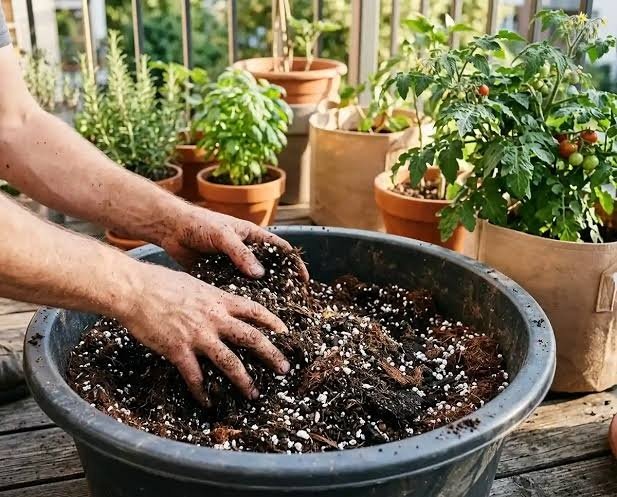
Soil mix matters more on a south balcony too. A mix with added perlite or coarse sand drains faster and helps prevent the waterlogged, overheated root conditions you can get from watering hot soil that hasn’t fully dried. On a north balcony, a mix with a bit more moisture-retaining material like coco coir helps stretch out the time between waterings.
If you’re working with a small footprint generally, it’s worth browsing through the container and soil guides on smallbalconygarden.online, since pot size interacts with all of this in ways that are easy to underestimate.
Common Mistakes Worth Naming Directly
The most frequent one is buying plants based on what looks good at the garden center without checking their light needs against the actual balcony orientation. The second is treating “shade” and “no light” as the same thing, which leads people to abandon north balconies as unusable when they’re often better suited to certain plants than a blazing south exposure would be. Third, and this one’s sneaky, is not accounting for how much a white or light-colored wall reflects extra light and heat onto a south balcony, effectively turning a partially shaded spot into something closer to full sun.
FAQs
Do east and west-facing balconies behave more like north or south? East-facing balconies get morning sun, which is gentler and cooler, so they behave more like a moderate version of south. West-facing balconies catch the hot afternoon sun and can actually run hotter than south in some climates, since that’s when ambient temperature is already at its peak.
Can I grow tomatoes on a north-facing balcony? It’s possible but the yield will be disappointing. Tomatoes need at least six hours of direct sun to fruit well. A north balcony might give you a leggy plant with a handful of tomatoes instead of a productive one. Cherry varieties tolerate lower light slightly better than large slicing types.
Why does my south balcony plant wilt even after watering? This is almost always heat stress rather than a lack of water. If the soil is already moist but the plant still droops in early afternoon, try moving it a few inches away from a hot wall or railing rather than watering again.
Is a north-facing balcony a waste of space for gardening? Not at all. It’s simply suited to a different plant list. Leafy greens, herbs that prefer cooler conditions, and shade-loving ornamentals often perform better there than they would in full sun.
Do I need shade cloth on a south balcony? Often yes, especially in peak summer or for young seedlings that haven’t hardened off yet. A 30-40% shade cloth for a few weeks during the hottest stretch can prevent scorch without meaningfully cutting into what sun-loving plants need.
Orientation isn’t a limitation to work around so much as a starting point for choosing what to plant in the first place. Once the light and heat pattern of your specific balcony is clear, the rest of the decisions, pot material, watering rhythm, plant selection, tend to fall into place on their own. For a broader look at matching plant choices to small-space light conditions, the Royal Horticultural Society’s guide to aspect and plant selection is a useful reference point.