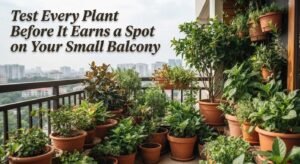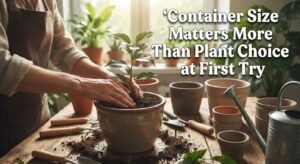
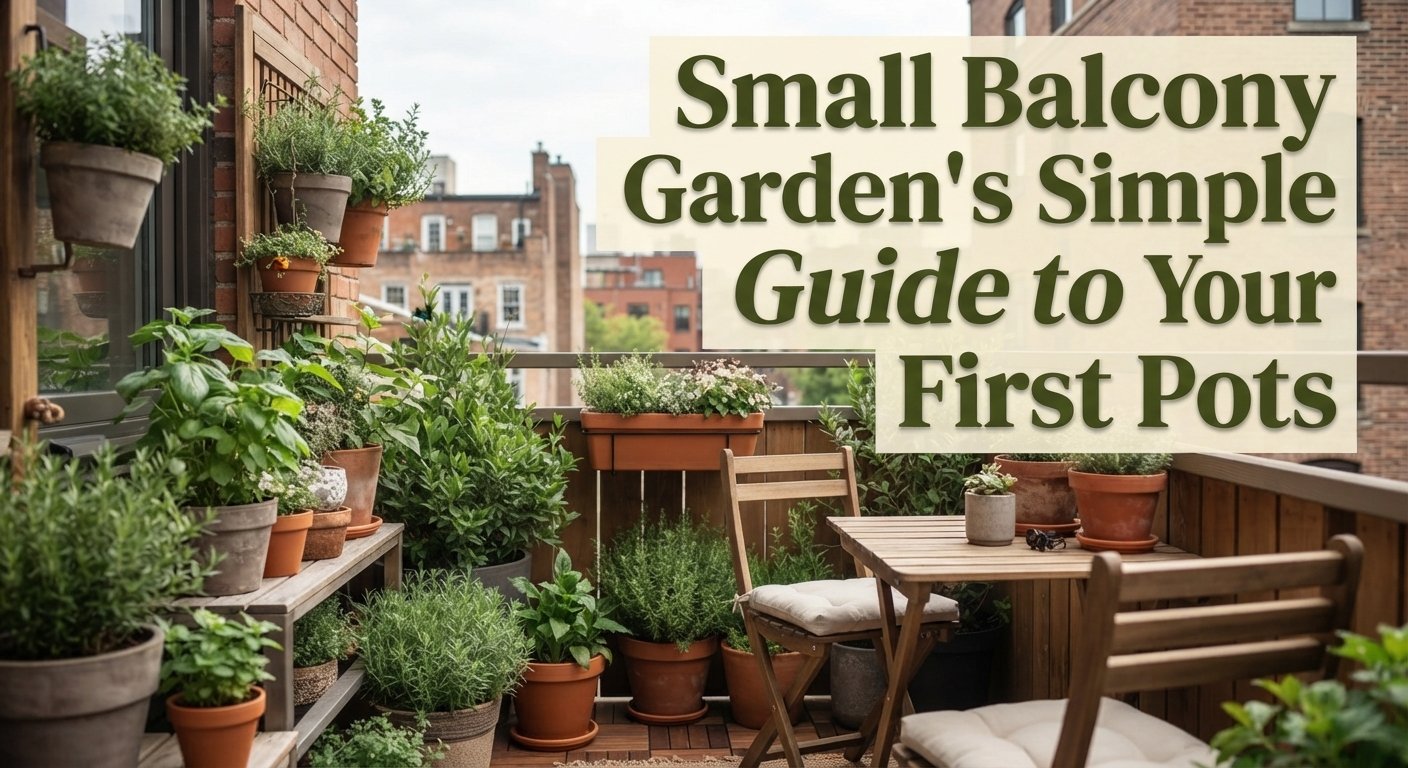
Most first-time balcony gardeners buy the wrong pot before they buy the wrong plant. It happens in that order almost every time. Someone walks into a garden center, falls for a beautiful glazed ceramic planter, brings it home, and only later realizes it has no drainage hole, weighs as much as a small dog, and holds enough soil for maybe one lettuce.
None of that is really their fault. Nobody hands you a manual before your first pot purchase. So here’s the version that should exist.
1. Drainage Is Non-Negotiable, No Exceptions
A pot without a drainage hole is not a plant pot. It’s a decorative container that will eventually drown whatever you put in it. Water needs somewhere to go, and if it can’t escape out the bottom, it just sits at the base of the roots until they rot.
If you’ve already bought a pot without one, it’s not wasted money. Drill a hole yourself if the material allows it (terracotta and plastic both drill fine with the right bit), or use it as a decorative outer sleeve and keep your actual plant in a smaller, properly drained pot inside it. This is called a cachepot setup, and it’s one of the easiest fixes in gardening.
2. Size the Pot to the Plant, Not to the Space You Have
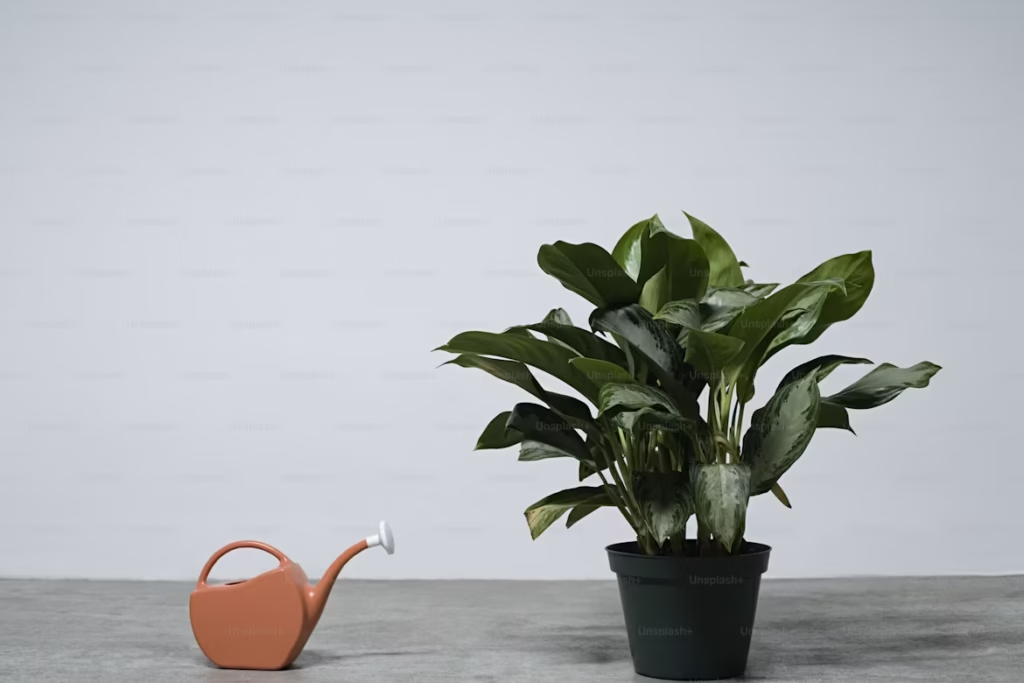
There’s a temptation on a small balcony to buy one big pot because it feels efficient, one purchase instead of five. Resist it. Different plants have different root needs, and cramming a tomato and a strawberry and a marigold into the same large container usually means all three end up competing for water and nutrients, with the tomato winning and the other two limping along.
As a rough guide:
| Plant Type | Minimum Pot Size | Notes |
|---|---|---|
| Herbs (basil, thyme, chives) | 6-8 inch pot | Can share a pot if spaced well |
| Lettuce & leafy greens | 8-10 inch pot | Shallow roots, wide is better than deep |
| Tomatoes (cherry/dwarf) | 12-16 inch pot, 5 gallon min | Needs depth for root development |
| Peppers | 10-14 inch pot | Similar depth needs to tomatoes |
| Strawberries | 10-12 inch pot or hanging basket | Good candidate for vertical space |
And smaller pots dry out faster than people expect, especially in direct sun, so don’t go smaller than the range above just to save space. You’ll end up watering twice a day and still losing plants to heat stress.
3. Material Matters More Than Most Beginners Realize
Terracotta looks the part and breathes well, which helps prevent root rot, but it also dries out fast and gets heavy once filled with wet soil. That’s a real consideration if your balcony has weight restrictions, which many rental buildings do. Glazed ceramic holds moisture longer and looks polished, but it’s the heaviest option by a wide margin and can crack in freezing temperatures if left outside over winter.
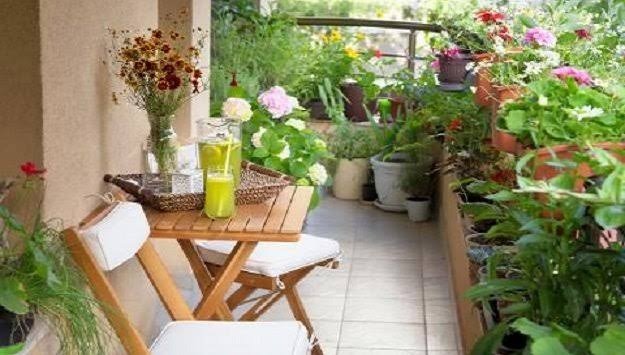
Plastic gets a bad reputation it doesn’t fully deserve. It’s light, holds moisture well, comes in every size imaginable, and modern versions have improved UV resistance so they don’t turn brittle in a season. For a first-time balcony setup, especially a rental where you might move the whole thing later, plastic is the practical choice even if it’s not the prettiest.
Fabric grow bags deserve a mention too. They’re inexpensive, foldable for storage, and their breathable sides naturally prune roots at the edges instead of letting them circle endlessly, which actually produces healthier root systems for many vegetables. The tradeoff is that they dry out faster than any of the above, so watering frequency goes up.
4. Weight and Wind Are the Two Things Nobody Warns You About
A filled 5-gallon pot with wet soil can weigh 40 pounds or more. Multiply that by however many pots you’re picturing, and a lot of balconies are looking at a weight load that pushes past what the structure was designed for. If you’re on an upper floor of an older building, or you’re just not sure, it’s worth checking with a building manager before committing to a row of large ceramic planters. This isn’t a rare problem. It’s one of the most common reasons balcony gardens fail structurally rather than horticulturally.
Wind is the other overlooked factor. Balconies above the second or third floor often catch wind that never reaches ground level, and a tall, top-heavy plant in a lightweight plastic pot is a genuine tipping hazard. Wider, lower pots have a lower center of gravity and handle wind far better than tall narrow ones. If you’re set on something vertical, like a trellised cucumber or climbing bean, weigh the base down with stones under the soil or choose a wider pot than you’d normally pick for that plant size.
Where Beginners Usually Go Wrong
The most common mistake isn’t a plant choice. It’s mismatching pot size to plant, almost always by going too small to save space or money upfront, and then wondering three weeks later why everything looks stressed despite regular watering. A close second is skipping a saucer or tray under the pot, which either damages flooring or, on balconies with drainage restrictions in shared buildings, creates a mess that annoys the neighbor below.
A Simple First-Season Setup
If this is genuinely your first year, don’t try to fill every inch of railing space at once. Start with three or four pots: one herb pot with two or three compatible herbs, one 5-gallon pot for a single tomato or pepper, and one wide, shallow pot for lettuce or greens that you can succession-sow through the season. That’s enough to learn watering rhythm, sun patterns, and your own follow-through before scaling up. Most of the guides on smallbalconygarden.online, including the container size charts and the seasonal planting calendars, are built around this kind of gradual start rather than an all-at-once approach, because that’s what actually sticks past the first month.
Buy pots slightly bigger than you think you need this year. You’ll fill the space eventually, and it’s cheaper to size up once than to keep replacing pots your plants outgrow.
FAQs
Can I reuse a pot from a plant that died? Yes, but scrub it out with hot water and a stiff brush first, especially if the plant died from a fungal issue or root rot. Skipping this step can carry disease into your next planting.
Do self-watering pots actually work for balconies? They work well for consistent moisture, particularly for anyone who travels or tends to forget watering. The tradeoff is they’re usually plastic and heavier when the reservoir is full, so factor that into weight limits.
How many pots is too many for a small balcony? There’s no fixed number since it depends on square footage and weight allowance, but a good gut check is leaving enough floor space to comfortably stand and turn around without brushing every pot. If you’re squeezing sideways to move, it’s time to go vertical instead of adding more floor pots.
What’s the actual difference between potting soil and garden soil for containers? Garden soil compacts in containers and drains poorly, which suffocates roots. Potting mix is formulated to stay loose and airy in a confined space, and it’s worth the extra cost for anything in a pot rather than in the ground.
Should pots sit directly on the balcony floor? Raising them slightly with pot feet or a small stand improves drainage and airflow underneath, and it protects the flooring from moisture damage or staining over a full season.
Get the pot situation right before anything else and most of the usual first-year frustration disappears on its own. For more detail on matching container size to root depth by vegetable, the University of Maryland Extension’s container gardening guide is a solid reference to cross-check against.