
A pot of basil that gets knocked flat every few days isn’t a watering problem or a soil problem. Nine times out of ten, it’s a wind problem, and it’s one of the most overlooked variables in balcony gardening. Sun gets all the attention on plant tags, but wind is often the thing quietly deciding whether a balcony garden thrives or limps along all season.
Here’s how to actually tell what you’re dealing with, and what to do about it once you know.
1. Why Balcony Wind Is Different From Garden Wind
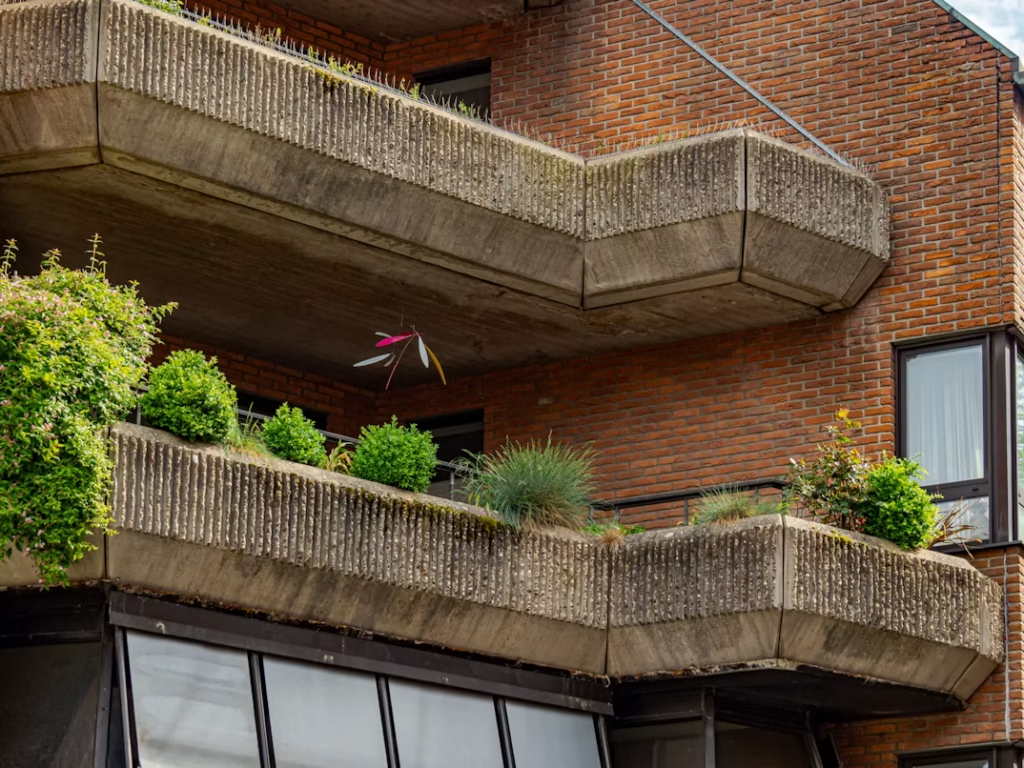
Ground-level gardens are buffered. Fences, hedges, other buildings, and the simple friction of air moving across a large open area all slow wind down before it reaches your plants. Balconies don’t get that buffer, especially above the third floor, where wind speed increases noticeably compared to street level. Buildings also create their own wind patterns: corner units often catch wind funneling around the structure from two directions at once, and balconies near the top of a building can experience gusts that wouldn’t register at all on the ground.
This matters because wind does more than just topple pots. It strips moisture from leaves and soil far faster than sun alone, which is why plants on windy balconies often look drought-stressed even when watered on schedule. It also damages stem tissue through constant flexing, which weakens plants over time in ways that aren’t always obvious until a storm finally snaps something.
2. The Simple Test: Watch a Ribbon
You don’t need instruments for this. Tie a light strip of ribbon or fabric to your railing and watch it over a few days at different times.
If it moves gently and settles often, your balcony has manageable air movement, the kind most plants tolerate fine and even benefit from, since some airflow reduces fungal issues.
If it’s extended and fluttering most of the day, you’re dealing with consistent wind that will affect watering needs and plant choice.
If it’s whipping around or standing out horizontal for extended stretches, especially in the afternoon, your balcony falls into genuinely windy territory, and that changes almost every decision from here.
Do this test across a full week if you can. Wind patterns shift with weather systems, and a single calm day isn’t representative.
3. Where People Usually Go Wrong
The most common mistake is blaming the wrong thing. A wilting, stunted tomato plant on a ninth-floor balcony gets diagnosed as underwatered, so the owner waters more, and the plant still struggles because the actual issue is moisture loss from wind exposure combined with physical stress on the stem. More water doesn’t fix wind damage.
The second mistake is choosing tall, top-heavy plants for exposed balconies without staking them from day one. Sunflowers, tall dahlias, and unsupported tomato plants look fine for the first few weeks and then snap during the first real gust, usually right at the point where the stem was already weakest from constant movement.
And a smaller but common one: hanging baskets on railings facing the prevailing wind direction. They swing constantly, which stresses roots and makes consistent watering nearly impossible since the soil surface dries unevenly.
4. What Actually Handles Wind Well
| Plant Type | Wind Tolerance | Notes |
|---|---|---|
| Ornamental grasses | High | Built to flex; look better with some movement |
| Herbs (rosemary, thyme, oregano) | High | Woody stems, low profile, naturally wind-hardy |
| Succulents and sedums | High | Low growth habit, minimal leaf surface to catch wind |
| Compact peppers | Moderate | Fine with staking on exposed balconies |
| Leafy greens (lettuce, spinach) | Moderate | Tolerate wind but dry out faster, water more often |
| Tomatoes (indeterminate) | Low | Need sturdy staking or cages; struggle unsupported |
| Tall flowering annuals | Low | Snap easily; best in sheltered corners only |
| Hanging baskets on exposed rails | Low | Constant swinging stresses roots regardless of plant |
If your ribbon test came back windy, lean toward the top half of this list and treat anything from the bottom half as needing real support structures, not just a nice pot.
5. Adjusting the Space Itself
Wind exposure isn’t always fixed. A few changes shift a genuinely difficult balcony into something workable.
A windbreak doesn’t need to be elaborate. A simple lattice panel, a row of tall grasses in sturdy pots, or even a section of outdoor bamboo screening cuts wind speed significantly without blocking meaningful light. Position it on the side the wind comes from most consistently, which your ribbon test will have already told you.
Grouping pots close together helps more than most people expect. Plants shelter each other, and the cluster creates a slightly calmer microclimate than any single pot sitting alone. This is a trick worth remembering from general small balcony garden online planning advice, since it solves crowding and wind exposure at the same time.

Heavier pots resist tipping better than light ones, obviously, but the material matters too. Glazed ceramic and concrete planters have enough mass to stay put in wind that would send a lightweight plastic pot skidding across the floor. If budget is tight, a layer of gravel in the bottom of a lighter pot adds stabilizing weight without much cost.
And staking should happen early, not after a plant starts leaning. A stake driven in at planting time, before the root system fills the pot, avoids root damage and gives the plant support from the start rather than as a rescue measure.
6. Watering Adjustments for Windy Balconies
Wind changes watering math more than people account for. A pot that would need watering every two days in a sheltered spot might need it daily, sometimes even twice on a particularly gusty, warm afternoon, purely because wind pulls moisture out of both the soil surface and the leaves through faster transpiration.
Mulching the soil surface with a thin layer of bark or gravel slows that evaporation noticeably. Self-watering pots or those with a water reservoir also help even things out, since they buffer against the faster drying that wind causes between waterings. Checking soil moisture by hand rather than by calendar is the more reliable approach here, since wind conditions change week to week even on the same balcony.
I’ve had readers assume their balcony wasn’t windy simply because it faced a courtyard rather than open sky, and courtyards can actually funnel wind in unpredictable ways depending on building shape. Worth checking regardless of which direction you assume is sheltered.
Frequently Asked Questions
How do I know if my balcony is too windy for any garden at all? True dealbreaker wind, the kind where nothing survives, is rare. Even genuinely exposed high-rise balconies can support low-growing, sturdy plants like sedums, ornamental grasses, and herbs with the right pot weight and windbreak setup.
Do windbreaks block too much light for a full-sun balcony? A well-placed windbreak on one side, positioned based on your actual wind direction, typically cuts very little light since it only needs to cover the exposure angle, not the whole balcony. Lattice and slatted screens filter wind while still letting most light through.
Can I use garden fabric or plastic sheeting as a temporary windbreak? You can for short-term protection during a storm, but leaving lightweight sheeting up long-term usually fails, since it catches wind like a sail and can tear loose or damage railings. Semi-rigid materials like lattice or bamboo screening hold up better as a permanent solution.
Will wind exposure change with the seasons? Yes, noticeably. Many balconies see stronger, more consistent wind in early spring and late autumn compared to summer. Retest with the ribbon method each season rather than assuming last year’s conditions still apply.
Is it worth growing tomatoes on a windy balcony at all? Determinate, compact tomato varieties do reasonably well with sturdy cages and a sheltered corner. Tall indeterminate varieties are a much harder sell on genuinely windy balconies and usually disappoint without serious staking investment.
Most windy balconies aren’t hopeless, they just need plant choices and setup that match the actual conditions rather than the conditions people assume they have. The ribbon test takes five minutes and saves a season of guessing. For more on matching plants to the specific conditions of a small space, the container gardening basics guide on small balcony garden online is a good next stop.