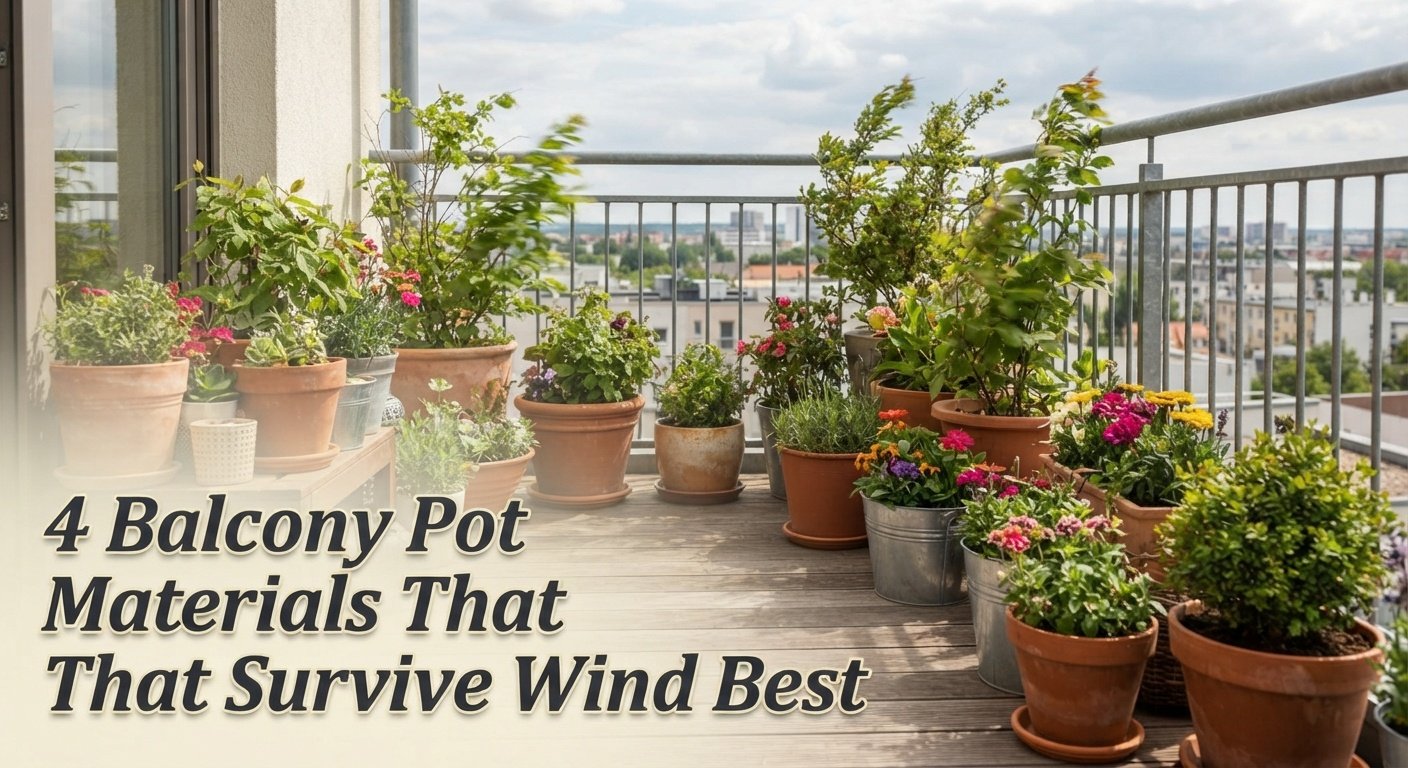
Weight isn’t the whole story with wind resistant pots, and that trips up more people than you’d guess. I’ve watched someone haul a heavy stone planter onto an exposed corner balcony expecting it to sit there forever, only to have it slowly walk itself sideways across the floor over a windy month, an inch or two at a time, from vibration alone. Heavy doesn’t automatically mean stable. Shape matters just as much as mass, and material affects both.
If you’ve already worked out that your balcony genuinely deals with consistent wind rather than the occasional gust, figuring that out properly is worth doing before you spend money on pots at all. Once you know what you’re dealing with, material choice becomes the next real decision, and it’s one a lot of guides skim past in favor of just telling you to “buy heavier pots.”
1. Concrete and Hypertufa
Concrete wins on raw mass, and for genuinely exposed high-rise balconies, that mass is doing real work. A filled concrete planter simply doesn’t move in wind that would send a plastic pot skidding, and its low center of gravity means it resists tipping even when top-heavy plants catch a gust broadside.
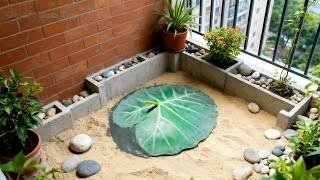
The tradeoff is exactly what you’d expect. Concrete is heavy before you’ve added a single scoop of soil, and on upper floors that weight has to fit within your balcony’s actual load rating. If you haven’t checked that number, calculating your balcony’s weight load walks through the math, and concrete planters are exactly the container type most likely to push you toward that upper limit fast.
Hypertufa, a lighter homemade mix of cement, peat, and perlite, splits the difference. It’s porous, breathable, and roughly a third the weight of solid concrete at the same size, while still carrying enough mass to hold its ground in wind that would move something lighter. It takes more effort to make than to buy, but for gardeners on upper floors who want concrete’s stability without concrete’s full weight penalty, it’s worth the afternoon of mixing.
2. Glazed Ceramic
Glazed ceramic sits in a comfortable middle ground. It’s substantially heavier than plastic or resin, wide-based on most designs, and the glazing itself helps it shed water rather than absorbing it the way unglazed terracotta does, which matters because a waterlogged unglazed pot can actually become less stable over time as the material itself soaks up weight unevenly.
Here’s where people usually go wrong with ceramic specifically. They pick a tall, narrow glazed pot because it photographs well, and a tall narrow shape with a small base footprint is exactly the geometry that tips easiest in wind, regardless of how heavy the material is. Ceramic’s wind resistance comes from wide, low designs, not from the material alone doing all the work. A short, broad glazed bowl planter will outperform a tall glazed urn every time on an exposed railing, even if the urn weighs more.
Ceramic does have a real weakness worth naming honestly: it cracks in freeze-thaw cycles if water gets trapped in the clay body through a chip or hairline crack, so it’s a stronger long-term pick for balconies that don’t see hard winters, or ones where pots get moved indoors seasonally.
3. Fiberglass and Resin, Weighted at the Base
This one surprises people, because fiberglass and resin containers have a reputation as the lightweight option, and mostly they deserve it. But manufacturers have gotten smart about wind performance in the last several years, and a lot of modern resin planters ship with a weighted base or a design that widens dramatically at the bottom specifically to counter their light overall mass.
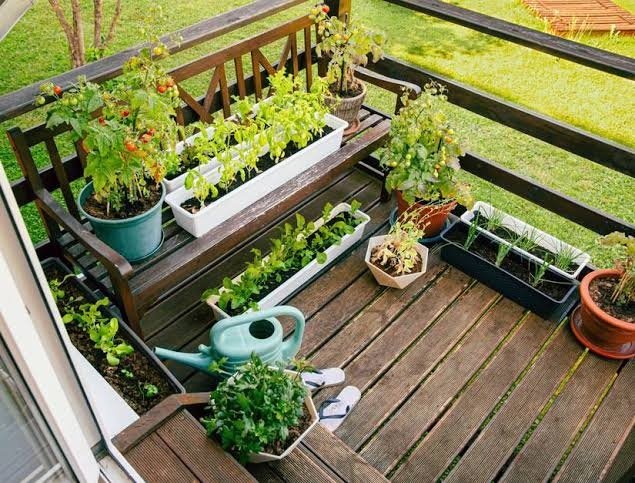
The physics here is straightforward once you see it. A wide, heavy base combined with a light upper body creates a low center of gravity without the total weight of solid concrete. It’s the same principle that keeps a bowling pin standing through more of a nudge than you’d expect from something that shape. Look specifically for resin pots described as having a weighted or ballasted base rather than assuming all resin behaves the same, because a straight-walled lightweight resin cylinder with no base weighting is genuinely one of the worst performers in wind, cheap, tall, and light all at once.
Fiberglass also holds up better than most materials against UV exposure and temperature swings without cracking, which matters on a balcony that bakes all summer, something covered in more detail over on why your balcony feels hotter than a backyard if surface heat is a concern on top of wind.
4. Galvanized Steel and Powder-Coated Metal
Metal containers, done right, combine decent weight with genuinely low, wide profiles, and galvanized or powder-coated finishes resist the rust that would otherwise be metal’s obvious downside outdoors. A round galvanized tub planter, the kind that looks almost like a horse trough, sits low and wide by design, which gives it wind stability that has nothing to do with being especially heavy.
Metal conducts heat fast, though, and that’s a genuine consideration on a sunbaked balcony. A dark metal container in direct afternoon sun can run hot enough to stress root systems, so this material tends to work best either in partial shade, or with a plastic liner pot inside the metal shell that keeps roots a little insulated from the container wall itself. It’s not a dealbreaker, just something to plan around rather than discover in July.
Quick Reference: Wind Performance by Material
| Material | Wind Stability | Typical Weight | Watch Out For |
|---|---|---|---|
| Solid concrete | Excellent | Very heavy | Balcony weight limits, cracking in severe freeze |
| Hypertufa | Very good | Moderate | Rougher finish, more DIY effort |
| Glazed ceramic (wide base) | Good | Moderate-heavy | Freeze-thaw cracking, tall shapes tip easily |
| Weighted resin/fiberglass | Good | Light-moderate | Only true if base is actually weighted |
| Galvanized/powder-coated metal | Good | Moderate | Heat conduction in full sun |
| Unweighted plastic or thin resin | Poor | Very light | Common on windy balconies for the wrong reasons |
None of these materials is a universal answer, and honestly, most stable balcony setups end up mixing two or three of them depending on what’s going where. Heavy concrete near the wall, lighter weighted resin toward spots you actually need to move occasionally, that kind of practical split.
If your setup right now is mostly the thin plastic pots that come standard with nursery plants, that’s usually the first thing worth upgrading before anything else on a windy balcony, and it connects with a broader point I keep coming back to on small balcony garden online: the pot is doing structural work here, not just holding soil. Treating it as an afterthought is where most wind related plant losses actually start.
Frequently Asked Questions
Can I just add rocks to the bottom of a light plastic pot to make it wind resistant? It helps somewhat, but rocks alone rarely fix a fundamentally unstable shape, especially a tall narrow pot. Combining added weight with a wider, lower-profile container gets you much further than weight alone.
Do self-watering pots have any wind advantage? Somewhat, since the built-in water reservoir adds consistent bottom weight that a standard pot doesn’t have. It’s a nice secondary benefit, though it shouldn’t be your main wind-resistance strategy.
Is wood a decent option for windy balconies? Wooden planter boxes can work well since they’re often built low and wide by design, though untreated wood degrades faster outdoors than the materials above, and a fully soil-filled wood box gets heavy fast in a way that circles back to the balcony weight question.
How much does pot shape actually matter compared to material? More than most people assume. A wide, low pot in a mediocre material will often outperform a tall, narrow pot in an excellent material, purely on physics. Shape and material work together, not one instead of the other.
Should every pot on a windy balcony be the heaviest option available? Not necessarily, and that’s usually overkill for smaller plants that don’t catch much wind anyway. Save the heaviest materials for larger plants or exposed corners, and let lighter weighted options handle smaller, lower-profile plantings.
Getting pot material right on a windy balcony is one of those decisions that pays off quietly, mostly by nothing bad happening rather than anything dramatic. For more on the structural science behind why elevated outdoor spaces behave so differently from ground-level gardens, the Wind Engineering research group at the University of Western Ontario has published work on how buildings shape wind patterns at height, which is the same phenomenon playing out in miniature on your railing.