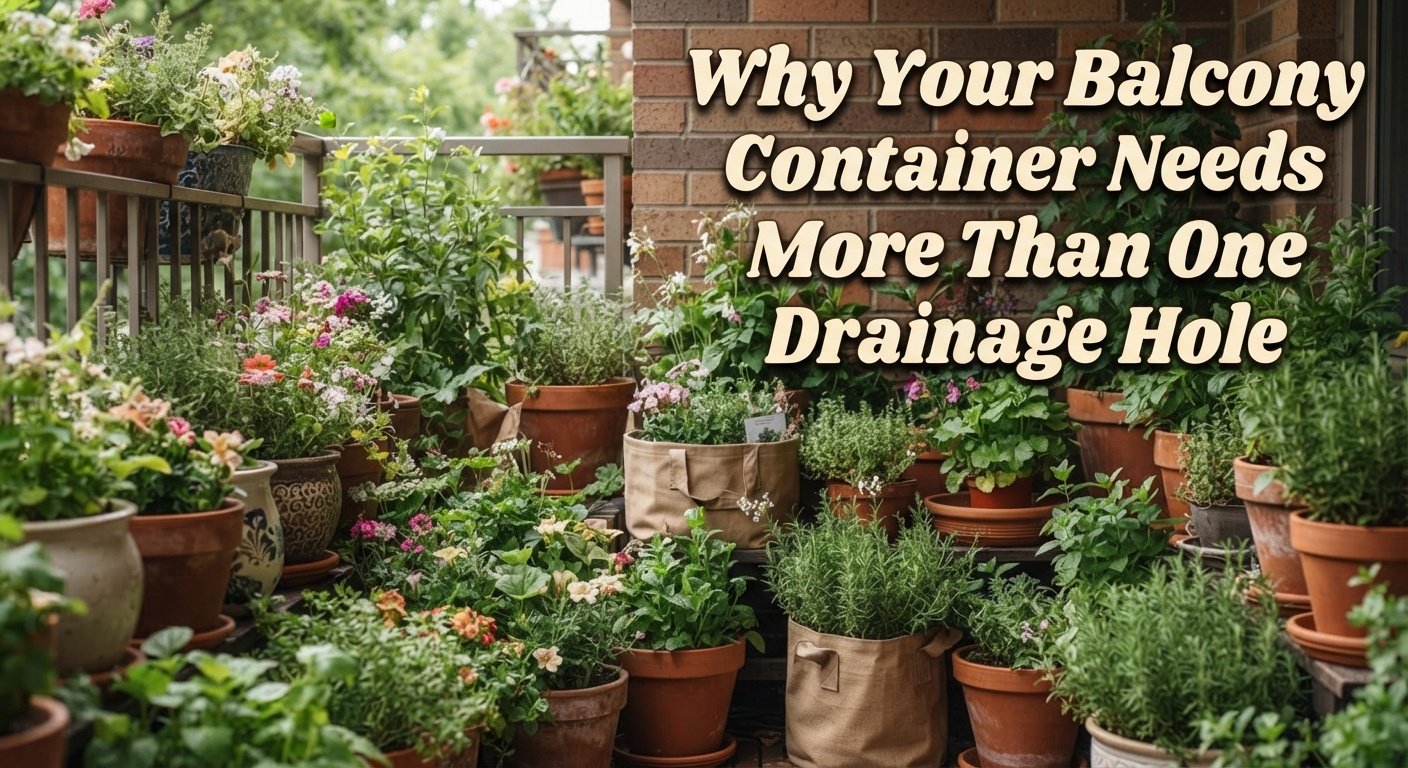
One hole is not enough. That’s the short version, and if you’ve ever pulled a wilting plant out of a pot only to find the bottom two inches sitting in a swamp of gray, sour soil, you already know why.
Most containers sold for balconies come with a single drainage hole punched dead center in the base. It looks tidy. It photographs well for the product listing. And it’s almost never enough to move water through the soil fast enough to keep roots healthy, especially once a plant has filled out and its root mass starts blocking that one opening from the inside.
This matters more on a balcony than it does in a backyard bed, because balcony containers dry out and re-wet on a completely different rhythm. Heat radiating off concrete and glass changes evaporation rates. Wind exposure does too. If you haven’t already sorted out how your specific balcony behaves, it’s worth reading through reading your balcony’s sun before planting before you go any further with container choices, because sun and drainage problems tend to show up together.
1. What Actually Happens Inside a Single-Hole Pot
Water doesn’t just fall straight down and exit. It moves through soil the way it moves through a sponge, following the path of least resistance. In a single-hole container, that path narrows to one small point at the center of the base. Everywhere else on the bottom layer, water pools and sits.
Roots that sit in standing water stop taking in oxygen. Within a few days, especially in warm weather, they start to die back from the tips. The plant above ground shows this as slow wilting that doesn’t respond to more water, yellowing lower leaves, or a general stall in growth that gardeners often misread as a nutrient problem rather than a drainage one.
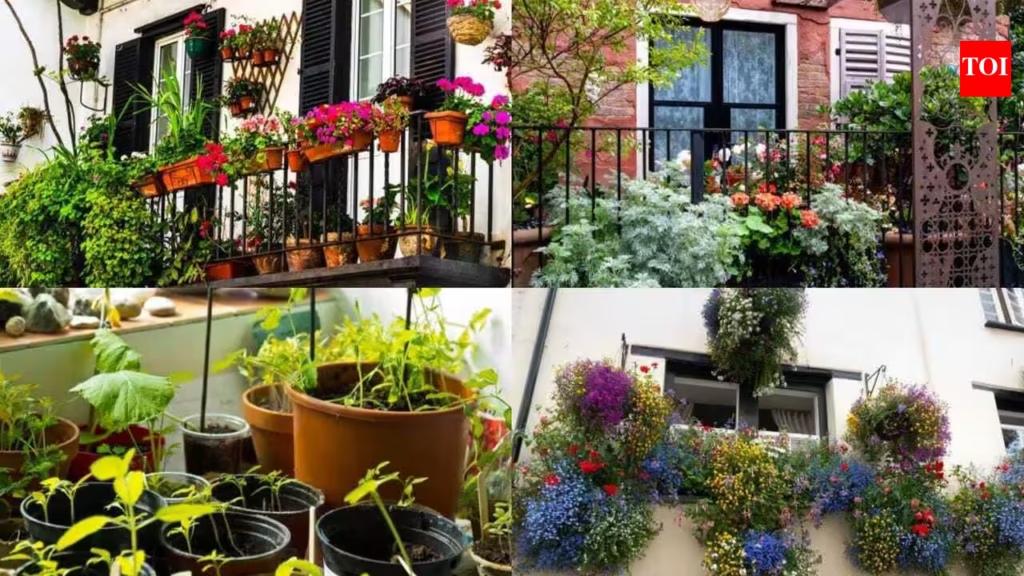
And here’s where people usually go wrong: they see wilting, assume the plant is thirsty, and add more water. That’s the single most common mistake I see on small balcony gardening online, and it makes the root rot worse, not better.
2. Why More Holes Change the Physics, Not Just the Speed
Adding two, three, or four holes doesn’t just make water leave faster. It changes where the wet and dry zones sit inside the pot. With multiple exit points spread across the base, water has several short paths out instead of one long one, so the whole bottom layer drains close to evenly. That means roots throughout the pot experience similar moisture levels instead of a soggy center and dry edges.
This is especially important in deep containers, which is most of what works well on a balcony where floor space is limited and gardeners tend to go vertical instead of wide. A pot that’s twelve inches deep with only a center hole will almost always have a wet layer at the bottom third that never fully dries between waterings, even if the surface looks fine.
If you’re still deciding what container depth and size actually make sense for your space, container size matters more than plant choice at first covers that groundwork, and it pairs directly with what’s happening here. Get the size right, then get the drainage right. Doing one without the other just moves the problem around.
3. How Many Holes Is Actually Enough
There’s no single number that works for every pot, but there’s a reliable way to think about it. Bigger base, more holes. Denser potting mix, more holes. Any container without a raised foot or drainage tray gap underneath needs extra holes because the base sits flush against a surface and water has nowhere to escape sideways.
| Container Diameter | Minimum Recommended Holes | Notes |
|---|---|---|
| Under 8 inches | 1 to 2 | Fine for shallow, fast-draining mixes |
| 8 to 14 inches | 3 to 4 | Spread around base, not clustered center |
| 14 to 20 inches | 4 to 6 | Add a layer of coarse material at the base |
| Over 20 inches (planters, troughs) | 6 or more | Consider drilling along lower sides too |
Drilling extra holes into plastic and resin pots is straightforward with a regular drill bit. Terracotta and ceramic need a masonry bit and a slow, steady hand, since they crack easily under pressure. Wooden planters usually just need a standard bit and a bit of patience with the grain.
4. The Weight and Structure Question Nobody Thinks About
There’s a side conversation worth having here, and it’s one that doesn’t come up often enough. More drainage holes mean water exits faster, which means the container’s total weight changes more quickly after rain or watering. On most balconies that’s a non-issue. On older buildings or balconies with strict load limits, sudden weight shifts from waterlogged containers can actually matter more than people expect, particularly if you’re running several large planters along one railing.
If you haven’t checked what your balcony can actually hold, it’s genuinely worth five minutes with calculating your balcony’s weight load before you commit to a row of large, well-draining containers. Better drainage is good. Ten gallons of trapped water sitting in six pots along one edge is a separate problem entirely, and one that’s easy to avoid once you know the numbers.
5. Setting Up Drainage So It Actually Works Long-Term
Holes alone aren’t the whole system. A few things make the difference between drainage that works for a season and drainage that clogs by midsummer.
Line the base loosely with a layer of coarse material, broken terracotta pieces, coarse gravel, or a mesh screen, so soil doesn’t wash straight out through the new holes and clog them from below. Skip the old advice about a thick gravel layer improving drainage on its own; it doesn’t, and it just eats into usable soil depth. It’s there to keep the holes open, nothing more.
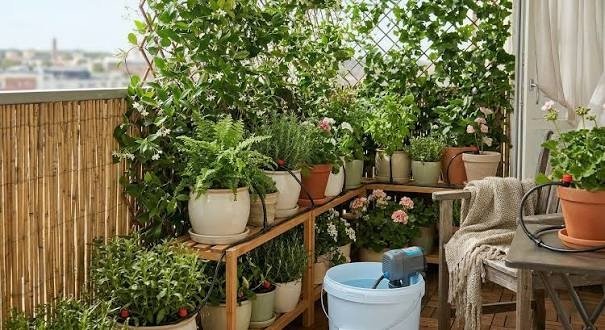
Elevate the pot slightly off the balcony floor with pot feet or a simple tray with a raised lip. A pot sitting flush against a hot concrete surface can have its base holes partially blocked just by contact, and on a balcony that gets strong afternoon sun, that surface heat adds another layer of stress on top of the drainage issue. For balconies that run hot, why your balcony feels hotter than a backyard explains some of what’s driving that, and it’s usually more than people assume.
Check the holes every few weeks once plants mature. Root systems grow toward moisture and oxygen, and established roots will sometimes work their way into a drainage hole and partially plug it from the inside. A quick look after watering, checking whether water is actually running through within a minute or two, tells you everything you need to know.
A pot with proper drainage still needs the right soil, the right watering rhythm, and the right amount of light for what’s growing in it. But none of that matters much if water can’t leave the container in the first place. Drill the extra holes before you plant, not after you’ve already lost a few rounds of seedlings figuring it out the hard way.
FAQs
Do self-watering containers still need extra drainage holes? Yes, though the logic shifts slightly. Self-watering pots use a reservoir system, but the soil chamber above still needs a way to shed excess water if the wicking system oversaturates, which happens more often than manufacturers admit.
Can I add holes to a glazed ceramic pot without cracking it? Usually, if you use a masonry or ceramic-specific drill bit, go slowly, and keep the area cool with a bit of water while drilling. Rushing it is what causes cracks, not the drilling itself.
Is it better to drill holes on the sides instead of the bottom? For very large planters, side holes near the base work as a good supplement to bottom holes, especially if the bottom sits flush against a surface. They shouldn’t fully replace bottom drainage though.
How do I know if my current drainage setup is actually a problem? Water the pot fully and time how long it takes water to appear at the base. Anything beyond two or three minutes for a standard potting mix usually points to insufficient or blocked drainage.
Will more holes mean I have to water more often? Slightly, yes, particularly in smaller containers. That trade-off is almost always worth it compared to the alternative of root rot from standing water, and it’s one reason checking your balcony’s sun exposure matters when you’re planning a watering schedule.
For more on setting up containers correctly from the start, small balcony garden online has a broader rundown worth bookmarking: small balcony gardens, a simple guide to your first pots.