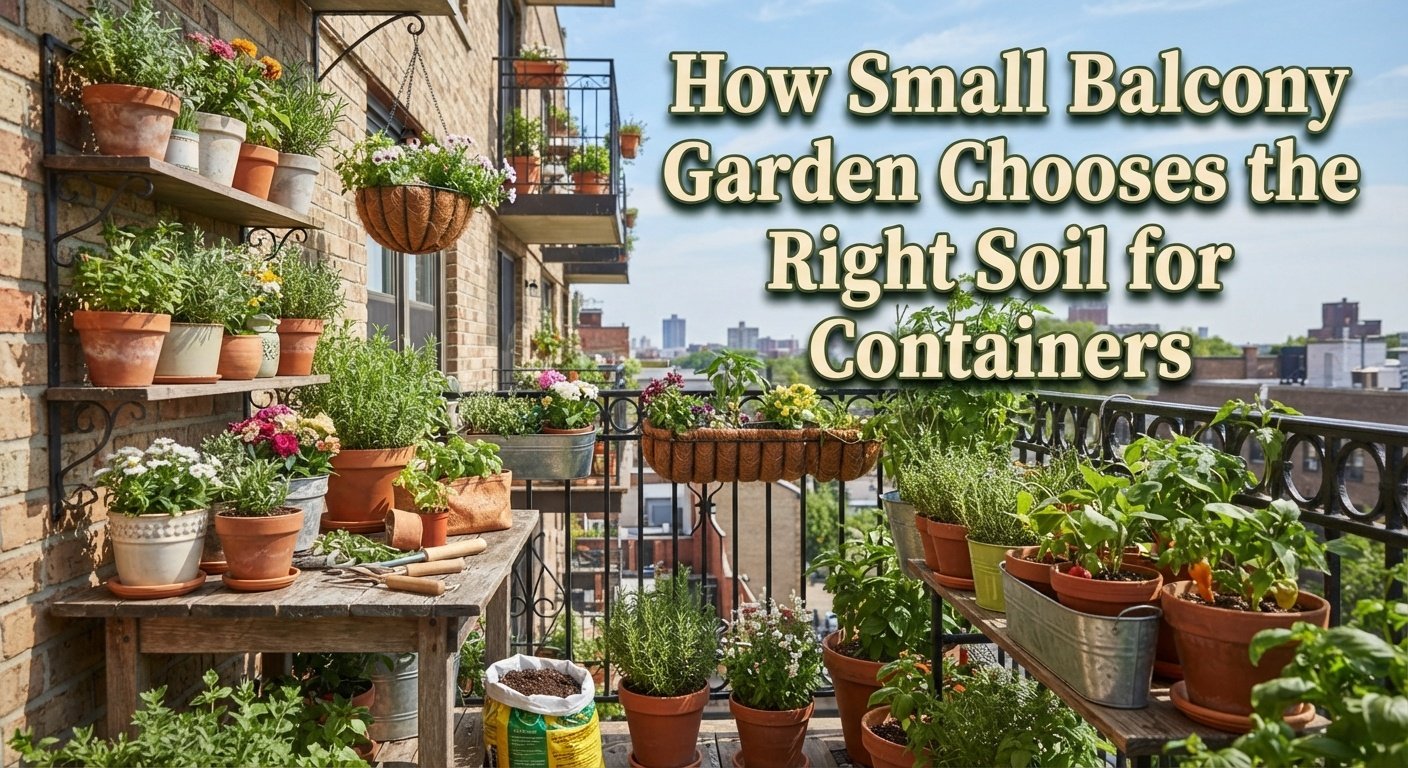
My first year growing on a balcony, I filled three pots with topsoil left over from a backyard project at my mother’s place. Free dirt felt like a smart move at the time. Within two weeks, that soil had compacted into something closer to a brick than a growing medium, and every plant in it looked stunted and thirsty no matter how much I watered. That mistake taught me more about container soil than any bag label ever has.
Garden soil and container soil are not interchangeable, and once you understand why, the rest of this gets a lot simpler.
1. Why Bagged “Potting Soil” Isn’t Actually Soil
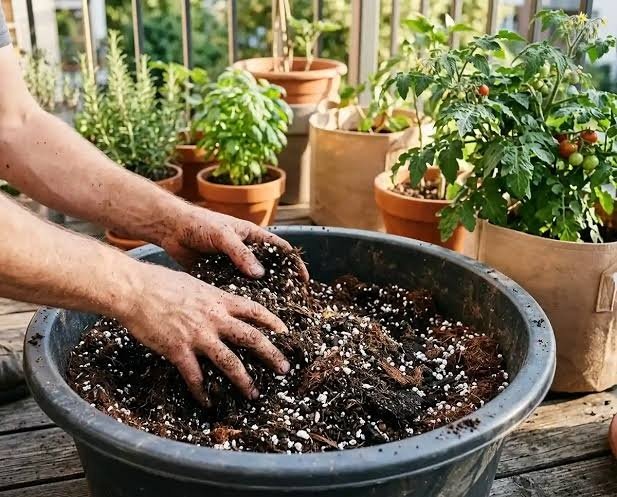
Here’s the thing that surprised me early on: most quality potting mixes contain very little actual soil. They’re built from peat moss or coconut coir, perlite or vermiculite, sometimes composted bark, and little else. That’s intentional. Real soil, the kind from a garden bed, compacts under its own weight in a confined container, squeezing out the air pockets that plant roots depend on to breathe.
A container is a closed system in a way a garden bed isn’t. There’s no earthworm activity loosening things up over time, no deep soil structure built over years, and drainage happens only through whatever holes are in the bottom of the pot. Potting mix is engineered to stay loose and airy specifically to compensate for all of that. Garden soil was never designed to do this job, and it shows fast once it’s stuck in a pot.
2. The Base Mix I Actually Reach For
I’ll be honest, I don’t measure this with scientific precision every time, but there’s a ratio I come back to for most general-purpose balcony containers, and it’s worked reliably for years across herbs, greens, and small fruiting plants alike.
| Component | Rough Proportion | What It’s Doing |
|---|---|---|
| Peat moss or coco coir | 50-60% | Holds moisture, provides structure |
| Perlite or coarse vermiculite | 20-25% | Creates air pockets, prevents compaction |
| Compost or worm castings | 15-20% | Adds nutrients and beneficial microbes |
| Slow-release fertilizer | Small amount, per label | Feeds through the season |
You can mix this yourself from bulk ingredients, or you can buy a bagged premium potting mix and just amend it with a bit of extra perlite, which is honestly what I do more often than not these days. Bagged mixes have gotten a lot better over the years, but a lot of them are still slightly heavier and denser than I’d like straight out of the bag, especially the cheaper ones.
3. Adjusting the Ratio for What You’re Actually Growing
The base mix above works fine as a starting point, but different plants want different things, and treating every container the same way is a quiet mistake that shows up slowly over a season rather than immediately.
Herbs like rosemary, thyme, and lavender want something leaner and faster-draining than the base mix provides. Bump the perlite up to 30 or even 35 percent and cut back on compost, since these plants come from lean, rocky soils originally and actually resent being too well-fed and too moist.
Leafy greens and lettuce want the opposite adjustment. They’re shallow-rooted and thirsty, so a bit more compost and moisture-holding coir works in their favor, and they won’t punish you for slightly richer soil the way herbs will.
Tomatoes and peppers do well with the base mix largely unchanged, though adding a handful of extra compost partway through the season helps sustain them through their heaviest fruiting stretch, since container plants exhaust nutrients faster than plants growing in the ground. If you’re still working out how much container these plants actually need before worrying about the mix inside it, container size matters more than plant choice at first try is worth reading alongside this, since soil volume and soil composition are really two halves of the same root-health question.
4. Where People Usually Go Wrong
The single biggest mistake I see, and it was my own mistake too, is reaching for bagged “garden soil” or “topsoil” instead of potting mix because it’s cheaper and sitting right next to it on the shelf. Read the bag. If it says garden soil, top soil, or raised bed soil, it’s not built for containers, full stop, no matter how good a deal it looks like.
A close second mistake is never refreshing soil between plantings, using the same mix in the same pot year after year until it’s compacted and nutritionally spent. Potting mix breaks down over time, the organic matter decomposes, and the structure that kept it loose and airy gradually collapses. A mix that performed beautifully in its first season can be noticeably denser and less effective by its third, even with nothing visibly wrong with the plant growing in it.
And a smaller but sneaky one: using soil that’s too heavy on upper-floor balconies with real weight restrictions. Compost-heavy, moisture-retentive mixes weigh considerably more once saturated than a lighter, perlite-forward blend, and if you’re filling several large containers, that difference adds up. This connects directly with calculating your balcony’s weight load, since soil choice is one of the more overlooked variables in that whole calculation, right alongside pot material itself.
5. Refreshing Soil Without Starting Completely Over
You don’t need to dump and replace an entire container’s soil every single season, and honestly, that’s more work and more expense than most balconies need. What I do instead is scrape off the top two or three inches at the start of each new growing season, work in fresh compost and a bit of new perlite, and let that refreshed top layer feed down as I water through the season.
Every second or third year, for containers holding heavier feeders like tomatoes, a full soil replacement makes more sense, since the deeper structure really has broken down by that point and topping off the surface alone won’t fix it anymore. I keep a rough mental note of which pots are due, though I’ll admit I’ve definitely let one or two go a season longer than I meant to.
If you’re just getting your first round of pots set up and soil hasn’t even entered the picture yet, small balcony garden online’s guide to your first pots is a good place to start before this soil conversation, since pot material and drainage decisions actually affect how your soil mix behaves once it’s in there. Get those two things right together and a lot of the guesswork disappears.
There’s a satisfying rhythm to this once you’ve done it a couple of seasons. You start to recognize tired soil by look and feel before a plant even shows visible stress, and that instinct saves more container gardens than any product on a shelf.
Frequently Asked Questions
Can I reuse potting soil from a plant that had pest or disease problems? It’s safer not to. Fungal spores and some pests can persist in old soil, so if a plant struggled with something like root rot or a fungus gnat infestation, start that container fresh next time rather than risk carrying the problem forward.
Is it worth buying an expensive premium potting mix, or is the cheap bag fine? For most casual balcony growing, a mid-range mix does the job, though cheaper bags tend to be denser and compact faster, meaning you’ll be refreshing or replacing them sooner. If you’re growing something that stays in the same pot for years, like a perennial herb, spending more upfront tends to pay off.
How do I know when my container soil actually needs replacing versus just refreshing? If water runs straight through without the soil holding moisture, or conversely pools on top and drains painfully slowly, that’s usually a sign the structure has broken down and a full replacement is overdue rather than a quick top-off.
Do I need different soil for indoor versus outdoor balcony containers? Not dramatically different, though indoor mixes are sometimes formulated to be lighter and less prone to attracting gnats, since there’s less airflow and natural predation indoors to keep pest populations in check.
Should I add sand to lighten heavy container soil? Generally no. Sand mixed into peat or coir based soil tends to settle and compact rather than aerate, almost the opposite of what you’re trying to achieve. Perlite or vermiculite does that job far better for a fraction of the weight.
Getting the soil right is one of those unglamorous decisions that quietly determines how much trouble the rest of the season gives you. For a deeper technical breakdown of soilless mix components and why they behave the way they do, Cornell’s Cooperative Extension has a solid resource on container growing media worth a look.