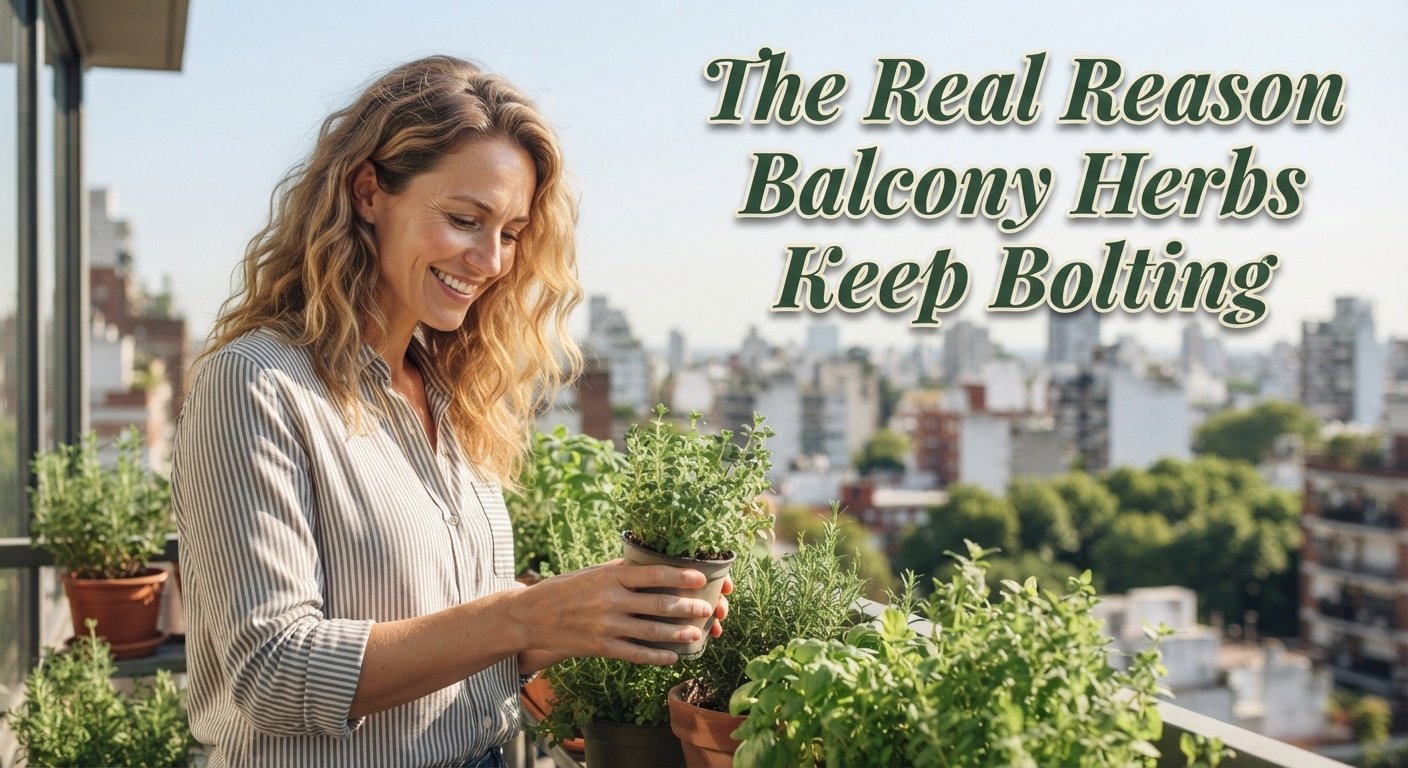
Last July, a reader wrote in asking why her basil had gone from lush and bushy to a spindly stalk topped with white flowers in under two weeks. She’d done everything the seed packet said. Watered it, fed it, gave it a sunny spot. Then it just ran for the exit. That question comes up so often on small balconies that it’s worth pulling apart properly, because the usual advice (“pinch it back!”) only treats the symptom.
Bolting isn’t really about neglect. It’s a plant’s stress response, and balconies happen to be one of the most stressful environments a herb can grow in.
1. What Bolting Actually Is
Bolting is when a plant abandons leaf production and rushes to flower and set seed. It’s not a malfunction. From the plant’s point of view, it’s a survival move. Something in its environment has signaled that conditions are getting worse, so it needs to reproduce now rather than later.
For leafy herbs like basil, cilantro, and arugula, this is bad news for us, since we want the leaves, not the seeds. Once a plant bolts, the leaves that remain often turn bitter or tough, and the plant puts most of its remaining energy into the flower stalk instead of new growth.
2. Why Balconies Push Herbs Into Bolting Faster Than Garden Beds
A raised bed has soil mass that buffers temperature swings. A balcony pot doesn’t. This is the piece most guides skip entirely.
A terracotta pot sitting against a south-facing railing can hit soil temperatures 15 to 20 degrees higher than the surrounding air on a hot afternoon. If you’ve ever wondered why your balcony basil wilts by afternoon, heat stress at the root zone is very often the real culprit, and it’s also one of the biggest bolting triggers there is.
Wind matters too, and it’s underrated. Herbs on a breezy balcony lose moisture through their leaves faster than the roots can replace it, which reads to the plant as drought stress even when the soil feels damp on top. If your space gets gusty, it’s worth checking whether you’re dealing with a balcony too windy for a garden before blaming your watering schedule.
And then there’s light duration, not just light intensity. Long summer days extend the hours a plant spends photosynthesizing, and for herbs like cilantro that are genetically wired to bolt as days lengthen, a bright reflective balcony can push that trigger earlier than it would happen in a shadier backyard bed.
3. The Mistake Almost Everyone Makes
Here’s where people usually go wrong: they see the flower stalk forming and immediately think “I need more water.” So they water more. And more. Which, on a balcony where drainage is already limited by pot size, tips straight into root stress, which triggers even more bolting.
The fix isn’t more water. It’s addressing the actual stressor, which is almost always heat, root confinement, or light duration, not thirst.
Root confinement deserves its own mention. A herb crammed into a pot two sizes too small hits its bolting trigger far sooner than the same plant given room to spread. This is one of the reasons container size matters more early on than which variety you picked. If you’re setting up pots for the first time, it’s worth reading through why container size matters more than plant choice at first before you buy another packet of seeds.
4. What Actually Slows Bolting Down
None of this stops bolting entirely. Every annual herb bolts eventually, that’s just its life cycle. But you can buy weeks, sometimes a full season, with a few adjustments.
| Stressor | What’s Happening | What Helps |
|---|---|---|
| Root zone heat | Soil overheats in direct sun, especially in dark or terracotta pots | Light-colored pots, mulch the surface, move pots away from reflective walls |
| Root confinement | Roots hit the pot wall and signal reproduction | Upsize pots, especially for basil and cilantro |
| Long daylight | Extended light hours trigger flowering genes | Partial afternoon shade instead of full sun all day |
| Inconsistent watering | Drought stress mimics end-of-life urgency | Even, regular watering rather than heavy then dry cycles |
| Overcrowding | Competition for light and nutrients | Thin seedlings early, don’t over-sow |
Succession planting helps more than any single trick on this list. Instead of one basil plant you’re babying all summer, start a new one every three to four weeks. When the first bolts, which it will, the next is already filling in.
Choosing slow-bolt varieties also makes a real difference, and it’s an easy swap. Slow-bolt cilantro and heat-tolerant basil cultivars exist specifically because this is such a widespread problem for container growers.
5. Once It’s Bolted, What Now
You don’t have to pull it immediately. Flowering herbs attract pollinators, and basil flowers in particular are edible, with a milder version of the leaf flavor. Cilantro flowers eventually turn into coriander seed, so if you cook with coriander, a bolted plant isn’t wasted, it’s just shifted purpose.
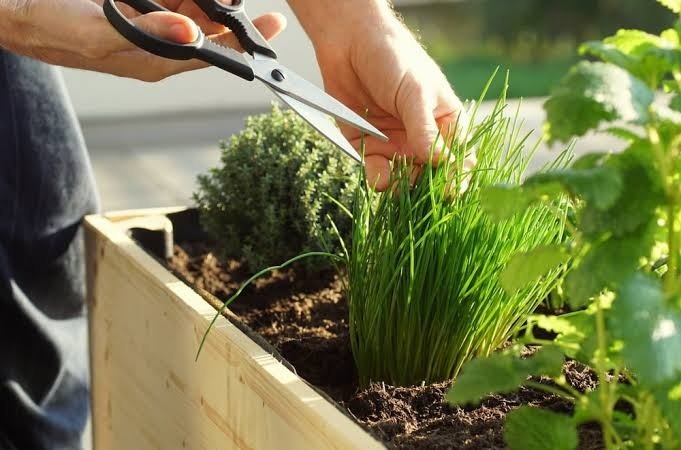
If you do want to keep the plant productive a bit longer, pinch the flower stalk out as soon as you spot it, before it fully opens. That can buy another week or two of usable leaves, though it won’t reverse the process once it’s underway.
I’d also gently push back on the instinct to treat a bolted plant as a failure. It grew, it fed you for weeks, and now it’s doing exactly what it evolved to do. Some seasons that’s just how it goes.
For gardeners still working out their setup, it’s worth going back to basics on reading your balcony’s sun exposure before planting, since so much of the bolting puzzle traces back to matching the plant to the actual light and heat conditions of your specific spot, not the general advice on the seed packet.
Most of what looks like bad luck with balcony herbs is really just a mismatch between a plant’s expectations and a balcony’s particular version of stress. Once you see it that way, the fixes get a lot less mysterious.
FAQs
Does pinching off flowers stop bolting for good? No. It delays it. Once a plant has switched into reproductive mode, pinching buys a short window of usable leaves but the underlying trigger is still active.
Is bolted basil safe to eat? Yes, leaves and flowers are both edible, though older leaves on a bolted plant tend to taste more bitter and the texture gets tougher.
Why does cilantro bolt faster than basil on the same balcony? Cilantro is more sensitive to day length and heat than basil. It’s genuinely one of the fastest herbs to bolt in containers, which is why slow-bolt cultivars are worth seeking out specifically for balcony growing.
Can I save seeds from a bolted herb? Yes, and it’s one of the few upsides. Let the flowers fully mature and dry on the stalk, then collect the seed heads before they scatter.
Does a bigger pot really delay bolting, or is that overstated? It’s not overstated. Root confinement is one of the clearest bolting triggers in container herbs, and moving up even one pot size can add real weeks before flowering starts.
If you want to go deeper on matching herbs to your specific setup, the guide on best balcony herbs for windy spots is a good next read.