
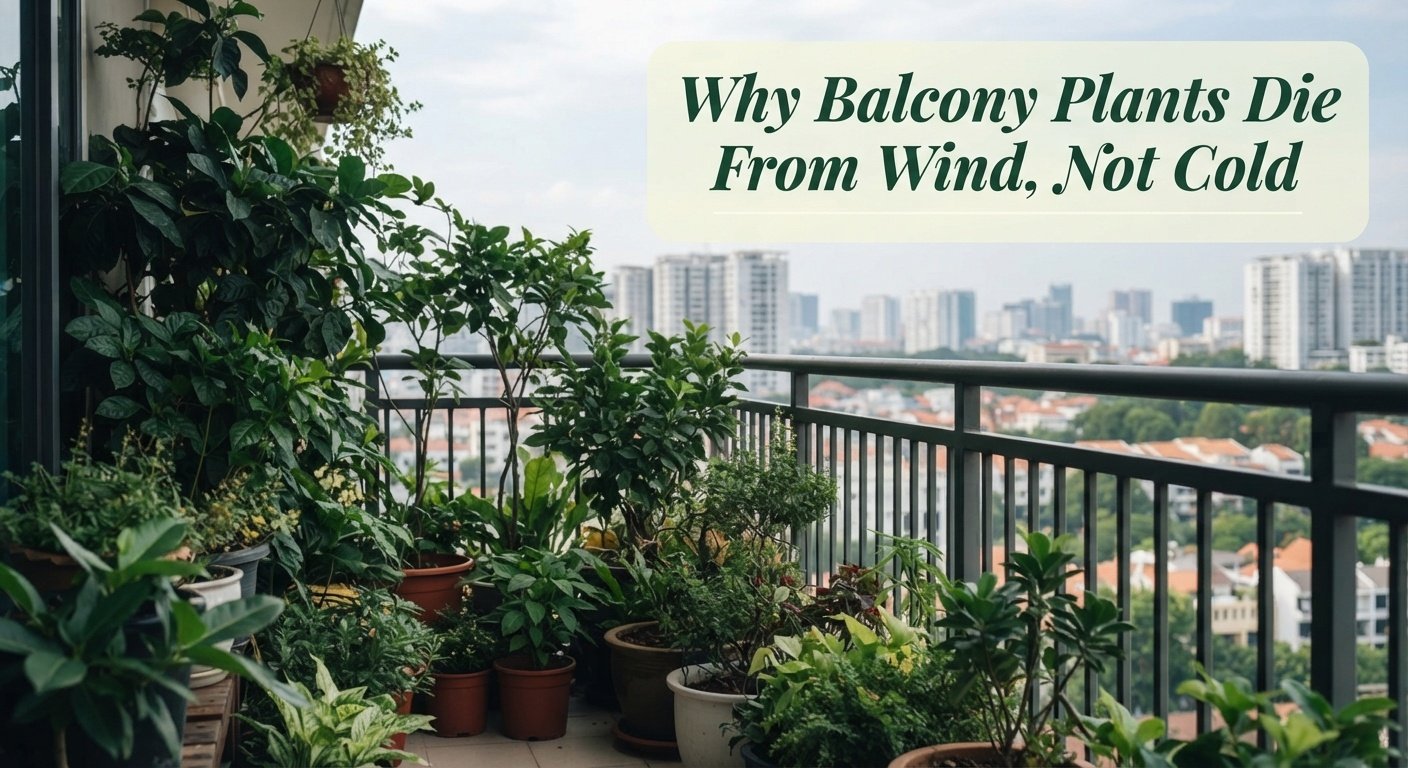
Most people who lose a balcony plant in the colder months blame the temperature. It’s an easy conclusion to reach, and it’s usually wrong. Cold air alone rarely kills a plant that’s suited to the season. What actually finishes off most balcony plants between autumn and early spring is wind, and almost nobody checks for it until the damage is done.
1. The Cold Excuse Doesn’t Hold Up to Scrutiny
Here’s the belief: balcony plants die in winter because it gets too cold for them. It sounds reasonable, and it’s the explanation almost every grower reaches for first.
Why it’s wrong: most plants sold for outdoor container growing are rated for temperatures well below what a typical balcony experiences, even in a cold snap. A hardy perennial rated to survive 20°F in the ground can still die on a balcony where the air temperature never drops below freezing, which tells you the cold itself isn’t the mechanism doing the damage.
What’s actually true: wind strips moisture out of leaves and stems far faster than the roots can replace it, especially when the soil is already cool and root uptake has slowed down. This is called wind desiccation, and it kills plants that would have sailed through the same temperature in a sheltered spot without any trouble at all. A plant doesn’t need freezing air to die of exposure. It needs constant airflow pulling water out of its tissue faster than it can pull water back in from the soil.
If you’ve never actually assessed how exposed your specific balcony is, that’s worth doing before blaming the thermometer for a plant loss. Checking whether your balcony is too windy for a garden takes about ten minutes and tells you more than any weather app will.
2. High-Rise and Corner Balconies Get Hit the Hardest
Wind exposure isn’t uniform across balcony types, and this is where a lot of confusion comes from. A ground-floor balcony tucked behind a building might experience almost no wind stress, while a unit on the eighth floor of the same building can face sustained gusts strong enough to snap stems and shred leaves. Wind speed generally increases with height, and buildings create wind tunnel effects around corners that can double or triple the effective wind speed a plant experiences compared to open ground at the same elevation.
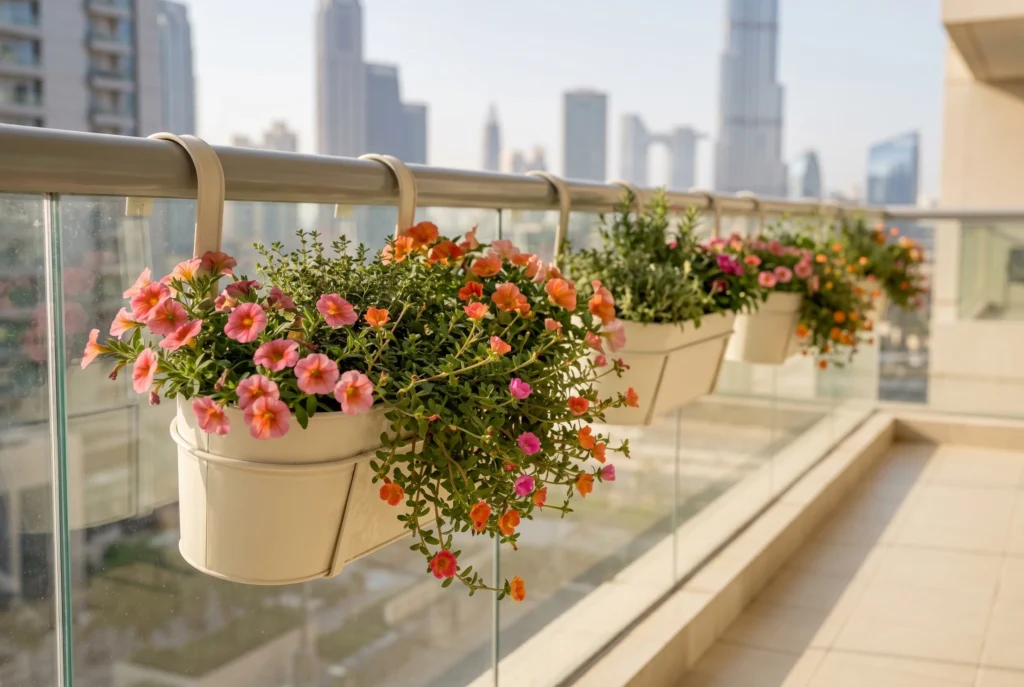
Corner units are particularly rough because they can catch wind from two directions depending on the weather pattern that day. If your small balcony garden setup is on a corner or a high floor, treat wind as the default assumption rather than something you’ll only worry about if it comes up.
Quick-reference: relative wind exposure by balcony position
| Balcony type | Typical exposure | Risk level |
|---|---|---|
| Ground floor, sheltered by structure | Low | Minimal |
| Mid-rise, open aspect | Moderate | Watch closely in exposed seasons |
| High-rise, straight-on aspect | High | Significant, plan for it |
| High-rise, corner unit | Very high | Treat as a priority factor |
3. Pot Material and Plant Structure Make a Bigger Difference Than People Expect
Here’s where people usually go wrong. They pick plants based on cold hardiness ratings and completely ignore whether the plant’s physical structure can handle wind at all. A tall, top-heavy plant in a lightweight plastic pot is a bad combination on an exposed balcony regardless of the season, because the wind doesn’t need to be freezing to tip the pot over or snap a stem at the base.
Heavier pot materials help with stability, though they come with their own trade-offs. Terracotta and glazed ceramic sit lower to the ground in terms of center of gravity relative to their weight, and while terracotta struggles in extreme heat for reasons unrelated to wind, that same weight becomes an asset once the season shifts and wind resistance matters more than heat retention. If you’re choosing pot materials with wind specifically in mind, it’s worth reading through which pot materials actually hold up in windy spots before buying anything new, since this changes depending on your specific exposure level and not every wind-resistant material suits every plant.
Plant structure matters just as much as pot weight. Broad-leafed plants catch wind like a sail and transpire moisture faster under constant airflow. Narrow-leafed, fine-textured plants, or anything with a naturally low, compact growth habit, tend to handle the same wind conditions with far less stress. This is one reason certain herbs consistently outperform broader-leafed vegetables on exposed balconies through the colder months, and it’s worth looking specifically at herbs suited to windy spots if wind is the dominant condition you’re designing around.
4. The Damage Often Looks Like Cold Damage, Which Is How the Myth Survives
Wind-damaged leaves can look remarkably similar to cold-damaged leaves. Both produce browning, curling, and a dried, brittle texture, and by the time a grower notices the damage, the specific weather event that caused it is long gone. So the plant looks cold-burned, the calendar shows it happened during a cold snap, and the conclusion writes itself even though the cold wasn’t the actual mechanism.
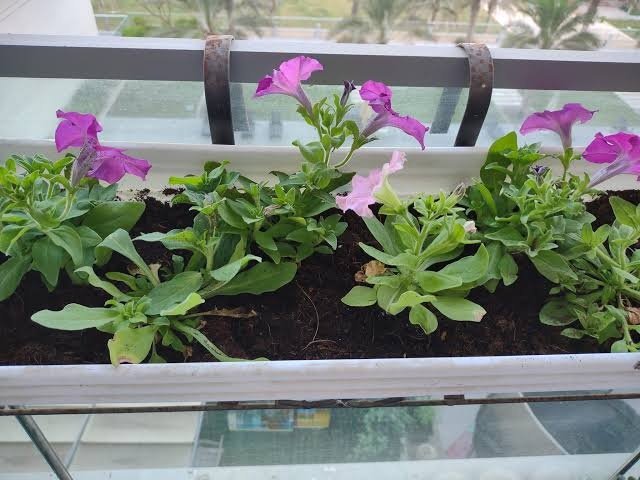
One tell that separates the two: cold damage tends to show up more evenly across the plant and often follows an actual frost event you can verify against local weather records. Wind damage tends to be directional, worse on the side of the plant facing the prevailing wind, and can happen on days that weren’t particularly cold at all, sometimes even on a clear, sunny, blustery afternoon that felt perfectly pleasant to a person standing there.
And honestly, I used to make this mistake myself early on, blaming a dead rosemary plant on an overnight temperature dip that, when I actually checked the records afterward, never got anywhere near freezing. The real cause was three days of sustained wind off a nearby open lot that I hadn’t accounted for at all.
What to Actually Do About It
Windbreaks don’t need to be elaborate. A simple mesh screen, a strategically placed taller plant, or even repositioning containers a few feet away from the most exposed corner of the balcony can cut wind stress substantially. Grouping pots closer together also helps, since plants create a modest buffering effect for each other that isolated containers don’t get.
Watering strategy shifts too. On sustained windy days, plants lose moisture faster even if the air feels cool, so checking soil moisture more frequently during windy stretches matters more than sticking to a fixed schedule. This connects back to a broader pattern worth understanding on any small balcony garden setup, which is that why balcony pots dry out faster than garden beds has almost as much to do with airflow as it does with sun exposure or pot material.
FAQs
Can wind actually kill a plant even in mild weather? Yes, and this surprises people every time. Sustained wind pulls moisture from leaves regardless of air temperature, so a mild but constantly windy day can stress a plant more than a still, cold one.
How do I tell if my balcony has a wind problem I haven’t noticed? Watch for consistent leaning in one direction, soil that dries out much faster than expected, or leaf browning concentrated on one side of the plant. Any of these point toward wind exposure as a factor worth investigating properly.
Do windbreaks reduce light too much to be worth using? A well-placed mesh screen or semi-open barrier reduces wind speed substantially without blocking meaningful light, since it works by disrupting airflow rather than creating solid shade. Solid barriers are more likely to cause a light trade-off, so mesh or slatted options are usually the better choice.
Is there a wind speed where I should just bring plants inside? There’s no single universal number since it depends on the plant, but sustained wind in the 25 to 30 mph range starts causing physical damage to most container plants, and gusts above that regularly tip over lighter pots. If a storm forecast mentions sustained wind in that range, moving vulnerable containers to a sheltered spot is worth the effort.
Why does this seem worse in fall and early spring specifically? Those transitional seasons often bring the strongest sustained winds in a lot of climates, combined with plants that are already somewhat stressed from the seasonal shift. A plant at full summer vigor handles wind better than the same plant heading into dormancy or just coming out of it.
Once you start factoring wind into plant decisions the same way you’d factor in sun exposure, a lot of seasonal losses that used to feel random start making a lot more sense. It’s rarely the thermometer doing the damage. It’s almost always the thing blowing past it.
For more on how wind affects plant water loss specifically, the Colorado State University Extension has a clear technical explanation of transpiration and wind stress worth reading if you want the underlying mechanism.