
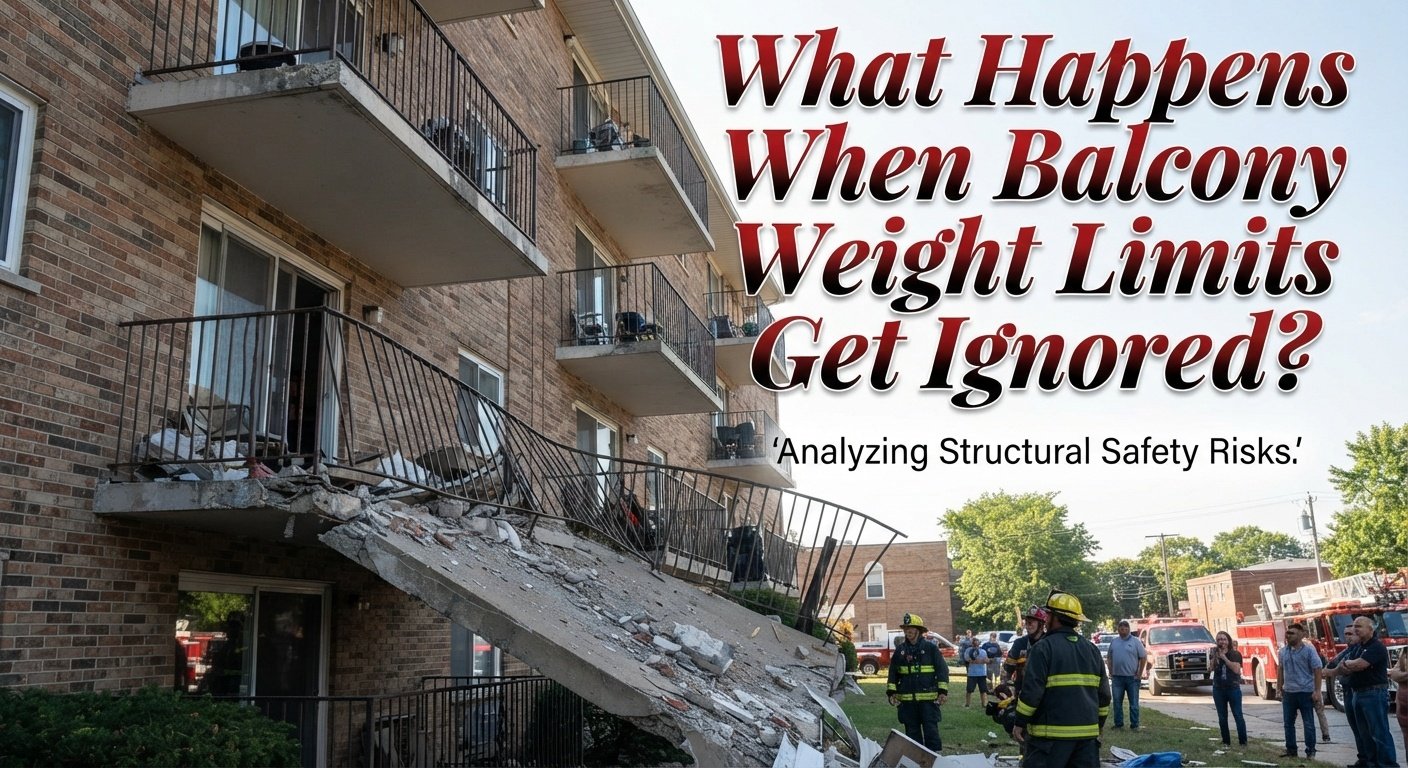
A cracked balcony slab in a mid-rise building rarely makes headlines unless someone gets hurt. Structural engineers who inspect these failures after the fact tend to find the same thing: not a single dramatic overload, but months of accumulated weight nobody added up. Wet soil, waterlogged pots, a bench, a small table, maybe a water barrel for the hot months. None of it looked like much on its own.
This isn’t a scare piece. Most balconies handle container gardens just fine. But the ones that don’t tend to fail in the same predictable, avoidable ways, and it’s worth understanding why before you fill yours with pots.
1. What “Weight Limit” Actually Means on a Residential Balcony
Balconies are rated by live load capacity, usually expressed in pounds per square foot or kilograms per square meter. In most residential buildings across North America, that number sits somewhere between 40 and 60 psf, though older buildings and cantilevered balconies can be rated lower.
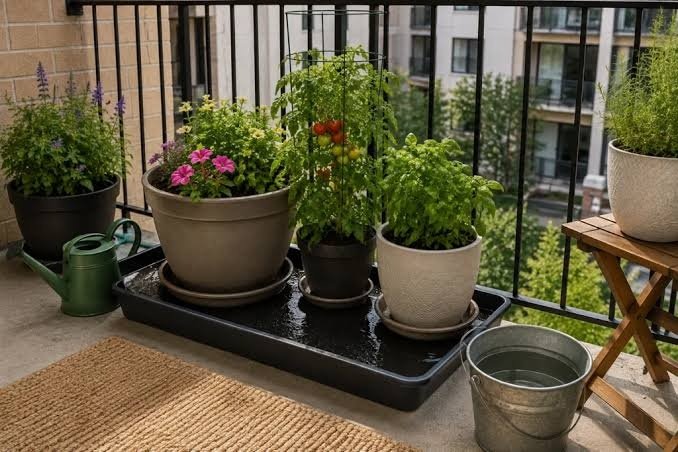
Here’s the part that trips people up: that number covers everything on the balcony at once, not just your plants. People standing there, furniture, snow load in winter, the pots, the soil, the water sitting in that soil after a good rain. It’s a shared budget, not a plant allowance.
If you’ve never actually worked out what your balcony can hold, the guide on calculating your balcony’s weight load walks through the math in more detail than I have room for here, and it’s worth doing before you commit to bigger containers.
2. Where the Weight Actually Comes From
Soil is the part everyone underestimates. Dry potting mix runs light, somewhere around 20 to 30 pounds per cubic foot. Once it’s saturated after watering, that same soil can weigh close to 50 percent more. A 24-inch container that felt manageable dry can genuinely surprise you once you’ve watered it thoroughly for a week straight.
Pot material matters just as much as soil. Glazed ceramic and concrete pots carry serious dead weight before a single plant goes in them. Plastic and fiberglass containers hold far less structural cost for the same footprint, which is one reason they’re such a common recommendation for balcony growers even though they’re less exciting to look at.
Then there’s the stuff people forget to count. Drainage trays full of runoff water. A rain barrel. Decorative stone or gravel mulch, which is heavier per cubic foot than it looks. Furniture. A person standing on the balcony while watering everything else that’s already there.
3. Where People Usually Go Wrong
The mistake I see constantly is treating weight capacity as a one-time check instead of an ongoing one. Someone calculates their load carefully in spring with three small pots, feels confident, and then adds five more containers over the summer as the garden grows on them. Nobody redoes the math.
And it’s an easy trap to fall into, because balconies don’t groan or creak as a warning the way an overloaded shelf might. Concrete and steel structures typically fail silently, with stress cracks that aren’t visible from where you’re standing, which is exactly why the rated limit exists in the first place rather than relying on how the balcony “feels.”
The other common error is clustering weight in one spot instead of distributing it. A row of heavy pots pushed against the railing puts concentrated stress right where the structure is often weakest, particularly on older cantilevered balconies that weren’t engineered with much of a safety margin to begin with.
4. A Practical Way to Actually Stay Within Limits
You don’t need an engineering degree, but you do need to actually add things up instead of eyeballing it.
Quick-reference weight guide for common balcony setups:
- Small plastic pot (12 in), moist soil, mature herb: roughly 15 to 20 lbs
- Medium plastic pot (16 in), moist soil, small vegetable plant: roughly 30 to 40 lbs
- Large ceramic pot (20 in), moist soil, dwarf shrub: roughly 60 to 90 lbs
- Standard folding chair: roughly 8 to 12 lbs
- Full watering can, standing: roughly 15 to 20 lbs
Add those up against your balcony’s rated psf multiplied by its square footage, and you’ll get a real number instead of a guess. If the total is uncomfortably close to the limit, the fix isn’t necessarily fewer plants. Switching a couple of your biggest containers from ceramic to lightweight plastic or fiberglass can free up real capacity without losing a single plant.
Small Balcony Garden gets messages fairly often from readers who assumed their setup was fine because “it’s just a few pots,” and once they actually total the numbers, they’re surprised how close to the ceiling they were. It’s not usually a design flaw. It’s just math nobody did.
5. Signs Something Is Already Under Too Much Stress
A few things are worth checking periodically, especially if you’ve been steadily adding to your garden over a season or two. Hairline cracks near where the balcony meets the exterior wall. Any noticeable sag or bounce when you walk across it. Doors or windows near the balcony that have started sticking, which can indicate the structure has shifted slightly. Water pooling in a spot where it didn’t used to.
None of these guarantee a problem, and older buildings sometimes have quirks that are unrelated to load. But if you notice more than one at once, it’s worth having the balcony inspected rather than assuming it’s fine because nothing has happened yet. This matters more on older buildings and rental units where you may not know the original engineering specs at all.
If your balcony faces ongoing wind exposure on top of weight considerations, it’s also worth reading through whether your balcony is too windy for a garden, since wind load and structural stress can compound each other in older buildings in ways people don’t expect.
There’s no dramatic ending to this one. Just add up your numbers before you fall in love with a big terracotta planter, and check back in every time the garden grows past what you originally planned for.
FAQs
How do I find out my balcony’s actual weight limit? Check your building’s original architectural or structural documents if you can access them, or ask your building manager or landlord directly. If neither is available, a structural engineer can assess it, though for most residential balconies the standard 40 to 60 psf range is a reasonable starting assumption pending confirmation.
Is it really dangerous, or is this overly cautious advice? Balcony collapses from overload are rare but they do happen, and they’re almost always preventable. Treating the limit seriously costs you nothing extra, so there’s little reason not to.
Do raised garden beds on balconies count differently than pots? No, they carry the same structural math, and they’re often heavier per square foot than individual pots since the soil volume is continuous rather than broken up.
What’s lighter, plastic pots or fabric grow bags? Fabric grow bags are usually lighter empty, but once filled and watered, the difference mostly disappears since soil and water make up nearly all the weight either way.
Should I worry about weight distribution or just total weight? Both matter. Spreading containers evenly across the balcony floor, rather than lining them all against the railing, reduces concentrated stress on any single structural point.
If you’re still working out your overall setup, the beginner walkthrough on small balcony gardens and your first pots is a good place to start before you add anything heavier.