
A woman two floors down from me lost an entire tray of seedlings on a Tuesday afternoon. No storm, no warning, just a stretch of ordinary wind that funneled between two buildings and stripped the leaves off everything in about twenty minutes. She’d done everything right by the usual advice: good soil, enough sun, regular watering. Wind wasn’t on her checklist. It rarely is, until it’s the thing that ends a season early.
Coastal gardeners figured this out a long time ago, mostly because they didn’t have a choice. Plant something in an exposed spot near open water and wind becomes the first filter a plant has to survive, before sun or soil ever matter. Balconies, especially ones above the third or fourth floor, behave more like a cliffside garden than a backyard bed. The lessons transfer almost directly.
1. Wind Damages Differently Than People Expect
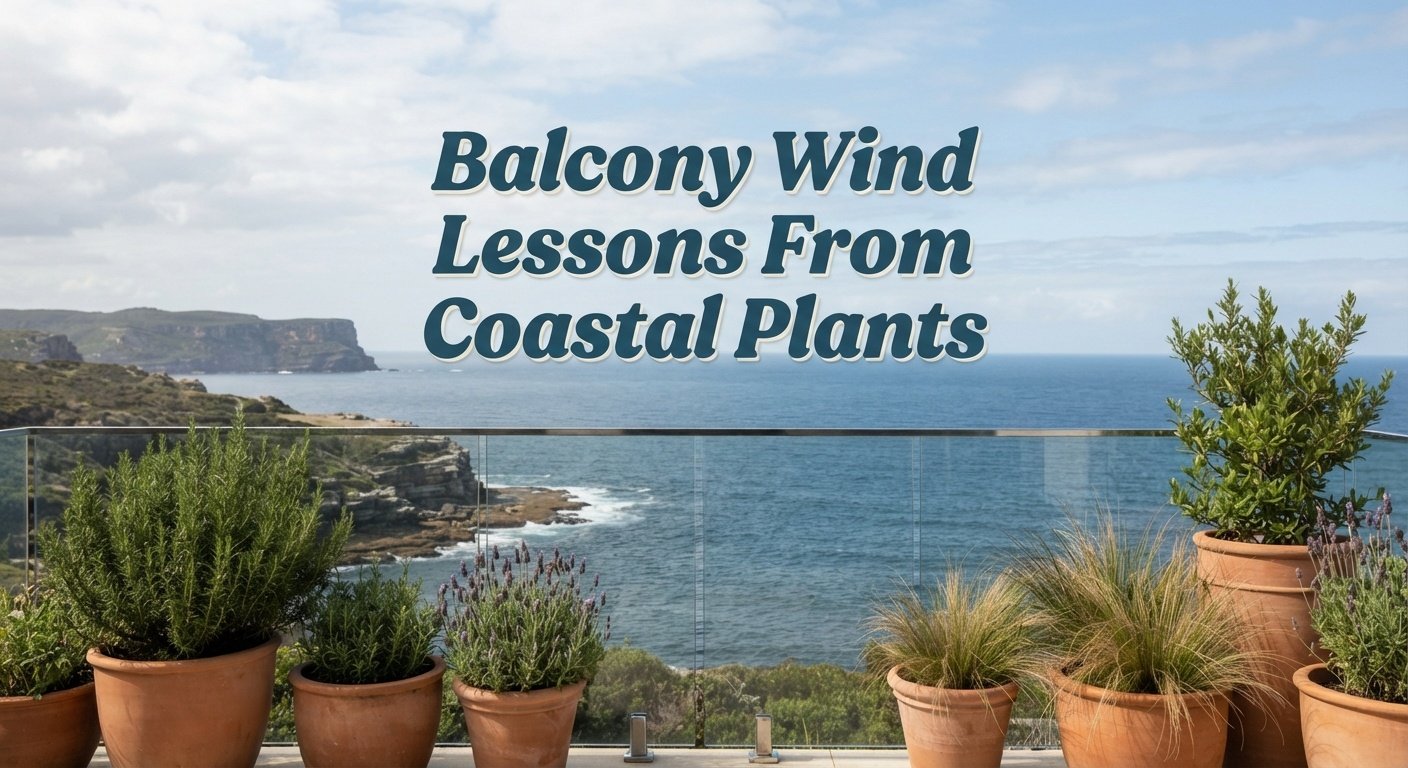
Most new gardeners assume wind kills by snapping stems or toppling pots. That happens, but it’s not the main mechanism. The bigger problem is moisture loss through the leaves, faster than the roots can replace it. This is called wind desiccation, and it’s the same reason coastal shrubs like rosemary, lavender, and many salt-tolerant natives evolved narrow, leathery, or silvery leaves. Less surface area and a waxy coating both slow down water loss when air is constantly moving across the plant.
If you’ve ever wondered why your balcony basil wilts by afternoon even when the soil is damp, this is very often the actual cause. The soil test says the plant should be fine. The leaves disagree, because they’re losing water to moving air faster than the roots can pull it back in.
2. Exposure Changes By Floor, Not Just By Orientation
A ground-floor courtyard and a twelfth-floor balcony facing the identical direction are not the same growing environment. Wind speed increases with height in a fairly predictable way, and buildings create venturi effects, where air gets squeezed between structures and speeds up. Corner units and balconies near gaps between buildings often get hit hardest, even when the compass direction looks sheltered on paper.
Coastal gardeners plan for this by grouping plants in tiers, with the toughest specimens on the windward edge acting as a living windbreak for anything more delicate behind them. On a balcony, that might mean a row of ornamental grasses or a wind-tolerant herb like thyme along the railing, with basil, lettuce, or anything leafier set back and lower.
3. Pot Choice Matters More Than People Think
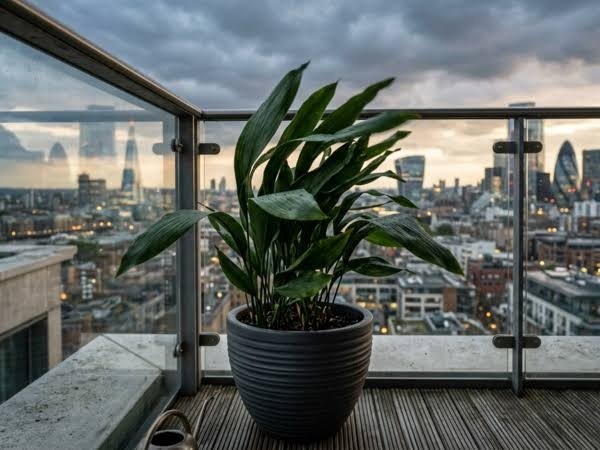
This is where a lot of balcony gardens fail quietly. A tall, narrow terracotta pot looks elegant and catches wind like a sail. Coastal container gardeners lean toward wide, low, heavy pots for exactly this reason: a lower center of gravity and a broader base resist tipping, and the material itself matters too. If you haven’t looked at it yet, this breakdown of pot materials that hold up in wind is worth ten minutes, because switching containers solves more wind problems than switching plants does.
Quick-reference: matching pot shape to exposure
| Balcony Exposure | Best Pot Shape | Worst Pot Shape | Why |
|---|---|---|---|
| High-rise, corner unit | Wide, squat, heavy base | Tall, narrow, lightweight | Low center of gravity resists tipping |
| Mid-level, open railing | Wide-base with drainage feet | Hanging baskets unsecured | Wind gusts swing unanchored weight |
| Ground floor, courtyard | Standard upright pots fine | N/A, less critical here | Wind speed is lowest near ground level |
| Windward corner (funnel zone) | Grouped, clustered pots | Single isolated tall pots | Clustering breaks up airflow |
4. The Plants That Actually Take Wind Well
This is where the coastal comparison earns its keep. Look at what survives on an actual coastline and a pattern appears fast: tough, often gray-green or silvery foliage, deep or fibrous root systems, and a general resistance to being pushed around physically. Rosemary, thyme, sedum, ornamental grasses, and ornamental sage all fit this profile and adapt well to containers.
Herbs in particular are worth a second look if wind has been ruling out your balcony. This list of herbs suited to windy spots leans on the same coastal logic, prioritizing plants with smaller or tougher leaves over the soft, broad-leafed herbs that struggle in constant airflow.
Where people usually go wrong here is picking plants based on sun requirements alone and ignoring wind entirely, then blaming the sun rating when the plant fails. A full-sun label tells you almost nothing about whether a plant can handle being physically buffeted six hours a day. Those are two separate stresses, and a plant can be rated for one and still fail from the other.
5. Anchoring and Structural Support Borrowed From The Coast
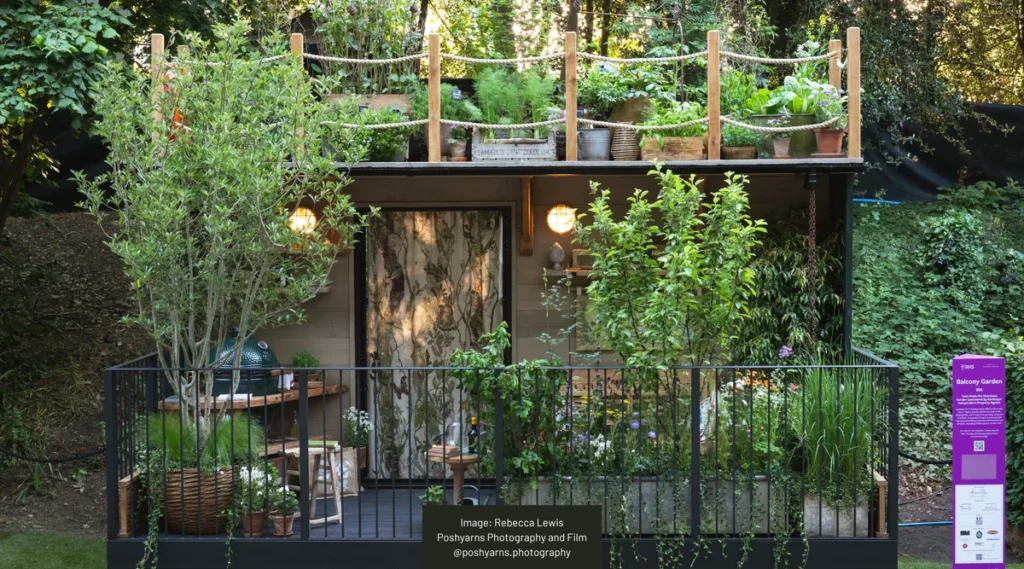
Coastal gardeners stake young plants more aggressively than inland gardeners typically bother to, because a plant that gets rocked at the root ball repeatedly never develops a stable anchor system. On a balcony, this translates to a few concrete habits: staking anything over a foot tall for its first month in a new pot, using trellises anchored to the railing rather than free-standing, and checking soil around the base after wind events for the telltale gap that shows a plant has been rocking loose.
And this part gets skipped constantly. People water, they feed, they check for pests, but they never physically check whether the root ball has shifted. A plant can look upright and still have a loosened, damaged root system underneath.
6. When Wind Is Bad Enough That It’s Not Actually Fixable
Sometimes the honest answer is that a particular spot on a particular balcony is too exposed for the plant someone wants to grow there, full stop. If gusts are strong enough to physically bend stems on a regular basis, no pot swap or staking trick solves that long term. It’s worth doing an honest assessment before sinking money into plants that are fighting a losing structural battle. This guide on telling whether your balcony is too windy for a garden walks through how to actually measure this instead of guessing.
But between full-shelter and full-exposure there’s a wide middle ground where the right plant choices, the right containers, and a little structural common sense make a real difference. That’s the space most balconies actually live in.
Frequently Asked Questions
How do I know if wind is the problem instead of underwatering? Check the soil first. If it’s damp but the leaves are curling, browning at the edges, or drooping by afternoon, wind desiccation is more likely than a watering issue. Underwatered plants usually show dry soil alongside wilting; wind-stressed plants often don’t.
Do windbreaks actually work on a small balcony? Yes, even a simple mesh screen or a row of sturdy plants along the exposed edge reduces wind speed noticeably for anything placed behind it. You don’t need to block wind entirely, just slow it down.
Can I still grow leafy vegetables on a windy balcony? It’s harder but not impossible. Set them in the most sheltered corner, behind a windbreak, and expect more frequent watering than a seed packet suggests, since wind pulls extra moisture out of broad leaves.
Is a hanging basket a bad idea on a windy balcony? Generally yes, unless it’s securely anchored on multiple points. An unsecured hanging basket swinging in wind stresses the root system and can detach entirely in stronger gusts.
Does wind exposure change with the seasons? Often, yes. Many balconies get stronger, more consistent wind in early spring and late fall as weather patterns shift, which is also exactly when new seedlings are most vulnerable. Worth factoring into planting timing.
If wind has been quietly sabotaging a balcony garden without an obvious cause, it’s usually one of these fixes, not a bigger overhaul. Small balcony garden has more coastal-inspired growing guides if this is the piece of the puzzle that’s been missing.