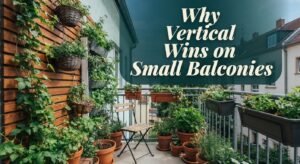
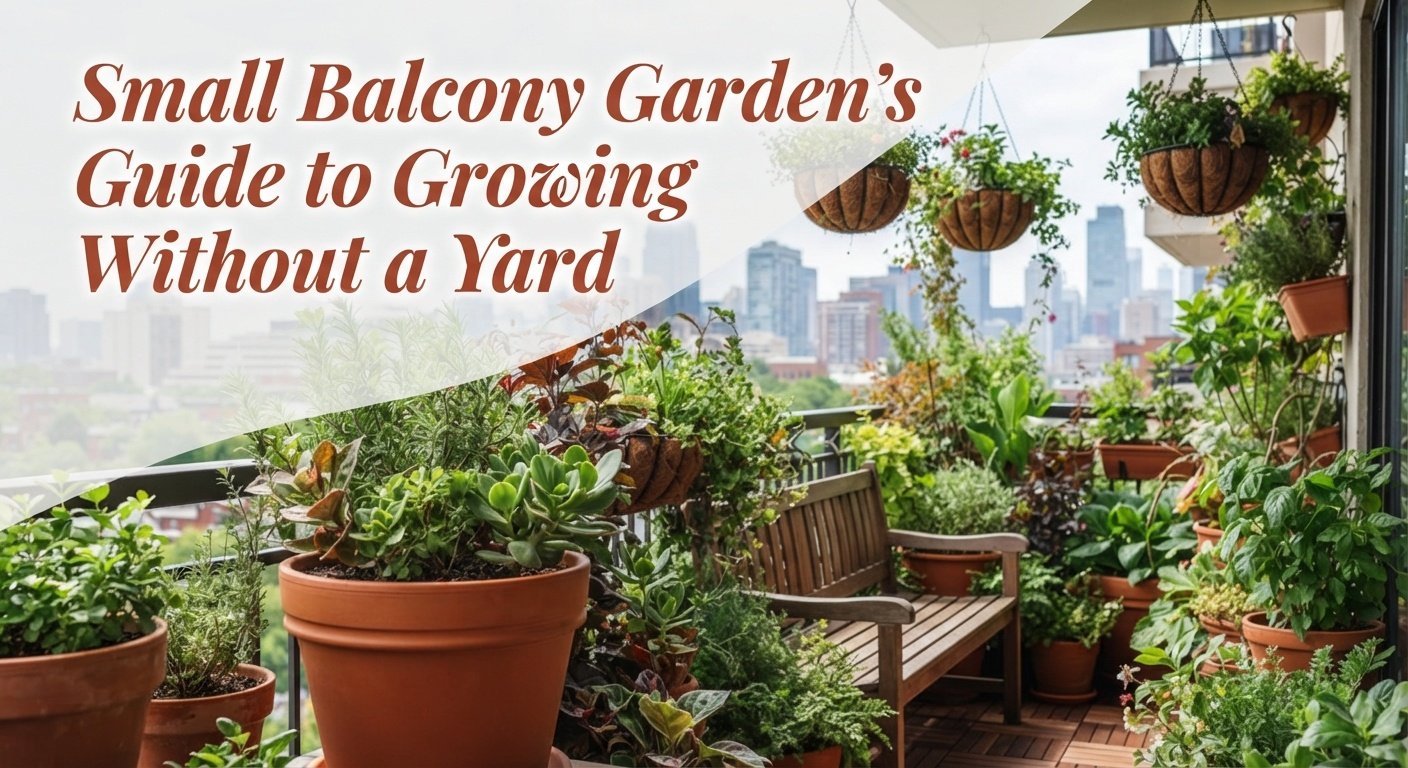
Most people who move into their first apartment without a yard assume gardening is just paused, not gone. A backyard was always the plan, someday, and until then the balcony is a placeholder. That assumption is wrong in a way that actually helps once you see it clearly: a balcony isn’t a smaller, sadder version of a yard. It’s a different growing environment with its own rules, and once those rules click, the results often beat what a lot of yard gardeners get.
1. Start By Mapping What You Actually Have
A yard gives you soil, depth, and usually some forgiving margin for error. A balcony gives you none of that automatically, which is exactly why the first step isn’t buying plants. It’s figuring out the specific conditions of the space you’re working with.
Sun exposure changes everything downstream. A south-facing balcony behaves nothing like a north-facing one, and the difference isn’t subtle, it can be the gap between tomatoes ripening and tomatoes staying green all season. Before choosing a single plant, it’s worth spending a few days actually watching how light moves across the space, morning through evening, because guessing wrong here wastes money on plants that were never going to survive. Reading your balcony’s sun before planting walks through exactly how to do that tracking properly instead of eyeballing it.
Wind matters just as much and gets ignored more. Balconies sit higher than yards, often with nothing to break gusts the way fences and hedges do at ground level, and that constant air movement dries soil out faster and can physically damage taller plants. If pots keep drying out no matter how often you water, or stems keep snapping, is your balcony too windy for a garden is the honest diagnostic most people skip.
2. Containers Are Doing the Job Soil Used to Do
In a yard, soil does most of the heavy lifting. It holds water, buffers temperature swings, and gives roots room to spread without much thought from the gardener. On a balcony, the container has to do all of that instead, and container choice becomes a much bigger decision than it looks like at first.
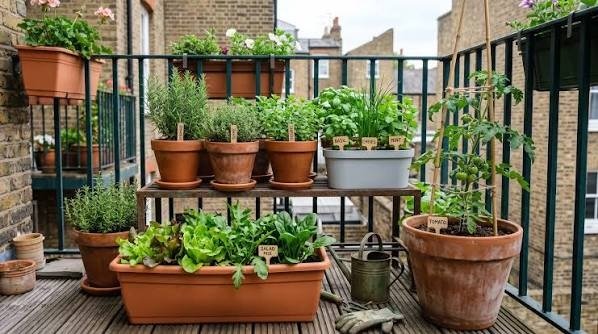
Size matters more than most beginners expect, and it matters more than plant selection does. A great plant in an undersized pot will underperform every time, while a modest plant in a properly sized container often outgrows expectations. This is one of those small balcony garden lessons that takes people a full season to learn the hard way, which is why container size matters more than plant choice at first try exists as a resource. It saves that season of trial and error.
Material matters too, and here’s where people usually go wrong. Terracotta looks classic and feels like the “correct” choice, but it dries out fast in heat and gets heavy once wet, which is a real problem if your balcony has a posted weight limit. Plastic and resin hold moisture longer and weigh less, which sounds like an obvious win until you factor in how badly some plastics perform in direct summer sun. There’s no universal right answer. There’s only the right answer for your specific balcony’s light, wind, and weight situation.
3. Water Behaves Completely Differently Up Here
This is probably the single biggest adjustment for anyone coming from yard gardening. Elevated containers dry out dramatically faster than in-ground beds, sometimes needing water daily during summer heat when a comparable yard bed would go two or three days between waterings.
Part of this comes down to exposure. A balcony often runs hotter than the yard below it, sometimes by a noticeable margin, because heat radiates off building walls, concrete flooring, and railings in a way grass and soil never do. Why your balcony feels hotter than a backyard breaks down why that temperature gap exists and how much it actually affects plant stress.
And overcorrecting is just as common a mistake as underwatering. New balcony gardeners, once they realize how fast pots dry out, often swing too far the other way and start watering on a rigid daily schedule regardless of actual soil condition. Root rot from overwatering kills about as many balcony plants as drought does. Check the soil, not the calendar.
Quick Reference: Yard Growing vs Balcony Growing
| Factor | Traditional Yard | Balcony |
|---|---|---|
| Water retention | Soil buffers naturally | Containers dry out fast, need frequent checks |
| Temperature | Ground-level, moderated | Often hotter, reflected heat from walls/concrete |
| Wind exposure | Blocked by fences, structures | Often unshielded, higher and more constant |
| Root space | Effectively unlimited | Fixed by container size |
| Weight considerations | Not applicable | Structural limits matter, always check first |
4. Picking Plants That Were Built for This
Not every plant that thrives in a yard will thrive on a balcony, and pretending otherwise is where a lot of first-year frustration comes from. The plants that do well in containers tend to share a few traits: compact root systems, tolerance for some inconsistency in watering, and reasonable wind resistance if the space is exposed.
Herbs are usually the safest entry point for exactly this reason, and starting there before moving to vegetables tends to build confidence rather than burn it out early. Small balcony gardens: simple guide to your first pots covers a sensible starting lineup for someone with zero track record yet.
Vegetables are absolutely doable too, but they ask more of the setup. Tomatoes in particular are unforgiving about inconsistent watering and wind stress, and a lot of balcony gardeners hit a wall the first time flowers form and then drop before fruiting. That specific problem has a specific, fixable cause, and it’s worth reading about before it happens rather than after.
5. The Weight Limit Nobody Checks Until Something Goes Wrong
Every balcony has a maximum load it was engineered to carry, and almost nobody checks that number before filling the space with pots, soil, furniture, and whatever else accumulates over a season. Wet soil is heavier than people expect, sometimes dramatically so once a large container is fully saturated, and a balcony packed with several large pots can approach real structural limits faster than intuition suggests.
This isn’t a scare tactic, it’s just physics that yard gardeners never have to think about because the ground handles unlimited weight without complaint. A balcony doesn’t have that luxury. Calculating your balcony’s weight load walks through how to actually get a real number for your specific space instead of guessing.
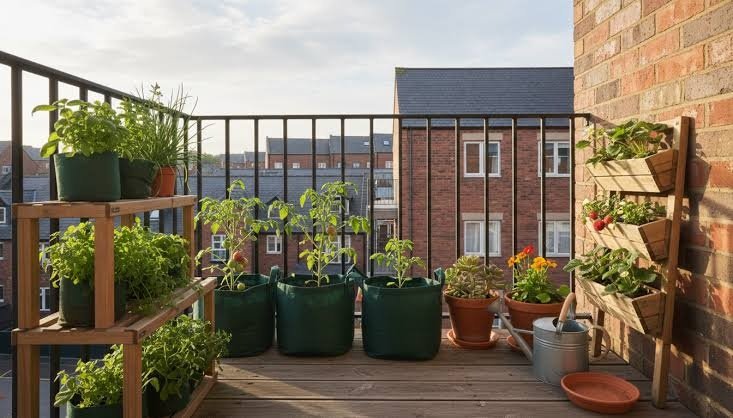
Small balcony garden gets messages fairly often from renters who filled a balcony with containers over a couple of seasons, adding one or two pots at a time, and never once stopped to add up the total. It’s an easy mistake because it happens gradually. It’s also an entirely avoidable one.
None of this is meant to make balcony gardening sound more complicated than a yard. It’s different, not harder, and once the container size, water rhythm, and weight math are sorted out, the actual gardening part, the choosing and tending and watching things grow, works exactly the way it always has. The yard was never a requirement. It was just one option among several, and for a lot of people the balcony turns out to be the better teacher anyway, since it forces you to actually understand what a plant needs instead of relying on soil to cover for you.
FAQs
Can I really grow vegetables on a balcony, or is it mostly just herbs and flowers? Vegetables are genuinely possible, including tomatoes, peppers, and leafy greens, as long as container size and sun exposure match what the plant actually needs. The main limiting factor is usually root space, not the fact that it’s a balcony rather than a yard.
How much more often do I need to water balcony containers compared to a yard bed? Often daily in summer heat, compared to every two or three days for an equivalent yard bed, because containers lose moisture much faster than in-ground soil. Wind and direct sun exposure push that even further.
Is there a general weight limit I should assume if my building can’t give me a number? There’s no universal safe number to assume, since it depends entirely on the specific structure. If your property manager can’t provide a figure, the safer move is to keep the total pot and soil load modest and avoid clustering heavy containers in one spot.
Do I need special soil for containers, or will regular garden soil work? Regular garden soil compacts and drains poorly in containers, so a proper potting mix designed for containers is worth the extra cost. It’s formulated for drainage and aeration in a way garden soil simply isn’t.
What’s the single biggest mistake first-time balcony gardeners make? Skipping the sun and wind assessment and buying plants first. Most balcony gardening failures trace back to a mismatch between the plant’s needs and the actual conditions of the space, not bad luck or a lack of a green thumb.
Anyone starting from scratch with no track record yet will get more out of balcony gardening 101 than any single plant guide, since it covers the groundwork everything else depends on.