
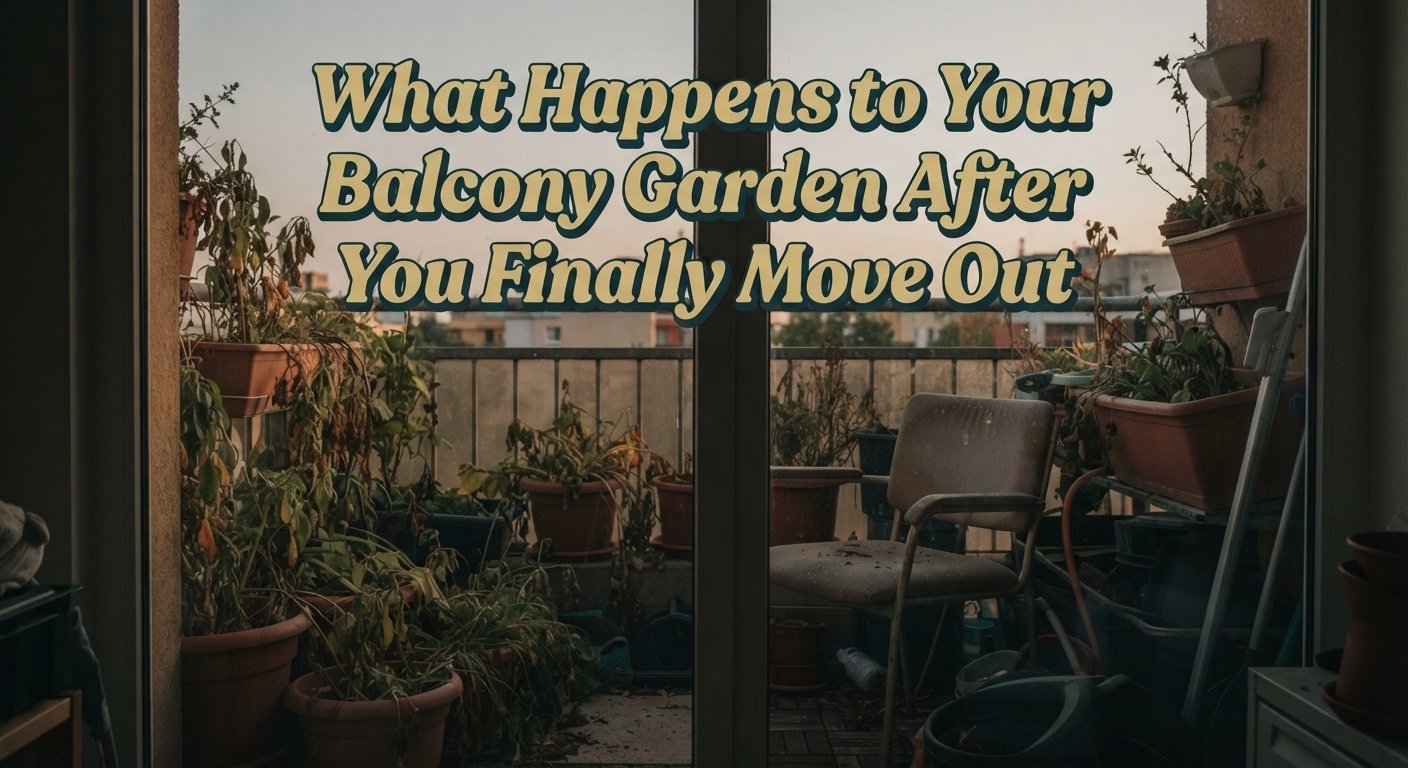
Most balcony gardening advice assumes you’re staying put. Pick the right pots, build up the soil over a few seasons, learn the light patterns, settle in for the long haul. Nobody talks much about the other side of it, the part where the lease ends, the moving truck is booked, and you’re standing on a balcony with forty pounds of soil and a tomato plant that’s finally, finally starting to fruit.
Renters move more often than homeowners, and balcony gardens are overwhelmingly a renter’s project. So the question of what actually happens to all of it deserves more attention than it gets.
1. The Options Are Narrower Than People Expect
There are really only a few paths available once a move is confirmed. You take the whole thing with you. You rehome individual plants to friends, neighbors, or a local gardening group. You compost what’s compostable and start fresh at the new place. Or, and this happens more than anyone likes to admit, everything gets left behind on the curb because there wasn’t time to plan for it.

That last option is avoidable almost every time, but it requires deciding early, not two days before the move. Waiting until moving week to think about the garden usually means the garden loses by default.
2. What Actually Survives Transport
Not everything travels well, and this is where a lot of good intentions fall apart. Root-bound perennials in large pots are heavy, awkward, and often too established to handle the stress of a multi-hour car ride or a moving truck. Annuals near the end of their productive life, meaning most tomatoes and peppers by late summer, often aren’t worth the effort of moving at all. They’re close to finished anyway.
What travels reasonably well: herbs in smaller pots, anything still young enough to handle root disturbance, and plants in lightweight containers rather than heavy ceramic or ballast-filled pots. If the pot itself has been chosen for wind resistance, it’s often also heavier than ideal for a move, and this is a genuine tradeoff worth thinking through before the day arrives, not during it.
Here’s where people usually go wrong: they try to move everything, run out of car space or patience halfway through, and end up abandoning the plants that would have actually made the trip fine, while keeping ones that were never going to survive the transition anyway. A little triage beforehand saves the whole ordeal.
Rough guide to what’s worth moving
| Plant Type | Worth Transporting | Better Left or Rehomed |
|---|---|---|
| Young herbs in small pots | Yes, low stress | — |
| Perennials, well established | Yes, if pot isn’t oversized | If pot is too heavy or root-bound |
| Annual vegetables, late season | Rarely worth it | Usually, especially near end of season |
| Anything in ceramic or stone pots | Depends on move distance | Often, due to weight alone |
| Seedlings and cuttings | Yes, easiest of all | — |
3. Rehoming Is Underused And Usually Easy
A plant that’s spent two seasons adjusting to a specific balcony’s light and wind pattern has value that doesn’t disappear just because the grower is leaving. Local gardening groups, neighbors, and even building message boards are often glad to take an established plant off someone’s hands, especially in fall when nurseries have less new stock available.
This matters more for anything that took real effort to establish. If a plant only survived after testing it properly against a specific balcony’s conditions, that adjustment period represents real time and effort that a fresh nursery plant won’t have. Handing it off rather than discarding it keeps that investment from just evaporating.
Posting a plant for free almost always finds a taker within a day or two in most urban areas. The bigger obstacle isn’t demand, it’s remembering to do it with enough lead time before the move.
4. Soil And Containers Are Their Own Separate Decision
People tend to think of “the garden” as one unit, but soil, containers, and plants are three different logistics problems. Soil is heavy and cheap to replace, which makes it one of the easiest things to leave behind entirely, dumped into a compost pile or added to a community garden bed if one’s nearby, rather than hauled to a new address. Containers are more of a judgment call. Lightweight plastic and fiberglass pots are usually worth keeping. Heavy ceramic and stone ones often aren’t, unless the new place is close enough that a single trip covers it.
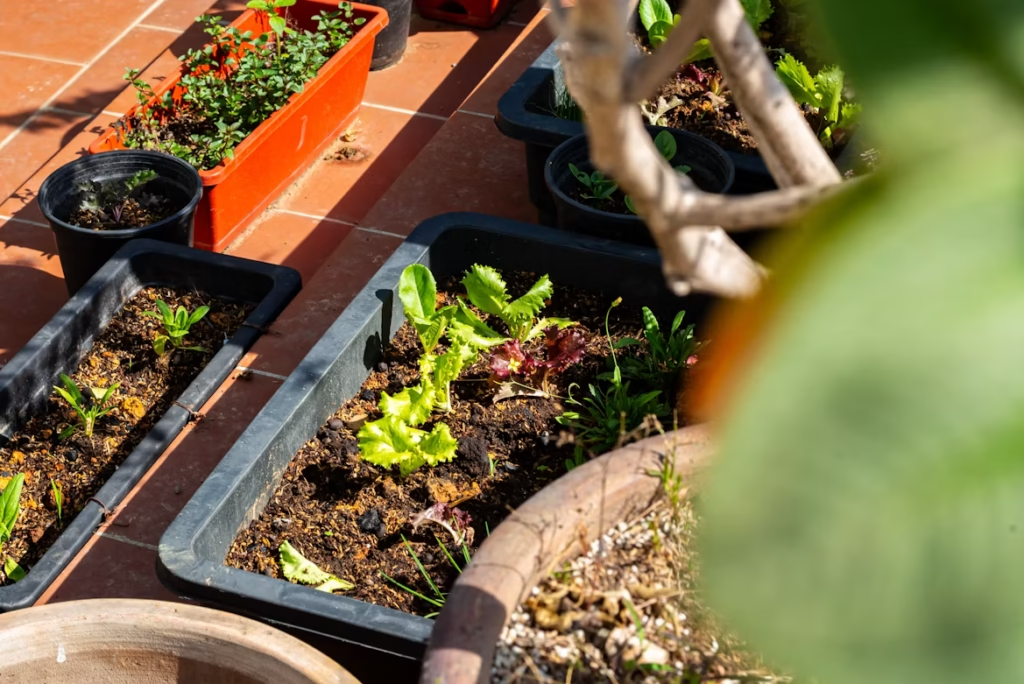
Small balcony garden has covered container weight from the load-bearing side before, and the same math applies here in reverse. A pot heavy enough to resist tipping in wind is also heavy enough to make a mover’s life difficult, and that tradeoff doesn’t disappear just because the context shifted from wind safety to a moving day.
5. Starting Over Is Sometimes The Better Choice
There’s a version of this where the honest answer is: don’t move any of it. New balcony, new light conditions, new wind exposure, none of which the old plants were selected for in the first place. A plant that thrived on a south-facing railing might struggle badly on a north-facing one, regardless of how well it traveled physically.
Starting fresh with plant choices suited to the new space, rather than forcing the old lineup to adapt to different conditions, is often less work in the long run than nursing transplant shock out of a dozen stressed plants while also unpacking boxes. That’s not a failure of the old garden. It’s just a reasonable acknowledgment that balcony conditions are specific to the balcony, and starting over sometimes beats dragging the past along.
Frequently Asked Questions
How far in advance should I start planning what to do with my plants? At least two to three weeks before the move, especially if rehoming is part of the plan. Posting plants for free with only a day or two of notice limits who can actually pick them up.
Is it bad to leave healthy soil behind? Not at all. Soil is inexpensive to replace and heavy to transport, so leaving it, ideally composted or added to a community garden, is usually the practical choice rather than a wasteful one.
Can I transplant an established tomato plant to a new balcony mid-season? It’s possible but risky. Transplant shock combined with a move’s disruption often sets fruiting back significantly, so weigh whether it’s close to done producing anyway before committing to the extra effort.
What if my new place has completely different light or wind conditions? Treat it as a fresh start rather than trying to recreate the old setup. A plant chosen for the old balcony’s specific conditions may simply not be right for the new one, regardless of how well it survives the move itself.
Is there a best time of year to move a balcony garden? Early spring or fall, when most plants are less stressed by extreme heat or cold, makes the transition considerably easier than moving in the middle of summer.
Anyone weighing whether a specific plant is worth the hassle of relocating might find it useful to revisit how much a balcony’s weight limits actually matter, since the same load concerns that applied on the old balcony often resurface the moment boxes and pots end up in the same elevator trip.