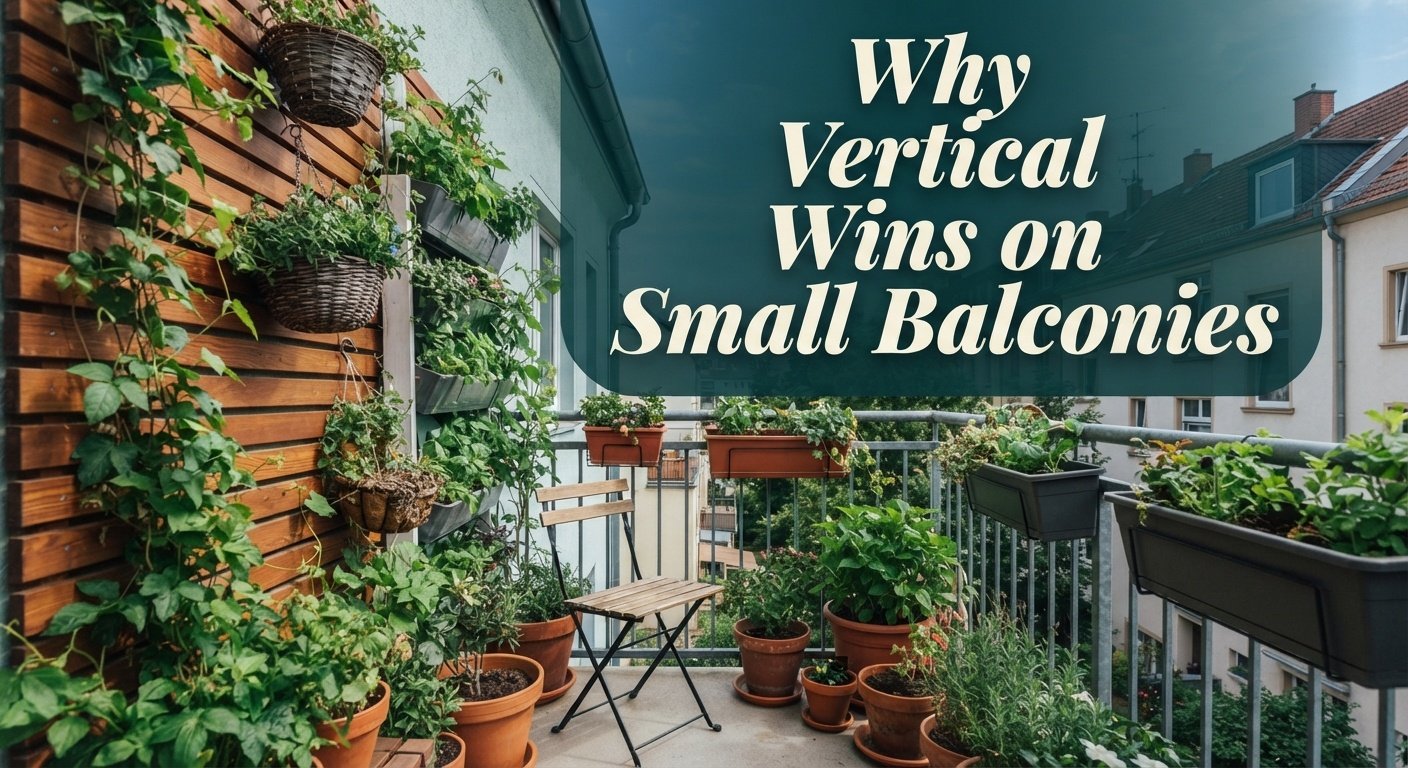
Do the math on your balcony before you do anything else. Most small balconies run somewhere between twenty and forty square feet of floor space, but the wall and railing area available to you is often double that or more once you actually measure it. Floor space is the resource everyone plants toward first. Vertical space is the resource almost nobody uses on purpose.
That gap is where most of the wasted potential on small balconies is sitting right now.
1. Floor Space Runs Out Fast, Vertical Space Barely Gets Touched
A typical small balcony fits maybe six to eight medium containers on the floor before it stops being walkable. That’s not a design opinion, it’s just arithmetic once you account for a chair, a door swing, and enough room to actually move around out there. Once those floor slots are filled, most people assume they’ve hit the ceiling on what the space can grow.
They haven’t. A single wall with a trellis, some rail planters, and a couple of tiered shelves can hold as many plants as the entire floor layout, sometimes more, without eating into a single square foot of walkable space. The floor stays clear. The growing capacity roughly doubles. This is the part that surprises new gardeners most when they finally try it, because the visual impression of a small balcony garden changes completely once green is happening at eye level and above, not just underfoot.
We talk to a lot of readers who’ve hit exactly this wall, plants everywhere, nowhere left to put anything new, and the answer almost every time is to stop looking down and start looking up. If you’re early in this process, balcony gardening 101, where should total beginners start is worth reading before you commit to a layout, since the order you plan things in matters.
2. Vertical Growing Changes Airflow, and That’s Mostly a Good Thing
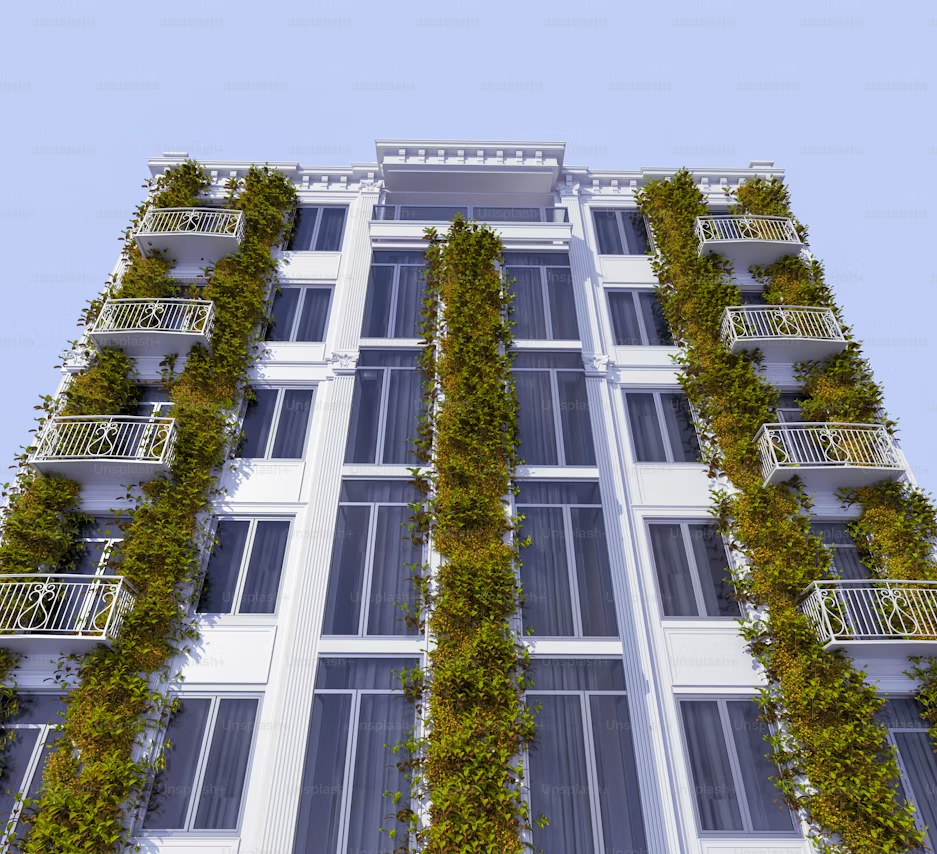
Here’s something that doesn’t get mentioned enough. Plants trained upward on a trellis or grown in tiered rail planters get noticeably better air circulation than the same plants crammed together on the floor. Crowded floor pots trap humid, still air between their leaves, which is exactly the environment fungal issues like powdery mildew love. Vertical arrangements space plants out naturally along a structure instead of clustering them shoulder to shoulder.
The tradeoff is that better airflow also means faster drying, and vertical containers tend to be smaller by necessity, so they hold less soil and less water reserve to begin with. A rail planter three feet up with wind moving past it will dry out faster than a floor pot in a sheltered corner. This isn’t a reason to avoid vertical growing. It’s a reason to plan your watering routine around it, which mostly means shorter intervals and closer attention rather than more water each time. If your balcony already deals with wind regularly, it’s worth pairing this shift with what we cover in is your balcony too windy for a garden, here’s how to tell, because vertical structures catch more wind than a low pot ever will.
3. Not Every Plant Wants to Go Up, and Forcing It Backfires
This is the mistake we see most often once people get excited about vertical growing. They try to train everything upward, including plants that were never built for it. A bush-type tomato variety doesn’t climb no matter how much twine you use, and forcing it against a trellis just stresses the stem without giving you any real height benefit. Root vegetables obviously don’t belong vertical at all, though we still get asked.
The plants that genuinely reward vertical space are the ones with a natural climbing or trailing habit. Cucumbers, pole beans, and many vining flowers will climb a support structure with minimal encouragement and actually produce better for it, since better airflow around the foliage reduces disease pressure on the fruit. Trailing plants like certain strawberry varieties or cascading herbs work well in tiered or hanging vertical setups because gravity does the styling for you.
The honest rule is simple. Match the plant’s natural growth habit to the structure, don’t force a habit onto a plant that doesn’t have it. A quick gut check before you commit a plant to a vertical spot:
- Does this variety climb, vine, or trail on its own without staking
- Is the mature size compact enough not to overwhelm the structure it’s on
- Will the root system fit the shallower soil volume most vertical containers offer
- Can you actually reach it to water and harvest once it’s up there
If you answer no to more than one of those, it’s probably a floor plant, not a vertical one.
4. Weight and Attachment Points Deserve Real Attention
Vertical structures put load somewhere your balcony might not be built for. A trellis screwed into a railing, a set of tiered shelves leaning against a wall, hanging baskets on hooks, all of these concentrate weight and stress at specific attachment points rather than spreading it evenly across the floor the way a row of pots does. This is where people who did everything right with plant selection still run into trouble.
Before you drill anything or hang anything heavy, it’s worth understanding what your railing and walls can actually support, especially if you’re renting and can’t verify the original construction specs. We go through the process in calculating your balcony’s weight load, and skipping this step is the single most common regret we hear about after the fact, usually after something has already come loose in a storm.
Here’s a rough guide to how different vertical elements distribute weight and risk:
| Vertical Element | Typical Weight Load | Main Risk Point |
|---|---|---|
| Freestanding trellis | Light to moderate, self-supporting | Tipping in wind if not anchored |
| Wall-mounted trellis | Moderate, concentrated at anchors | Anchor pull-out from wall material |
| Rail planters | Moderate, hangs on railing edge | Railing rated capacity, especially older rails |
| Tiered shelving | Can be heavy when fully loaded | Floor point load plus tipping if unweighted at base |
| Hanging baskets on hooks | Light per basket, adds up quickly | Individual hook rating, swinging in wind |
5. A Practical Way to Start Without Overbuilding
You don’t need to redesign the whole balcony at once. Start with one vertical element, a single trellis or a set of two or three tiered rail planters, and watch how it performs through a full watering cycle before adding more. This tells you whether your current watering routine can handle the faster drying, whether the attachment point holds up under real wind, and whether you actually enjoy tending something at that height rather than just liking the idea of it.
Once that first piece is working, expand deliberately. Add a second trellis on an adjacent section, or move up to hanging planters for trailing herbs once you’ve confirmed your rail can take the load. Small balcony garden readers who’ve done this in stages tend to end up with setups that actually last, instead of an ambitious install that gets half-abandoned by August because the watering demands outpaced what anyone was willing to keep up with.
And one more thing worth saying plainly. Vertical growing looks impressive in photos, but the plants that thrive there are usually the unglamorous, tough, fast-establishing kind, not the delicate showpieces people picture when they imagine a green wall. Pick for performance first. The look tends to follow once the plants are actually healthy.
The floor was never the limit. Most small balconies have been underused from the wall up the entire time, and once you start treating that space as real growing area instead of just somewhere to hang a string of lights, the whole garden stops feeling cramped.
FAQs
Do I need special containers for vertical growing, or can I use what I already have? Standard pots work fine on shelving, but rail planters and wall-mounted systems are usually purpose-built for weight distribution and drainage in that orientation. Repurposing a deep floor pot on a narrow shelf often creates a tipping risk that isn’t worth the money saved.
How much more often do vertical plants need watering compared to floor pots? It varies with wind and container size, but expect to water vertical containers noticeably more often, sometimes daily in hot, exposed conditions versus every two to three days for a comparable floor pot. Smaller soil volume and more airflow both push moisture out faster.
Can renters install vertical structures without violating a lease? Many leases restrict drilling into walls or railings, but freestanding trellises, over-rail hanging systems, and clip-on planters usually avoid that issue entirely since nothing is permanently attached. Always check your specific lease language before assuming, since restrictions vary a lot by building.
What’s the biggest mistake people make when starting a vertical setup? Going too big on the first attempt, usually by installing a full trellis wall or several tiered shelves at once before testing how the watering and structural load actually perform. One section tested properly beats five sections installed and half-neglected.
Will vertical growing block my view or make the balcony feel smaller? Done thoughtfully, it tends to do the opposite, since keeping the floor clear while plants grow at eye level and above usually makes a small balcony feel more open, not less. The exception is a solid, densely packed trellis right at seating height, which can feel enclosing if you’re not intentional about gaps.
For more on assessing what your specific balcony can structurally support before you build upward, the full guide lives at smallbalconygarden.online.