
Permaculture design has a rule that gets ignored constantly on small balconies: observe before you plant. Not observe for a season, necessarily, but at least long enough to notice how air actually moves through the space you’re working with. Most container gardening advice skips straight to plant selection and soil mix. Permaculture starts somewhere earlier, with the site itself, and wind is usually the first thing it asks you to look at.
That’s a useful correction for balcony growers, because wind on a balcony rarely behaves the way people assume. It isn’t just “windy” or “not windy.” It has direction, it has zones, and it interacts with the structure around it in ways that a five-minute glance never reveals.
1. Sector Analysis, Shrunk Down To A Railing
In permaculture design, “sector analysis” means mapping where sun, wind, water, and other forces move through a piece of land before deciding where anything goes. On a full property this might take weeks of observation. On a balcony, the same idea fits into a much smaller frame, but the logic holds.
Stand on the balcony at a few different times of day. Note where a scarf or a loose sheet of paper wants to move. Corners near gaps between buildings usually show the strongest, most erratic wind, a result of what’s sometimes called a venturi effect, where air speeds up as it’s forced through a narrower gap. Open railings without a solid base tend to funnel wind low, right at pot height, which is exactly where seedlings and short herbs sit.
This kind of mapping doesn’t need instruments. It needs ten minutes of actual attention, which is more than most container gardens ever get before the first plant goes in.
2. Zones And Placement, Not Just Plant Choice
Permaculture divides space into zones based on how much attention something needs, with the highest-maintenance elements closest to daily paths and hardier things pushed to the edges. Applied to a balcony, this reframes a common mistake: putting the most delicate plants in the most exposed spot simply because that’s where there happened to be room.
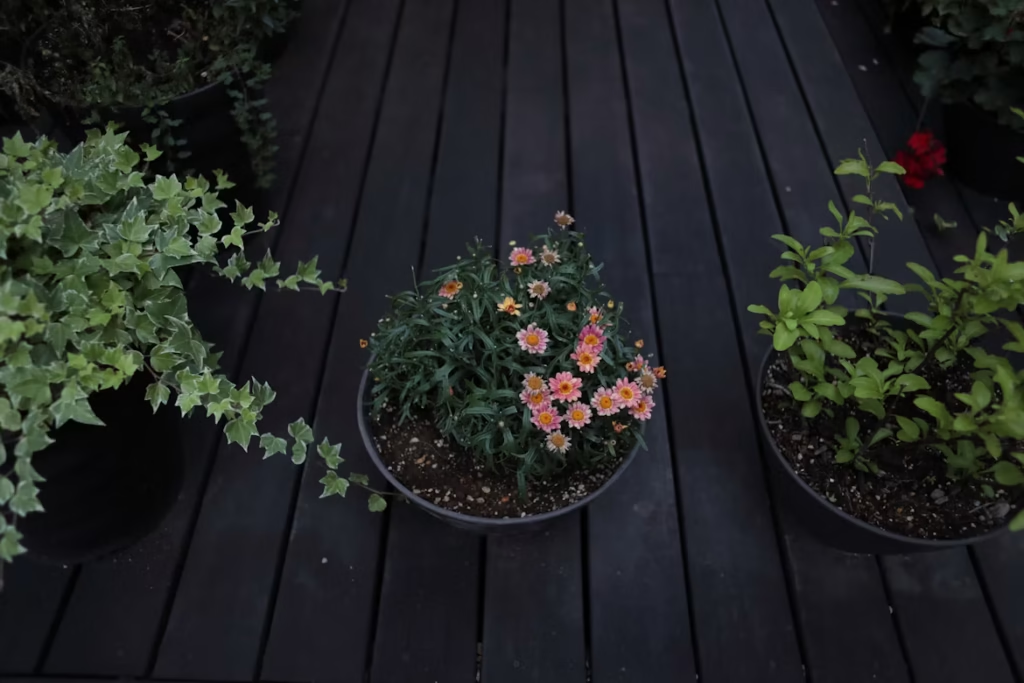
A better layout puts tougher, wind-tolerant plants along the exposed edge, functioning as a living buffer, with anything more fragile tucked behind them or closer to the door. This is one of the biggest gaps between how people usually shop for balcony plants and how the space actually behaves. Choosing a plant because the tag says “full sun” without checking whether that spot also happens to be the windiest corner is one of the 7 mistakes new balcony gardeners make in their first year, and it’s an easy one to avoid once wind is part of the initial mapping instead of an afterthought.
Zone-style placement for a small balcony
| Zone | Wind Exposure | What Belongs There |
|---|---|---|
| Outer edge, near railing | Highest exposure | Rosemary, thyme, ornamental grasses, sedum |
| Mid-balcony | Moderate, buffered | Tomatoes, peppers, larger herbs |
| Against the wall or door | Lowest exposure | Seedlings, lettuce, basil, anything leafy |
| Corner gaps between buildings | Unpredictable, often worst | Avoid delicate plants here entirely |
3. Guilds And Grouping Instead Of Solo Plants
One of permaculture’s more distinctive ideas is the plant guild, a small group of species placed together because they support each other functionally, not just because they look good side by side. A tall, sturdy plant might shelter a shorter one from wind while also casting useful afternoon shade. That same clustering effect works in containers.
Grouping pots close together, rather than spacing them out evenly along a railing, does two things. It reduces the wind each individual pot experiences, since neighboring foliage breaks up airflow before it hits the next plant. And it raises humidity slightly in the immediate area around the cluster, which matters more than people expect. If you’ve dealt with balcony basil wilting by afternoon even with damp soil, grouping it behind taller, tougher plants instead of leaving it isolated on the railing often solves more of the problem than adjusting the watering schedule does.
This is also where pot material starts to matter again. A cluster of heavy, wide-based pots is naturally more wind-stable than the same number of pots spread out individually, and choosing the right pot material for wind compounds that stability rather than fighting against it.
4. Working With Wind Instead Of Only Blocking It
There’s a tendency to treat wind purely as a threat to eliminate, and permaculture pushes back on that a little. A moving screen, a row of grasses that sway rather than resist, a windbreak with some give in it rather than a rigid solid barrier, these tend to outperform anything that tries to stop wind outright. A completely solid barrier can actually create turbulence on the leeward side, sometimes making conditions worse for whatever’s planted just behind it.
Semi-permeable barriers, things like lattice, mesh, or loosely spaced plantings, slow wind down gradually instead of stopping it and creating a pocket of chaotic air on the other side. This is a small but real distinction, and it’s one that gets missed when people reach straight for a solid privacy screen as a wind solution without understanding what happens to the airflow once it hits something that doesn’t give at all.
5. Reading The Plants Themselves As Ongoing Feedback
Permaculture leans heavily on observation as an ongoing practice, not a one-time step before planting. Wind stress shows up in plants in recognizable ways once you know what to look for: leaf curling on the windward side specifically, stunted growth compared to identical plants in more sheltered pots, stems that lean permanently in one direction even after staking.
Checking for this every week or two, rather than only when something looks obviously wrong, catches problems while they’re still fixable. A plant that’s been quietly struggling against wind for a month is a harder rescue than one that’s been struggling for four days. And this feedback loop, watch, adjust, watch again, is really the core habit permaculture asks for more than any specific technique.
Common Mistakes Worth Naming Directly
The most frequent one is treating wind as a fixed, unsolvable condition rather than something that can be redesigned around through placement, grouping, and pot choice. A close second is over-correcting with a fully solid barrier and creating worse turbulence than the original open exposure. Small balcony garden sees both of these repeatedly, and both usually trace back to skipping the initial observation step permaculture insists on.
None of this requires acreage or a formal design certification to apply. It requires paying attention to a fairly small, contained space with slightly more patience than most container gardening guides ask for.
Frequently Asked Questions
Do I really need to observe my balcony before planting, or can I just start? You can start, but you’ll likely replant a few things once you notice where the wind actually concentrates. A few days of paying attention saves a round of dead or stunted seedlings later.
What’s a simple windbreak I can build without tools or drilling? A row of tall, sturdy pots, like grasses or rosemary in heavy containers, positioned along the exposed edge works without any hardware. Mesh screens that clip onto railings are another no-drill option.
Can grouping plants together actually cause problems, like disease spreading? It’s a fair concern, but as long as there’s some airflow between pots and you’re not overwatering, tight grouping for wind protection rarely causes disease issues on a small residential balcony.
How do I tell wind damage apart from sunburn or heat stress? Wind damage tends to concentrate on one side of the plant, the side facing the prevailing wind, while heat and sun stress usually affect the whole plant more evenly.
Is it worth relocating pots seasonally if wind direction changes? On balconies where wind shifts noticeably between seasons, yes. It’s a small amount of effort for a real difference in how much stress plants are under during their most vulnerable growth periods.
Small balcony garden has a longer piece on why plants die from wind rather than cold if this is a distinction worth digging into further.