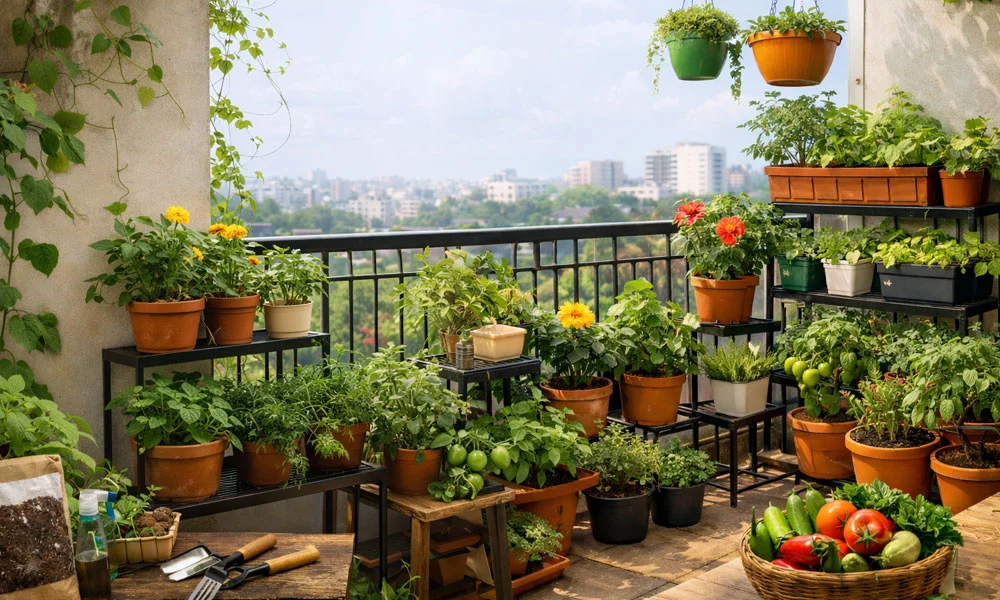
I killed a cactus once. Let that sink in. A cactus — the plant that basically survives on neglect — somehow didn’t make it past three weeks on my balcony. That was my introduction to balcony gardening, and honestly, it was humbling.
But here’s the thing: I didn’t quit. I just started asking better questions. Instead of picking whatever looked pretty at the nursery, I began researching what actually works in a small outdoor space with limited sunlight, inconsistent watering habits (guilty), and a beginner who still confuses overwatering with love.
Fast forward a couple of years, and my little balcony has become my favorite corner of the apartment. Not because I became some master gardener overnight — but because I finally chose the right plants to start with.
If you’re standing at the beginning of this journey, this is the article I wish I had found first.
1. Mint — The Plant That’s Almost Impossible to Kill
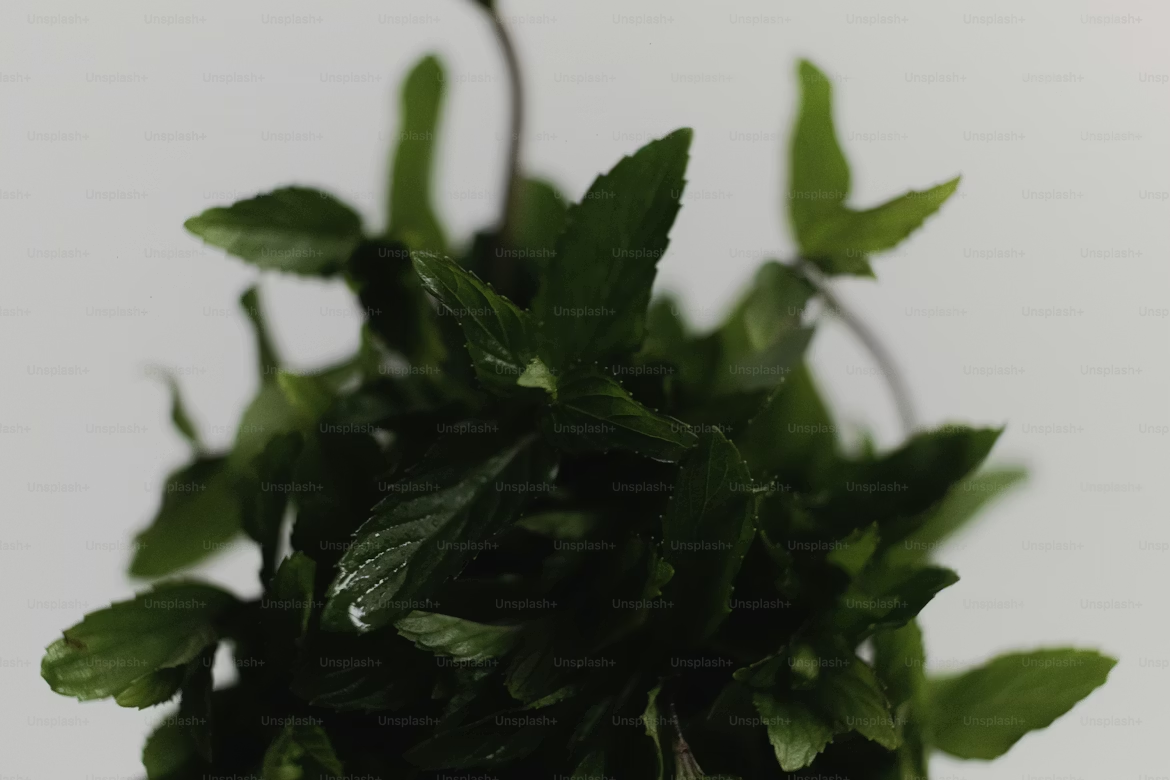
Mint was my second attempt after the cactus disaster, and it completely changed how I felt about balcony gardening. This plant is practically eager to grow. You water it, it grows. You forget to water it for a few days, it bounces back. You accidentally knock the pot over — it survives.
What makes mint so great for beginners is that it’s forgiving and fast. You’ll see visible progress within a week or two, which does wonders for your motivation when you’re just starting out.
What you need to know practically:
- Plant mint in a pot with drainage holes. This is non-negotiable. Without drainage, the roots sit in water and rot — and that’s how I lost my first mint plant before I learned better.
- Mint spreads aggressively. Keep it in its own container so it doesn’t bully other plants out of their space.
- It loves partial sunlight. If your balcony gets 3–4 hours of sun a day, mint will be perfectly happy.
- Trim it regularly. The more you harvest, the bushier and healthier it gets.
A quick tip from experience: When I started pinching off the flowering tops (called “deadheading”), the plant stopped putting energy into seeds and focused entirely on leaf production. More mint for my tea, basically.
One thing I didn’t expect — mint actually deters some pests. After I placed it near my tomatoes, I noticed fewer aphids. Bonus win.
2. Chili Peppers — Small Space, Big Reward
I’ll be honest — I added chili peppers to my balcony because I was tired of buying them every single week. What I didn’t expect was how genuinely satisfying it would be to cook with peppers I grew myself.
Chili plants are compact, sun-loving, and remarkably low-maintenance once they’re established. They’re also visually interesting — the peppers change color as they ripen, going from green to yellow to red depending on the variety. My balcony started to look like an actual garden instead of just a couple of sad pots.
Beginner-friendly chili varieties to consider:
| Variety | Heat Level | Size | Notes |
|---|---|---|---|
| Bird’s Eye | Hot | Compact | Extremely productive |
| Jalapeño | Medium | Medium | Great for cooking |
| Banana Pepper | Mild | Medium | Perfect for beginners |
| Cayenne | Hot | Tall | Easy to grow |
What I learned the hard way:
Chili plants need full sun — at least 6 hours a day. My first attempt was on a shaded corner of the balcony and the plant looked alive but never really produced much fruit. Once I moved it to the sunniest spot, everything changed.
Also, don’t rush the watering. Let the top inch of soil dry out between watering. Chili plants prefer a slight drought over wet feet. Check out these 9 powerful fertilizer tricks that actually work — I used a few of them on my chili plants and the difference in fruit production was noticeable.
3. Lettuce — Harvest in Weeks, Not Months
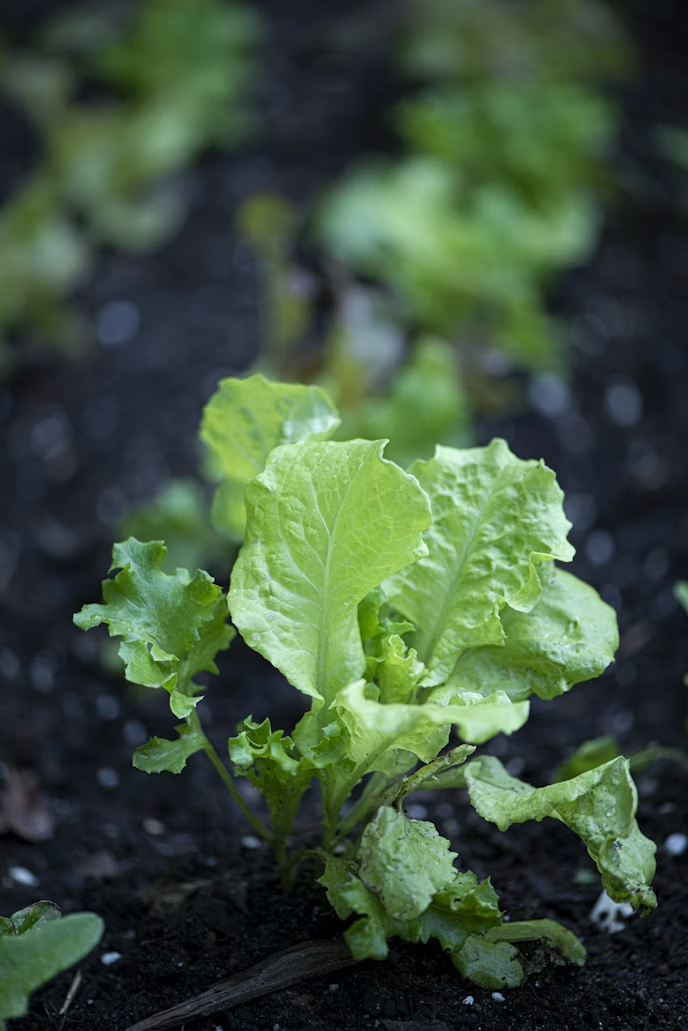
If you want fast results that also make you feel like a genius, grow lettuce. I planted my first batch and was harvesting outer leaves within three weeks. Three weeks. That kind of quick feedback loop is exactly what keeps beginners from giving up.
Lettuce is also one of those plants that does well in shadier balconies — which is perfect if your outdoor space doesn’t get blasted with afternoon sun. In fact, if your balcony gets too much heat, lettuce will bolt (go to seed and turn bitter), so a bit of shade is actually ideal.
Step-by-step for growing lettuce on a balcony:
- Choose a shallow container. Lettuce roots don’t go deep. A wide tray works better than a deep pot.
- Use quality potting mix. Don’t use garden soil — it gets compacted in containers and suffocates roots.
- Sow seeds thinly. Scatter them across the surface, cover with a thin layer of soil, and water gently.
- Keep the soil consistently moist. Lettuce doesn’t like to dry out completely.
- Harvest outer leaves first. This “cut and come again” method keeps the plant producing for weeks.
Varieties that work well in containers:
- Butterhead — soft, easy to grow, handles heat moderately well
- Loose-leaf — fastest to mature, perfect for the impatient beginner
- Romaine — takes a bit longer but stores well after harvest
One mistake I made early on: I planted too densely and didn’t thin the seedlings. The plants competed for nutrients and grew poorly. Now I thin ruthlessly, and the remaining plants thrive.
4. Marigolds — They’re Not Just Pretty
Okay, hear me out before you scroll past this one. I know marigolds sound like something your grandmother grows, but they’ve earned a permanent spot on my balcony — and not just for looks.
Marigolds are the underrated workhorses of beginner balcony gardens. They bloom abundantly, require minimal care, and serve as natural pest repellents. The scent confuses and deters whiteflies, aphids, and even mosquitoes to some extent.
When I started placing marigolds alongside my vegetables, the overall health of my balcony garden improved noticeably. Fewer pests meant less intervention from me, which meant less stress and less chance of me accidentally making things worse with pesticide overuse.
Why marigolds are beginner-perfect:
- They tolerate drought reasonably well
- They thrive in full sun but manage in partial shade
- They tell you when they’re thirsty — leaves droop slightly, you water, they perk right back up
- They bloom almost continuously through the growing season
- Deadhead spent flowers and new blooms keep coming
The companion planting angle:
This is something I didn’t discover until I read about 11 clever plant pairings that make your garden flourish. Companion planting changed how I thought about my balcony entirely — it’s not just about individual plants but how they work together as a system.
Marigolds next to tomatoes, peppers, and lettuce create a kind of protective circle. It sounds almost too simple to be true, but I’ve seen it work firsthand.
5. Tomatoes (Cherry Variety) — Worth Every Bit of Effort
I saved tomatoes for last because they take the most attention — but they’re absolutely worth it, especially the cherry varieties.
I tried growing full-sized tomatoes first. That was a mistake. They needed more support, more nutrients, and more space than my little balcony could realistically offer. Cherry tomatoes, on the other hand, are compact, prolific, and well-suited for container growing.
My current favorite is a variety called Tumbling Tom — it actually trails downward, so it works beautifully in hanging baskets or on the balcony railing. It looks intentional, like you planned a decorative feature that also produces food. Which I guess you did.
Practical tomato growing guide for balconies:
| Factor | What to Do |
|---|---|
| Container size | Minimum 12-inch pot, deeper is better |
| Sunlight | 6–8 hours minimum |
| Watering | Deep watering every 2–3 days; consistent is key |
| Support | Small cage or stake for bushy varieties |
| Fertilizer | Phosphorus-rich when flowering, then switch to potassium |
Mistakes I made (so you don’t have to):
Mistake 1: Inconsistent watering. Tomatoes punish irregular watering with a condition called blossom end rot — the bottom of the fruit turns black and mushy. Once I put my plants on a consistent watering schedule (I actually set a phone reminder), it stopped happening.
Mistake 2: Not pruning suckers. Those little shoots that grow in the joint between the stem and a branch — they need to be pinched off on indeterminate varieties. Left unchecked, the plant puts energy into foliage instead of fruit.
Mistake 3: Planting too late in the season. Tomatoes need a long warm season. In most climates, getting them in early means more harvest time before temperatures drop.
For help understanding when to plant what, I found this guide on 11 clever planting calendars that remove the guesswork from gardening genuinely useful when I was getting started.
Quick Comparison: All 5 Plants at a Glance
| Plant | Sunlight Needed | Watering Frequency | Difficulty | Time to First Harvest |
|---|---|---|---|---|
| Mint | Partial (3–4 hrs) | Every 2–3 days | Very Easy | 4–6 weeks |
| Chili Peppers | Full (6+ hrs) | Every 2–3 days | Easy | 8–12 weeks |
| Lettuce | Partial to Full | Daily or every other day | Very Easy | 3–4 weeks |
| Marigolds | Full (6+ hrs) | Every 2–3 days | Very Easy | 6–8 weeks (blooms) |
| Cherry Tomatoes | Full (6–8 hrs) | Every 2 days | Moderate | 8–10 weeks |
Common Beginner Mistakes Across All Five Plants
Overwatering is the number one killer. More plants die from too much water than too little. When in doubt, stick your finger an inch into the soil — if it’s still moist, wait another day.
Ignoring drainage. Every pot must have drainage holes. Every. Single. One. Sitting water is a recipe for root rot and a dead plant.
Using the wrong soil. Regular garden soil gets compacted in pots. Always use a quality potting mix made specifically for containers.
Choosing the wrong location first. Before buying a single plant, observe your balcony for a full day. Where does the sun hit in the morning? Where does shade fall in the afternoon? Match your plants to those conditions — not the other way around.
Expecting perfection immediately. Gardening has a learning curve. You will lose some plants. That’s not failure — it’s just data. Adjust and try again.
A Few Things That Made a Real Difference for Me
I started using a simple watering app to track which plants got watered and when. Sounds overly organized, but when you’re managing 6 or 7 pots, it’s easy to lose track.
I also invested in a good moisture meter — a cheap one costs just a few dollars and tells you exactly whether the soil is dry, moist, or wet. Eliminated most of my guessing.
And I stopped buying plants that looked interesting at the store without checking if they suited my specific balcony conditions first. That discipline alone probably saved me from ten more failures.
For anyone who wants to build a solid setup before diving into the plant selection, this article on the 7 hacks you need for an essential balcony setup covers the foundational stuff really well.
Final Thoughts
Starting with the right five plants made all the difference for me. Not because they’re magic — but because they’re forgiving enough to let a beginner make mistakes and still experience success.
Mint teaches you that plants want to grow. Chili peppers show you what consistent care produces. Lettuce gives you fast wins that keep you motivated. Marigolds teach you about the bigger ecosystem of your garden. And tomatoes — once you get them right — make you feel like you actually know what you’re doing.
You don’t need a sprawling yard. You don’t need years of experience. You just need a few pots, the right plants, and the willingness to learn as you go.