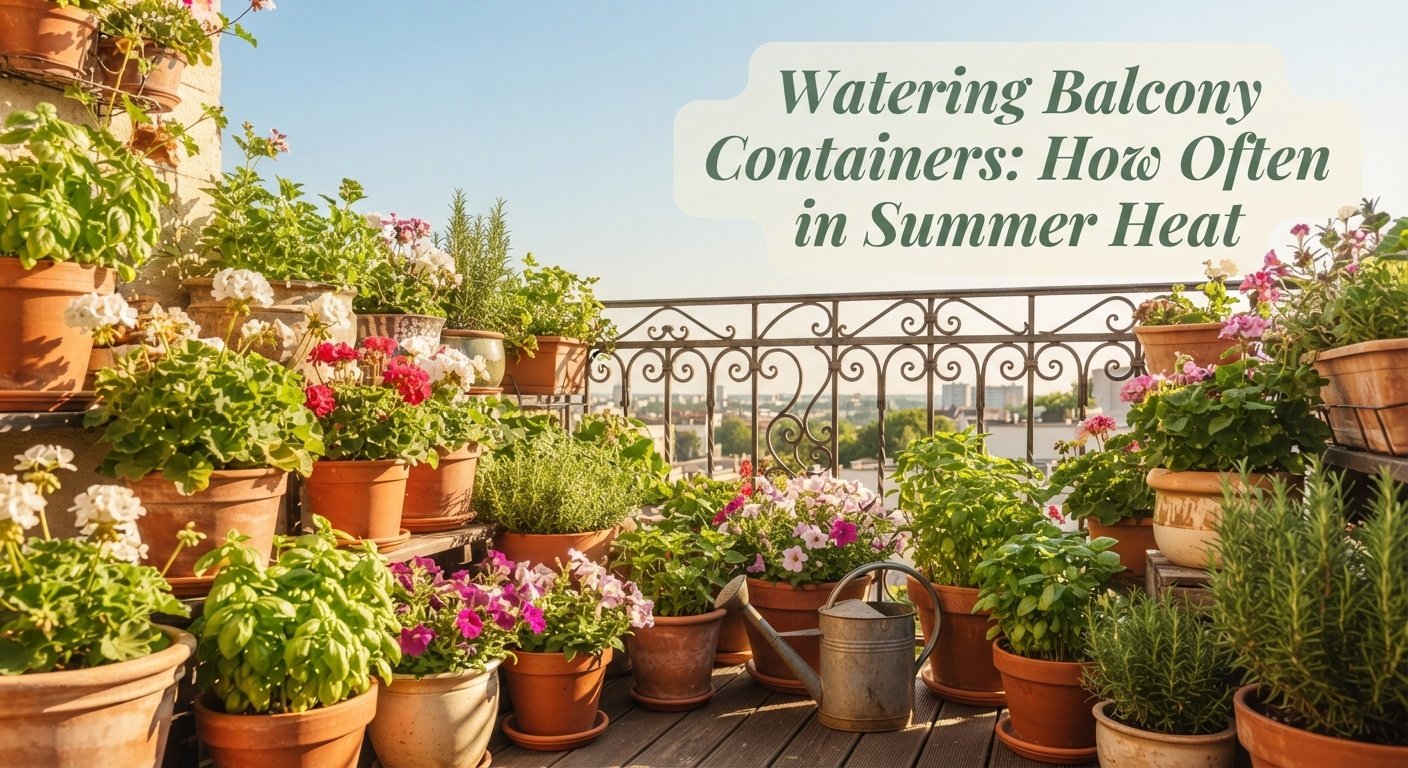
There’s no single number that works here, and anyone who gives you one without asking about your pot size, material, and exposure is guessing. A 6-inch terracotta pot on a west-facing high-rise balcony in July might need water twice a day. The same plant in a 16-inch glazed ceramic pot on a shaded ground-floor balcony might go three days between waterings. Same plant, wildly different answers.
So instead of a fixed rule, here’s how to actually figure out your own number, and what changes it once summer heat sets in.
1. Why Containers Dry Out So Much Faster Than Garden Soil
A garden bed has depth, insulation, and a huge reservoir of soil around the root zone that buffers temperature swings and holds moisture in reserve. A container has none of that. Roots are confined to a few liters of potting mix, surrounded on all sides by material that heats up in direct sun, and often sitting on a hot balcony floor that’s radiating heat back up from below.
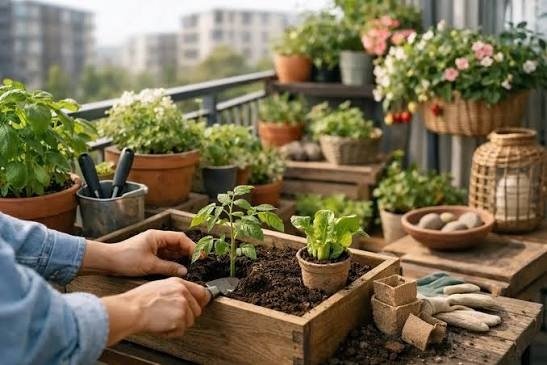
This is why container plants can show wilting on the same day a garden bed plant looks fine. The soil volume simply can’t hold enough water to buffer against a hot afternoon the way ground soil can. If you haven’t already worked out how much direct sun and heat your specific spot actually gets, the piece on why your balcony feels hotter than a backyard covers the radiant heat side of this in more detail, and it changes the watering math considerably once you factor it in.
2. What Actually Determines Your Watering Frequency
Four variables matter more than anything else, and most watering problems trace back to one of them being ignored.
Pot material changes evaporation speed a lot. Unglazed terracotta is porous and breathes, which keeps roots cooler but also means water escapes through the pot walls, not just the soil surface. Glazed ceramic, plastic, and metal containers hold moisture longer because nothing is escaping sideways.
Pot size determines your buffer. Smaller pots heat through faster and hold less total water, so they need more frequent attention, sometimes daily in peak summer regardless of plant type. Larger containers, generally 14 inches or wider, give roots more insulation and a bigger reserve.
Sun exposure and wind are the two conditions worth testing directly rather than assuming. A balcony that gets six-plus hours of harsh afternoon sun dries out completely differently than one getting the same six hours spread across a cooler morning window. If you haven’t mapped this yet, reading your balcony’s sun before planting walks through how to track it properly, and wind adds another layer on top since it pulls moisture from both soil and leaves faster than heat alone.
Plant type matters too, though less than people expect. Leafy greens and shallow-rooted herbs dry out fast because their root systems stay near the surface. Deeper-rooted plants like tomatoes and peppers can tap slightly cooler, moister soil lower in the pot, which buys a little more time between waterings even in the same conditions.
3. A Rough Starting Point, Then Adjust From There
Treat this as a starting frame, not a rule. Your specific balcony will pull you off it in one direction or another within the first week.
| Pot Size | Sheltered, Moderate Sun | Full Sun, Sheltered | Full Sun, Windy or High-Rise |
|---|---|---|---|
| Under 8 inches | Every 2 days | Daily | Daily, sometimes twice |
| 8 to 12 inches | Every 2 to 3 days | Every 1 to 2 days | Daily |
| 12 to 16 inches | Every 3 to 4 days | Every 2 days | Every 1 to 2 days |
| Over 16 inches | Every 4 to 5 days | Every 3 days | Every 2 days |
That right-hand column is where most of the surprises happen. A lot of people set up their watering habit based on a mild spring week and never revisit it once real summer heat and wind conditions kick in, which is exactly where plants start declining without an obvious cause.
4. Where People Usually Go Wrong
The single biggest mistake is watering on a fixed schedule instead of checking the soil. A calendar doesn’t know that yesterday was overcast and today is a 95-degree day with wind gusting off the building next door. Check soil moisture by hand, about an inch down, before watering rather than going by what day of the week it is.
The second mistake is shallow, frequent watering that never actually reaches the full root zone. A quick splash on top that runs straight through a hot, dry pot often wets only the top inch or two before draining out the bottom, leaving deeper roots dry. Water slowly, until it runs from the drainage holes, rather than giving a fast surface pass that feels sufficient but isn’t.
And a smaller one worth mentioning: watering in the middle of a hot afternoon means a good portion evaporates before it even reaches the roots, and cold water hitting hot soil can shock some plants. Early morning is the better window, since it gives roots time to take up moisture before the heat of the day, and a second check in early evening on the worst days catches anything that dried out faster than expected.
5. Small Adjustments That Buy You More Time Between Waterings
A thin layer of mulch, bark, gravel, or even straw on the soil surface slows evaporation meaningfully and is one of the cheapest fixes available. Grouping pots close together also helps, since plants shade each other’s soil and create a slightly cooler, calmer pocket of air than a single container standing alone.
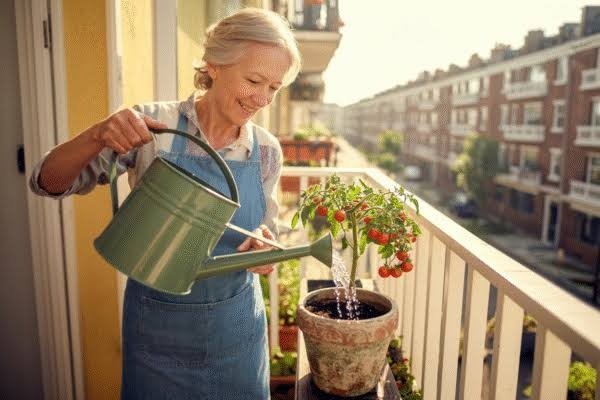
Self-watering pots with a built-in reservoir are worth considering for anyone traveling or working long hours during peak summer, since they buffer against the daily swings that catch people off guard. And if your balcony runs on the smaller side to begin with, container choice interacts with all of this more than plant choice does at first, which the piece on container size mattering more than plant choice at first try gets into if you’re still deciding what to plant into.
Frequently Asked Questions
How do I know if I’m overwatering instead of underwatering? Wilting can actually look similar for both, which trips people up. Check soil moisture before assuming; if it’s still wet a couple inches down and the plant is wilting with yellowing lower leaves, that’s more likely overwatering and poor drainage than thirst.
Should I water every plant on my balcony the same amount? No, and this is a common source of trouble. Group pots by similar water needs when possible, since a succulent and a leafy green sitting next to each other on the same watering schedule usually means one of them is unhappy.
Is it bad to water at night instead of morning? It’s not ideal but not disastrous either. Evening watering can leave foliage damp overnight, which slightly raises the risk of fungal issues in humid climates, though for most balcony containers this is a minor concern compared to getting the volume and consistency right.
What’s the fastest way to tell if a pot needs a bigger size for summer? If you’re watering daily and the plant is still wilting by afternoon even in decent soil, the container is likely too small for the current heat and plant size. Sizing up gives roots more buffer and immediately reduces how often you need to check on it.
Do self-watering pots actually work as well as people say? For most common balcony plants, yes, particularly during peak summer stretches. They’re less useful for plants that prefer drier conditions between waterings, like many herbs and succulents, since a constant reservoir can keep soil wetter than those plants want.
Once you’ve watched your containers through a few real hot days and adjusted from there, the guessing mostly stops. It becomes less about a schedule and more about reading the pot, the plant, and whatever the sky decided to do that particular afternoon.