A reader messaged me a while back asking whether it was even worth trying to garden since her lease said no permanent structures on the balcony. She’d been eyeing a small balcony setup for months, had a whole board of ideas saved, and then just stopped before she started because of one clause she read too literally.
I asked her to send me the actual language. It was standard stuff, no drilling into the building, no permanent fixtures, nothing about a landlord objecting to potted plants. She’d built an entire mental barrier around a restriction that, once she read it carefully, didn’t apply to what she actually wanted to do.
This happens constantly, and it’s worth talking about directly because I think the lease gets blamed for something that’s usually a different problem entirely.
1. What Most Leases Actually Restrict
Most residential leases are concerned with permanent alterations to the property, not portable containers sitting on a balcony floor. Drilling holes, installing permanent trellises bolted into railings, running irrigation lines through walls, that kind of thing draws scrutiny because it changes the physical structure of a unit someone else owns.
According to research compiled by the Healthy Food Policy Project, tenants are generally permitted to grow food in areas designated for their private use, and portable containers are typically treated as personal property that a renter can simply take with them when they move. That’s a meaningfully different situation than what my reader had imagined. Container gardening, which is what almost everyone on an apartment balcony is doing anyway, tends to sit comfortably inside what leases actually allow.
Where leases genuinely get stricter is around weight, drainage onto neighbors’ spaces below, and anything that could be read as a safety hazard. Those are real constraints worth understanding fully, and if you haven’t already looked into what your specific balcony can structurally handle, it’s worth calculating your balcony’s actual weight capacity before assuming a lease clause is the bigger issue.
2. The Obstacle That’s Actually Doing the Damage
Here’s where people usually go wrong, and I say this having done it myself in my first rental. The real barrier isn’t legal, it’s the fear of doing something irreversible in a space you don’t fully control. You’re hesitant to commit time, money, and effort to a garden you might have to abandon in eleven months when the lease is up.
That hesitation is completely reasonable. But it produces a strange outcome: people who would genuinely enjoy gardening talk themselves out of even trying a small, low-commitment version of it, because they’re mentally treating a rental balcony like it needs the same permanence as a backyard they own outright.
And look, I get it. I felt exactly the same way in my first apartment. I kept thinking, why invest in good pots and real soil if I’m moving in a year. Then I actually did the math on what a decent set of containers costs versus what I’d spend on takeout in a single month, and the calculation stopped making sense as an excuse.
3. What Renter-Friendly Actually Looks Like in Practice
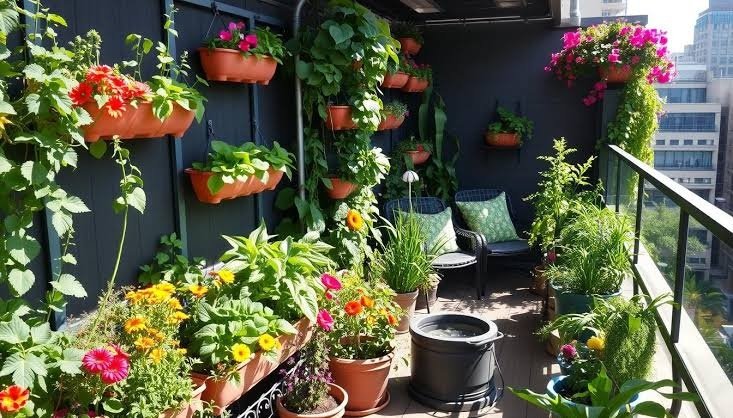
The fix isn’t ignoring the lease question, it’s designing around portability from the start instead of treating every plant purchase as a permanent commitment. Nothing about a genuinely good container garden requires it to be fixed to the building.
| Setup Element | Renter-Friendly Version | What to Avoid |
|---|---|---|
| Containers | Lightweight, movable pots you take when you leave | Anything cemented, built-in, or bolted to a railing |
| Watering | Self-watering pots or a simple drip system on a timer | Plumbed irrigation lines through exterior walls |
| Support structures | Freestanding trellises or tension rods | Anything drilled directly into railings or siding |
| Soil | Bagged potting mix you can bring or discard easily | Bulk garden soil dumped loose onto the balcony floor |
| Plant choice | Herbs, compact vegetables, and perennials that tolerate repotting | Trees or shrubs that need to go into the ground eventually |
None of this is complicated once you see it laid out. It’s just a shift from thinking about permanence to thinking about portability, which happens to be a better mindset for balcony gardening in general, lease or no lease. Small Balcony Garden exists mostly to help people make that shift without feeling like they’re settling for a lesser version of a real garden.
4. Making the Setup Actually Work for a Temporary Space
Once you accept that portability is the design goal rather than a compromise, a few practical choices make the whole thing easier. Self-watering containers matter more for renters specifically, since they reduce how dependent your plants are on a rigid schedule if you’re traveling or juggling a move. I’ve written more about self-watering pots versus drip irrigation for trips if that trade-off is relevant to your situation.
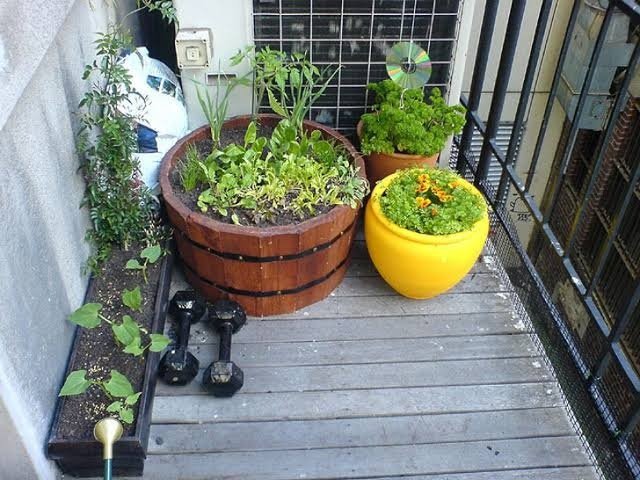
Pot material also matters differently for renters than for homeowners. You’re not just picking based on aesthetics or how a pot handles heat and wind, you’re picking based on how easily it moves during a future relocation. Heavy ceramic looks great and holds moisture well, but it’s a genuinely different proposition to carry down three flights of stairs than a fiber or resin container. If wind exposure is also a factor on your balcony, this breakdown of pot materials that survive wind best covers both angles at once.
If you’re starting from zero and don’t want to overcommit before you know whether you’ll even enjoy the process, starting several plants indoors first is a genuinely smart, low-risk entry point. Small Balcony Garden’s guide to starting plants indoors walks through which varieties handle that transition well before they ever touch your balcony railing.
My reader ended up building a modest setup that fall. Six containers, all lightweight, all things she could carry down to her car in one trip if she moved. She told me later the lease had barely factored into any of the actual decisions once she stopped treating it as the main obstacle. It was never really about the lease. It was about giving herself permission to start something small.
FAQs
Can my landlord really make me remove my container garden? In most cases, if you’re using portable containers on a balcony designated for your private use, landlords have limited grounds to object, though this varies by jurisdiction and by what your specific lease says about the space. Reading the actual clause, rather than assuming the worst, resolves this more often than people expect.
What if my lease doesn’t mention gardening at all? Silence in a lease generally means it’s neither explicitly permitted nor explicitly banned, and reaching out to your landlord directly for a quick confirmation is usually simpler and less stressful than guessing. A short, polite message asking about container plants on the balcony tends to get a straightforward answer.
Is it worth investing in good containers if I might move within a year? Quality lightweight containers move with you and last for years across multiple apartments, so the cost spreads out over more than one lease term. Cheap pots that crack or degrade in a single season often end up costing more over time.
Do I need permission for hanging planters or railing-mounted boxes? Anything that attaches to the railing itself, rather than sitting on the balcony floor, is more likely to fall under lease restrictions on alterations. Freestanding versions of the same idea, using tension rods or floor stands instead of hardware, generally sidestep the issue entirely.
What should I do if I’m still unsure whether something is allowed? Ask before you buy the material, not after. A quick written confirmation from your landlord or property manager, even over email, protects you far better than assuming based on what other renters have told you.
For anyone who wants the fuller picture on what tenants can generally expect regarding food gardens on rented property, Washington State University Extension has a genuinely practical guide worth reading.