I killed three basil plants in one August because I trusted a self-watering pot I’d never tested before leaving town. That trip was only five days. I came back to a reservoir that had gone dry on day three and soil that had baked into something closer to brick than potting mix. It wasn’t the pot’s fault, exactly. It was mine, for assuming “self-watering” meant “no thinking required.”
That mistake is basically why I get asked the same question every summer: self-watering pots or drip irrigation, which one actually keeps a balcony alive while you’re away. The honest answer is that it depends on your setup, and neither option is the plug-and-forget miracle the packaging suggests. Let’s walk through both, side by side, the way I’d explain it to a neighbor standing in my doorway with a suitcase already packed.
1. What Self-Watering Pots Actually Do
A self-watering pot holds a reservoir underneath or beside the soil, and a wick or capillary channel pulls water up as the soil dries. In theory, you fill the reservoir once, and the plant sips from it for days or weeks depending on size, heat, and how thirsty the plant is.
In practice, the reservoir size is everything. A small balcony planter with a two-liter reservoir might get you three or four days in mild weather. Put that same planter on a west-facing balcony in July, and you could be back down to a day and a half. I’ve tested this more than once on my own balcony, and the difference between a shaded corner and a sun-blasted railing spot was almost double the water use.
The wicking mechanism also matters more than most product descriptions let on. Rope wicks degrade over time and need replacing. Capillary mats can clog with root growth or mineral buildup from tap water. If you haven’t opened up your self-watering pot and looked at the wick in the last year, you honestly don’t know if it still works, and that’s a bad thing to discover the day before a trip.
2. What Drip Irrigation Actually Does
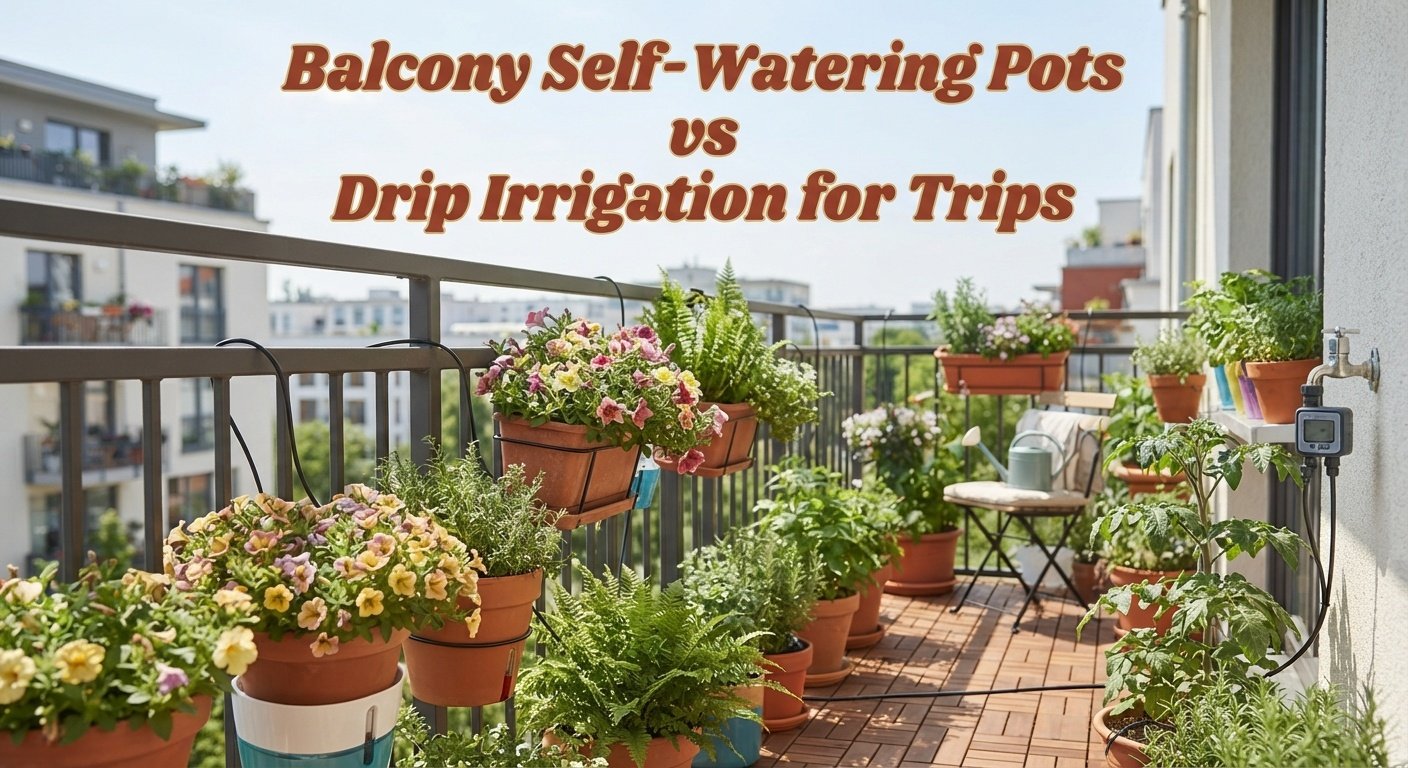
Drip irrigation runs a thin line of tubing to each pot, with a small emitter that releases water on a timer, drop by drop, directly at the base of the plant. Unlike a self-watering reservoir, it doesn’t rely on the plant pulling water. The system pushes it out on a schedule you set, which means it keeps working the same way on day one and day fourteen.
This is where drip pulls ahead for longer trips. A reservoir pot is a fixed amount of stored water. A drip system connected to an outdoor tap, or even a large jug with a gravity-fed drip line, keeps delivering water as long as the source doesn’t run dry and the timer has battery power. For anyone gone more than a week, that difference decides whether your plants survive or you come home to compost.
The tradeoff is setup and dependency on infrastructure most balconies don’t have built in. You need a spigot or a large enough reservoir jug, tubing that reaches every pot, and a battery-powered timer. If your balcony doesn’t have an outdoor water source, and most rental apartments don’t, you’re rigging something with a jug on a stool and gravity, which works, but it takes an afternoon to set up correctly the first time.
3. Side-by-Side Comparison
| Self-Watering Pots | Drip Irrigation | |
|---|---|---|
| Best for trips under | 5-7 days (varies by heat and pot size) | 1-3+ weeks |
| Setup time | Minutes, mostly buying the right pot | 30-90 minutes for a small balcony |
| Needs outdoor tap | No | Preferred, though jug systems work |
| Failure mode | Wick clogs or reservoir runs dry silently | Timer battery dies or emitter clogs |
| Upfront cost | Low to moderate per pot | Moderate, one-time for the whole balcony |
| Works for mixed plant sizes | Awkward, one reservoir per pot | Easy, adjust emitter flow per pot |
If you’ve only got a handful of pots and you’re gone for a long weekend, a self-watering pot is genuinely enough. If you’ve built out a real balcony garden with a dozen containers and you travel for two or three weeks at a stretch, drip irrigation earns its setup time.
4. Where People Usually Get This Wrong
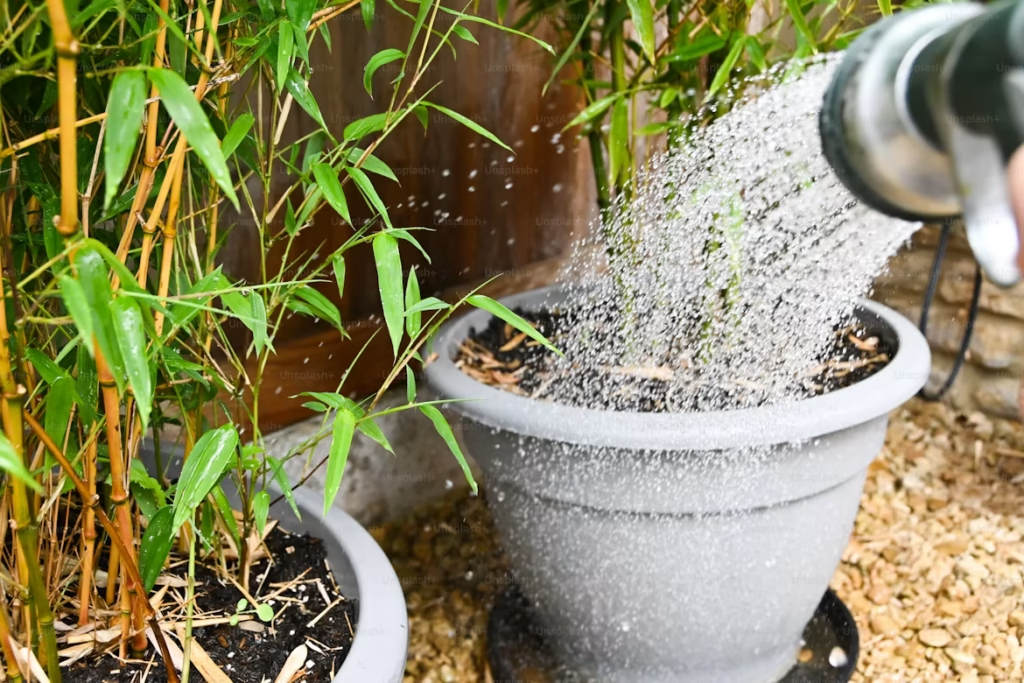
The most common mistake I see is buying a self-watering pot the week before a trip and never test-running it. Fill the reservoir, water the plant normally so the wick is primed, and then watch it for three or four days before you actually need it to work unsupervised. If the soil is still damp on day four with no help from you, you’ve got a system you can trust. If it’s already dry, you’ve just found out the safe way instead of the expensive way.
The second mistake is assuming drip irrigation needs no maintenance once it’s installed. Emitters clog, especially with hard tap water leaving mineral deposits over a season. Before any trip longer than a few days, run the system for ten minutes while you watch every single emitter. A clogged emitter looks identical to a working one until you’re standing there watching water not come out.
And here’s a smaller thing that trips people up on both systems: wind. If your balcony gets consistent gusts, and a lot of higher-floor units do, soil dries faster than the reservoir or drip schedule accounts for. I’ve written more on reading your balcony’s specific wind exposure, and it’s worth checking before you set either system to “trip mode” and walk away.
5. A Hybrid Approach That Actually Works
For most of my clients, and for my own balcony most seasons now, the answer isn’t picking one system. It’s grouping plants by trip length and treating them differently. Herbs and smaller pots that dry out fast go into self-watering containers, checked and primed a few days before departure. Larger containers, tomatoes, anything root-bound and thirsty, get a simple drip line off a jug with a battery timer.
This split matters more once your balcony has more than four or five pots going, because a single system stretched across very different container sizes ends up either overwatering the small pots or underwatering the big ones. I learned this the hard way after that basil disaster, and it’s the same layout smallbalconygarden.online walks through in its piece on why balconies run hotter than a backyard, since that heat difference is exactly why the split matters.
If you’re still building out your container collection and haven’t settled on pot sizes yet, it’s worth reading through a simple guide to picking your first pots before you invest in either watering system, since pot size changes how fast either method dries out.
6. Weight and Water Storage, a Detail Most People Skip
A full self-watering reservoir, or a jug feeding a drip line, adds real weight to a balcony that might already be close to its limit, especially if you’re running several pots at once. This isn’t usually dangerous for a short trip, but if you’re setting up a permanent drip system with a large storage jug, it’s worth calculating your balcony’s actual weight load rather than guessing. It takes about ten minutes to work out for your specific balcony, and smallbalconygarden.online has a full walkthrough if you’ve never done the math before.
None of this needs to be complicated. It just needs fifteen extra minutes of testing before you leave, instead of hoping the packaging was right.
Frequently Asked Questions
Can I combine a self-watering pot with a drip line for extra insurance on a long trip? Yes, and I’ve done this for trips over two weeks. The drip line becomes the main water source, and the reservoir acts as backup if the timer battery dies or an emitter clogs partway through the trip.
Do self-watering pots work for vegetables like tomatoes, or just herbs? They can work for tomatoes, but you’ll need a larger reservoir than most starter pots include, since tomatoes drink far more than basil or mint during a heat wave.
How do I know if my tap water will clog a drip emitter over time? Hard water with visible mineral buildup around your faucet is the biggest warning sign. If you see that buildup, plan to soak emitters in a mild vinegar solution every few months to keep them clear.
Is it safe to leave a drip timer running on battery power for three weeks unattended? Most quality timers last several months on a fresh battery, but replace it before any trip longer than a week rather than assuming it has enough charge left, since a dead timer mid-trip defeats the whole point.
What’s the single biggest reason self-watering pots fail while people are away? An unprimed or already-degraded wick, almost always. The pot looks fine sitting on the shelf, but the actual water transfer mechanism was never tested under real conditions before it had to work alone.
For more detail on drip system components and spacing, the University of Maryland Extension’s drip irrigation guide is worth skimming if you’re building a setup from scratch, and Illinois Extension’s notes on watering container gardens are a good sanity check if you’re mixing self-watering pots with hand watering on the days you’re actually home.