
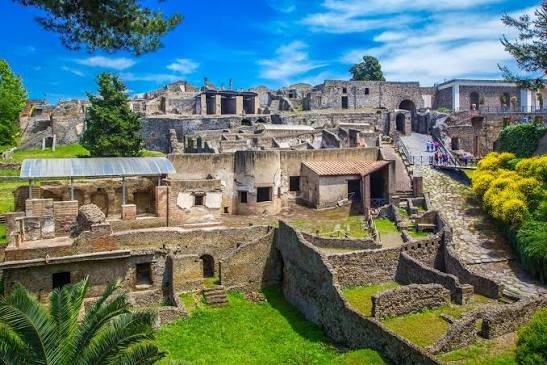
There’s a plaque in Pompeii, easy to walk past if you’re not looking for it, marking a second-floor apartment where archaeologists found pollen and root casts pressed into what used to be a wooden ledge. Someone was growing something up there almost two thousand years ago, three stories above a street that no longer exists. It wasn’t a garden by any grand definition. It was a person with limited space doing exactly what balcony gardeners do now.
That detail tends to surprise people. Balcony gardening gets treated like a modern compromise, something urban dwellers settled for once backyards stopped being an option. The actual history runs the other way. Growing things above ground level, on ledges, terraces, and rooftops, is one of the oldest continuous gardening practices there is, and it says something useful about why small balcony garden setups work as well as they do today.
1. Rome, Pompeii, and the First Balcony Gardens
Roman apartment buildings, called insulae, stacked families five and six stories high in cities like Rome and Ostia. Ground-level space belonged to shops and wealthier households with proper courtyards. Everyone else lived upward, and archaeological digs at Pompeii and Herculaneum have turned up evidence of container gardening on upper floors, including root systems in what were clearly deliberate planting vessels rather than random debris.
These weren’t decorative flourishes. Food was expensive and unreliable in a Roman insula, and herbs, in particular, grew well in small containers with minimal soil. The plants found match what you’d expect: things that don’t need deep roots or huge volumes of dirt. Sound familiar? It’s almost exactly the same logic behind picking best balcony herbs for windy spots today. Different century, same physics.
2. Hanging Gardens, Real or Not, Set the Template
The Hanging Gardens of Babylon get invoked constantly in garden writing, usually as a vague symbol of ambition rather than an actual reference point. Whether they existed exactly as described by ancient sources is still debated by historians, some now argue the gardens were actually in Nineveh rather than Babylon, built under Sennacherib rather than Nebuchadnezzar. But the engineering problem they describe is real and it’s the same one every balcony gardener faces now: how do you support significant plant weight and water needs on a raised, load-limited structure.
Ancient irrigation solutions for elevated gardens relied on screw pumps and channeled runoff, essentially early drainage engineering. Modern balconies solve the same problem with drainage holes and weight distribution, just with plastic pots instead of stone terraces. Anyone who has read through calculating your balcony’s weight load is, in a strange way, working from the same set of constraints someone was solving for three thousand years ago.
3. The Victorian Window Box Boom
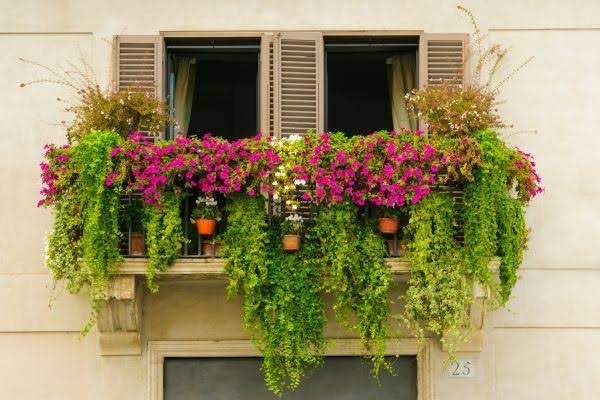
Balcony gardening as most people picture it today, small containers on a railing or ledge outside an apartment window, really took shape during the Victorian era. Industrialization pulled huge populations into cities across Britain and continental Europe, and housing density meant most people had no yard at all. Window boxes and small balcony plantings became one of the only ways to keep any connection to growing things.
There was a public health angle too, which gets left out of most garden history writing. Victorian cities were smoky, crowded, and often genuinely unhealthy, and greenery on balconies and window ledges was promoted, sometimes explicitly by public health reformers, as a way to improve air quality and mental wellbeing in tenement housing. That framing hasn’t disappeared. It’s just quieter now, folded into modern conversations about urban green space rather than stated outright the way Victorian pamphlets used to state it.
4. What Container Materials Reveal About Each Era
Every period of balcony gardening history left a fingerprint in the materials people used, mostly dictated by what was cheap and available rather than what worked best.
| Era | Common Container Material | Main Driver |
|---|---|---|
| Roman (1st century) | Terracotta, clay amphorae | Local clay abundance, low cost |
| Victorian (1800s) | Cast iron window boxes, wood | Industrial metalwork availability |
| Mid-20th century | Galvanized steel, early plastics | Post-war material innovation |
| Present day | Plastic, resin, fiberglass, terracotta | Weight, cost, and drainage control |
Terracotta’s persistence across nearly two thousand years is the interesting part. It was the default in Pompeii and it’s still sold in every garden center now, despite plastic being lighter, cheaper, and easier to manage for balcony weight limits. If you’ve ever wondered whether the classic terracotta pot is actually the right call for your space, balcony terracotta pots struggle in heat gets into exactly where that material starts working against you rather than for you.
5. Where the History Actually Helps You Now
Here’s where people usually misread this kind of history piece. They read about Rome or Babylon and assume it’s trivia, disconnected from anything useful for a fifth-floor apartment balcony in 2026. It isn’t. Every constraint ancient and Victorian balcony gardeners worked around, weight limits, wind exposure, limited soil depth, unreliable water access, is the same constraint list small balcony garden covers now. The tools changed. The problem didn’t.
And that’s oddly reassuring, if you think about it for a second. A gardener in an insula in 60 AD picking herbs that could survive shallow containers and constant wind was solving the exact puzzle a renter on the ninth floor is solving today, just without a hardware store nearby. The instinct to grow something small in a space that wasn’t built for growing anything at all, that instinct is old. Older than most of the buildings we live in now.
None of this history changes the practical checklist. Sun exposure still needs checking, wind still needs accounting for, and weight limits still matter regardless of how good the plaque on that Pompeii wall makes ancient container gardening sound. What it does change is the framing. A balcony garden was never really the consolation prize version of gardening. It’s closer to the original version, and the backyard vegetable patch is the relatively recent invention.
FAQs
Were ancient balcony gardens mostly food crops or decorative plants? Mostly food and herbs, especially in Roman insulae, where fresh produce was expensive and unreliable. Purely decorative balcony gardening became more common later, particularly during the Victorian window box period.
Did the Hanging Gardens of Babylon actually exist? Historians remain divided. Some ancient sources describe them in Babylon under Nebuchadnezzar, while other evidence points to a similar garden built in Nineveh under Sennacherib, and no confirmed archaeological site has settled the question either way.
Why did terracotta stay popular for so long when better materials exist now? Partly tradition, partly performance. Terracotta regulates soil moisture well in the right climate, though it struggles badly in extreme heat and gets heavy fast, which is a real drawback on weight-limited balconies.
Is there evidence balcony gardening improved health in crowded cities historically? Yes, particularly during the Victorian era, when public health reformers actively promoted window boxes and small plantings in tenement housing as a response to poor urban air quality and cramped living conditions.
What’s the biggest difference between historical and modern balcony gardening? Materials and information access, mostly. The underlying constraints, limited depth, wind, weight, and water, have barely changed, but modern gardeners have far more precise tools for measuring and solving them.
Anyone curious how these same old constraints play out on a real, modern balcony can start with balcony gardening 101, which walks through the basics without assuming any prior experience.