

Wind engineers have known for decades that a tenth-floor balcony and a thirtieth-floor balcony are not experiencing the same weather, even on a day that feels calm at street level. That’s not a guess. It comes out of decades of boundary-layer wind research, the same body of work that shapes how skyscrapers get designed to avoid making pedestrians miserable at ground level. Most balcony gardeners never see this research, but it explains a lot about why the exact same plant thrives on one building and shreds apart on another.
1. Wind Speed Climbs With Height, and It’s Not Subtle
Close to the ground, friction from buildings, trees, and general urban clutter slows wind down. Wind engineers call this the atmospheric boundary layer, and it behaves in a fairly predictable way: speed increases steadily with height until it levels off well above where most people live. This is the same reason a ground-floor courtyard can feel still while a twentieth-floor balcony fifty feet away has a steady breeze pulling at anything not tied down.
The practical version of this for gardeners is simple, even if the underlying physics isn’t. A plant that handles wind fine on a third-floor balcony can genuinely struggle in the exact same pot on a twentieth-floor balcony of the exact same building, facing the exact same direction. Height alone changes the equation, and it changes it more than most people assume before they’ve lived through it.
2. Corners and Edges Make Things Worse
Wind engineering research on tall buildings also points to something gardeners rarely think about: it’s not just height that matters, it’s position on the building. Wind accelerates sharply around building corners and edges as it gets deflected and compressed, sometimes called the corner acceleration or downwash effect. A balcony tucked into a recessed section of a facade behaves very differently from a balcony sitting right at a corner unit, even at the same floor.
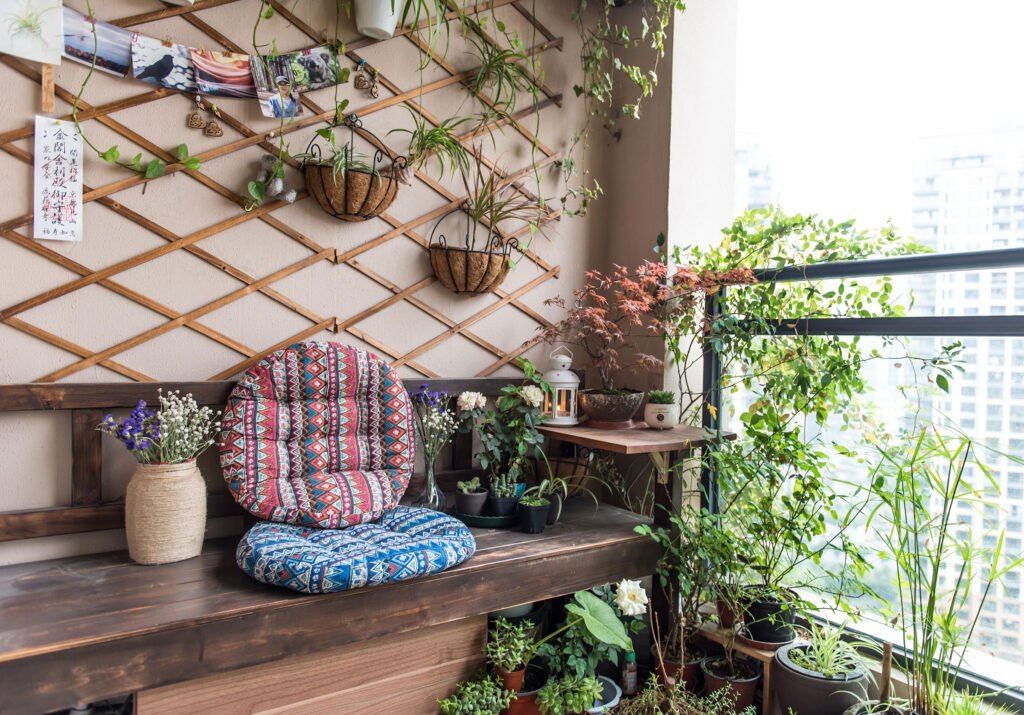
If your unit is an end unit or a corner unit, assume your wind exposure is a category above what a floor-based guess would suggest. This is one of the more common mismatches Small Balcony Garden hears about, gardeners who followed general wind advice for their floor and still lost plants because the corner position pushed conditions further than expected.
3. Where People Usually Get This Wrong
The most common mistake isn’t ignoring wind entirely, it’s assuming a still day at street level means a still day on the balcony. And that assumption is exactly backwards. Calm street-level conditions can coexist with a genuinely gusty balcony twelve floors up, because the wind that’s been slowed near the ground hasn’t been slowed the same way higher up. Gardeners check the weather app, see low wind speeds listed for their general area, and plant accordingly, without accounting for the fact that ground-station wind readings describe conditions at roughly ten meters, not the fortieth floor.
It’s worth actually testing your specific balcony rather than trusting a weather app number. A simple way to do this is outlined in how to tell if your balcony is too windy for a garden, and it takes less effort than replacing a third round of shredded basil.
4. What This Actually Means by Floor Range
Real wind engineering data doesn’t map cleanly onto a simple chart, there are too many variables involving building shape, surrounding structures, and local terrain. But general patterns from boundary-layer research give a reasonable working guide.
| Approximate Floor Range | General Wind Exposure | Plant Considerations |
|---|---|---|
| Ground to 5th floor | Closest to street-level conditions, often sheltered by nearby buildings and trees | Most plants tolerate this range well |
| 6th to 15th floor | Noticeably higher and steadier wind than ground level | Wind-tolerant herbs and sturdy perennials do better than delicate annuals |
| 16th to 30th floor | Consistent, often stronger gusts, especially at corners | Structural, low-profile, and wind-bred plants perform best |
| Above 30th floor | High sustained wind speeds, frequent gusting | Container gardening becomes genuinely difficult without serious wind mitigation |
This isn’t a precise formula, and it shouldn’t be treated as one. It’s a rough starting point for calibrating expectations before you buy plants that were never going to survive where you’re putting them.
5. Choosing Plants That Actually Match This
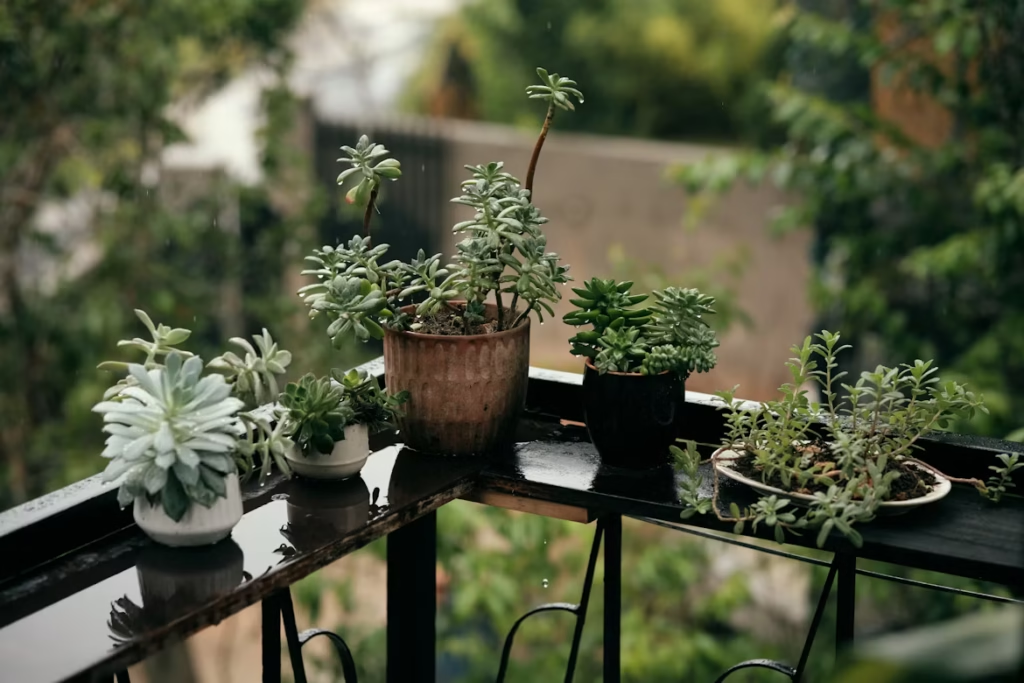
Once wind exposure is treated as a real variable instead of an afterthought, plant selection gets a lot more targeted. Compact, low-growing herbs with flexible stems handle gusts far better than tall, top-heavy plants in narrow pots. Rosemary, thyme, and oregano tend to shrug off wind that would flatten basil within a week. For a more complete rundown, the best balcony herbs for windy spots covers which varieties are actually bred or naturally suited for this.
Direction matters here too, and it’s worth pairing wind considerations with orientation. A north-facing versus south-facing balcony doesn’t just change sun exposure, it often changes which direction prevailing wind hits the space from, which compounds with height in ways that are easy to miss if you’re only thinking about light.
6. Weight Matters More at Height Too
There’s a secondary consideration that wind data indirectly points toward: heavier pots resist wind better, but weight limits get stricter the higher up you are in most buildings, not because of gardening but because of structural load distribution. Before loading up on heavy ceramic pots as a wind mitigation strategy, it’s worth actually running the numbers using how to calculate your balcony’s weight load, because solving a wind problem by creating a structural one isn’t really solving anything.
7. A Practical Note on All This
None of this means high floors are off limits for container gardening. It means the plant list needs to shift, the pot choice needs to account for both wind and weight, and expectations need to be set by the actual conditions rather than a generic gardening guide written with ground-level assumptions baked in. Small Balcony Garden readers on higher floors who’ve adjusted around this tend to end up with gardens that look sparser but survive consistently, rather than lush ones that get replaced every few weeks.
That tradeoff is worth making peace with early, because fighting it season after season with the wrong plant list gets expensive and discouraging fast.
FAQs
Does wind speed really double between a low floor and a high floor? It varies a lot by building and location, but wind engineering research consistently shows a substantial increase with height, sometimes reaching close to double or more in tall buildings compared to ground level. There’s no single fixed number that applies everywhere.
Is a covered balcony immune to this height effect? No, though it helps. Covering reduces direct exposure but doesn’t eliminate the pressure changes and turbulence that come from being higher up on the building, especially near corners or edges.
What’s the single best wind-resistant plant for a high floor? Rosemary is a strong option for most high-rise balconies. It’s naturally adapted to exposed, windy conditions and tolerates the kind of consistent gusting that shreds softer-leaved herbs.
Should I just give up on tall or top-heavy plants above a certain floor? Not entirely, but they need real support. Staking, dwarf varieties, and heavier low-set pots can make taller plants viable higher up, though it takes more effort than it would at street level.
How do I know if my specific balcony is windier than expected for its floor? Position matters as much as height. Corner units and balconies with nothing blocking the prevailing wind direction tend to run windier than their floor number alone would suggest, so it’s worth observing your own space over a few weeks before committing to a full plant list.
Anyone dealing with unexpected wind damage regardless of floor should also take a look at why balcony plants die from wind rather than cold, since the two get confused constantly and the fix for each is completely different.