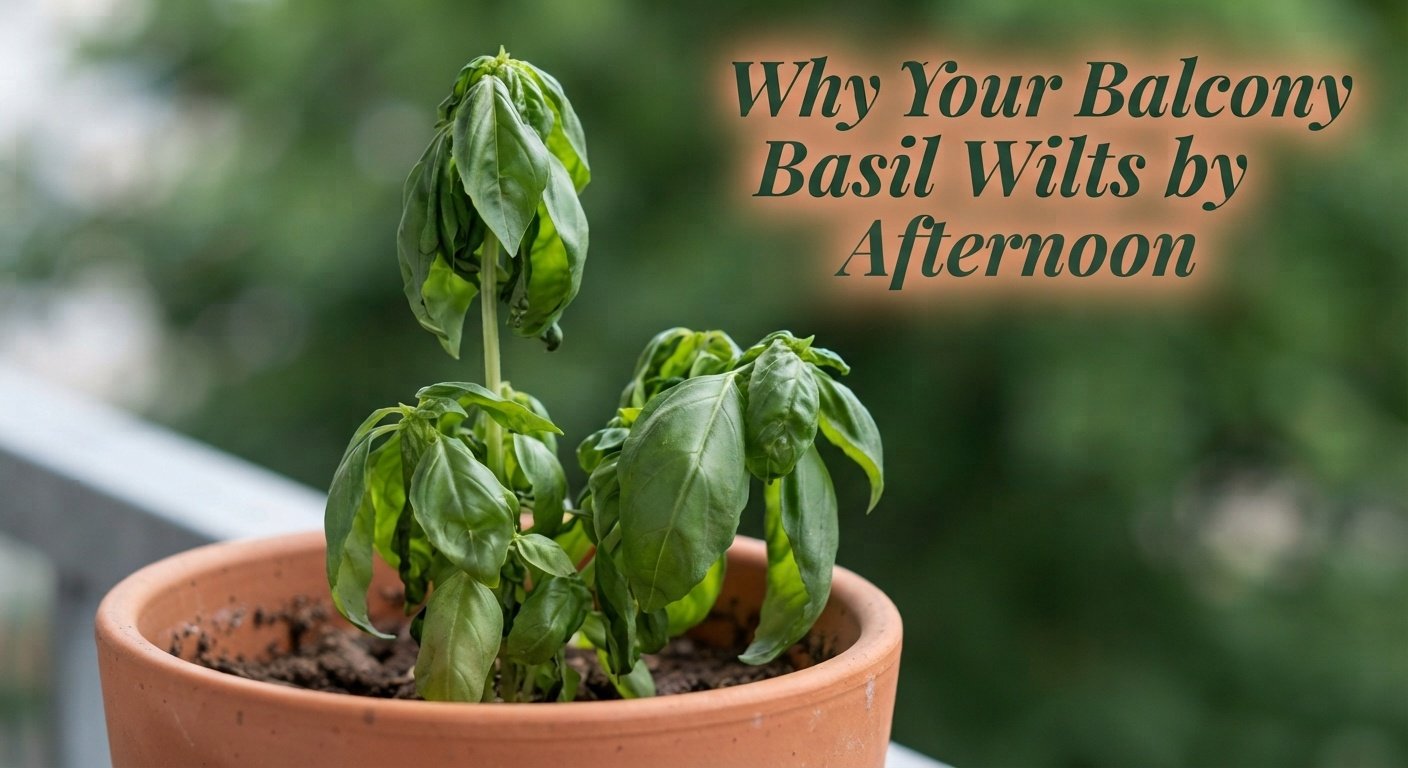
Every summer I get some version of the same message. Basil looked perfect at nine in the morning, sad and flat by three, and back to looking mostly fine again after sunset. People assume they’re underwatering. Half the time they’re doing the opposite, and the other half, the water has nothing to do with it at all.
Basil wilting on a schedule like that is usually not a watering problem. It’s a heat management problem wearing a watering problem’s clothes.
1. What’s Actually Happening When Basil Droops at 3 PM
Basil leaves are thin and soft compared to something like rosemary, which means they lose water through transpiration fast when the air heats up. On a hot afternoon, the plant can be pulling moisture out of its leaves faster than the roots can replace it, even when the soil underneath is perfectly moist. The plant wilts on purpose, temporarily, as a way of reducing leaf surface exposed to the sun.
This is called transient wilting, and it’s different from drought stress. Transient wilting usually resolves on its own once temperatures drop in the evening. Drought stress does not resolve without water, and the leaves tend to feel dry and papery rather than just droopy.
The mistake I see constantly is treating every wilt like the second kind. Someone sees flat leaves at 3 PM, panics, waters heavily, and the basil is sitting in soggy soil by dinnertime with roots that were never actually short on water to begin with.
2. Check the Soil Before You Touch the Watering Can
Before adding water, stick a finger about two inches into the pot. If the soil there is still damp, the plant is dealing with heat, not thirst, and it will perk back up once the sun moves off the balcony.
If the soil is dry at that depth, you’ve got an actual water deficit contributing to the wilt, and a slow, thorough watering is the right call. Quick surface watering doesn’t help much here since it wets the top layer and does little for the root zone where it matters.
A rough guide for reading basil in the afternoon:
| Symptom at 3 PM | Soil at 2 Inches Deep | Likely Cause | What to Do |
|---|---|---|---|
| Droopy but leaves feel soft and hydrated | Damp | Transient heat wilt | Nothing, it recovers by evening |
| Droopy, leaves feel slightly dry | Dry | Water deficit | Water slowly and deeply now |
| Yellowing lower leaves, wilted | Wet or soggy | Overwatering, poor drainage | Let soil dry out before next watering |
| Crispy, brown leaf edges | Bone dry | Prolonged drought stress | Water immediately, expect some leaf loss |
Here’s where people usually go wrong, and it’s not a small thing. They see the first row of that chart and respond like it’s the second row. Overcorrecting for a wilt that was never about water is one of the fastest ways to actually kill container basil, because it’s already prone to root rot in anything less than sharply draining soil.
3. The Pot Itself Might Be Working Against You
Container material and size change how much heat basil’s roots are exposed to, and this matters more on a balcony than in a backyard bed, since balconies run hotter to begin with. If you haven’t already worked through why your particular balcony runs warmer than a ground-level garden, why your balcony feels hotter than a backyard covers the surface-heat side of this in more detail, and it explains a lot of the afternoon wilt pattern before you even get to watering habits.
Thin plastic pots heat up fast and transfer that heat straight to the root ball. A dark-colored plastic pot sitting on hot concrete can push root zone temperatures well past what basil actually tolerates well, and the plant responds by wilting even with adequate soil moisture. Terracotta breathes better but dries out faster, so it’s a genuine tradeoff rather than a clear upgrade.
Pot size matters just as much. Basil in a container that’s too small dries out and heats up faster simply because there’s less soil mass buffering the temperature swing. If your basil is still in the small nursery pot it came in, that alone might explain most of your afternoon wilting, and it connects directly with what I’ve written about container size mattering more than plant choice at first, which is a mistake almost everyone makes at least once.
4. Timing Your Watering Actually Changes the Outcome
Watering basil in the early morning, before the heat of the day sets in, gives the plant a full reservoir of moisture to draw from before it starts losing water through transpiration. Watering in the evening works too, though morning tends to reduce fungal issues since foliage has all day to dry.
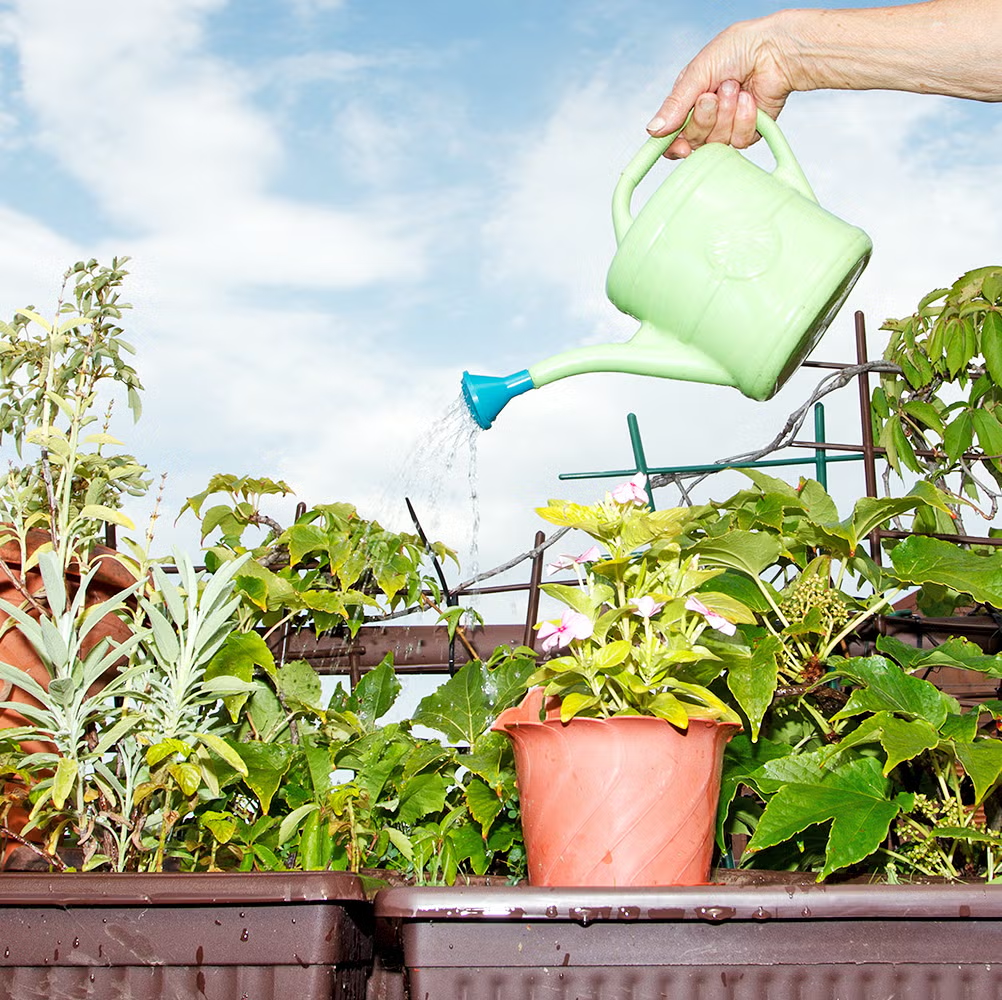
Watering during the hottest part of the afternoon, right when the plant is already wilting, is the least effective time, and cold water on hot soil can shock the roots slightly. It won’t kill the plant, but it doesn’t help nearly as much as people expect either. If you’re checking your balcony’s light pattern to plan around this, reading your balcony’s sun before planting is worth revisiting, since knowing exactly when your balcony hits peak heat lets you time watering around it instead of guessing.
One thing that genuinely helps and gets overlooked: mulching the soil surface with a thin layer of straw or even shredded bark slows evaporation and keeps root temperature more stable through the afternoon. It’s a small step that does more than most people assume for a plant this shallow-rooted.
5. When Relocation Is the Real Fix
Sometimes the honest answer isn’t a watering adjustment at all. It’s that the spot is simply too hot for basil in the middle of summer, and no amount of technique will change that.
Basil generally wants six or more hours of sun but does noticeably better with morning and early afternoon light rather than a full blast straight through the hottest hours of the day. If your pot sits against a south-facing wall with zero relief between noon and four, moving it even two feet, into a spot with some afternoon shade from a railing or neighboring plant, often solves the wilting pattern outright.
I’ve moved basil three times in one summer before landing on a spot that worked, and I stopped treating that as a failure a while ago. It’s just how balconies work. The microclimate a foot in either direction can be completely different, and there’s no substitute for actually watching where the plant struggles versus where it doesn’t.
And honestly, once you find that spot, everything else gets easier. The watering schedule stops feeling like guesswork.
Common Questions
Should I mist my basil to help it recover from afternoon wilt? Misting foliage doesn’t do much for the root zone, which is where the actual water shortage or heat stress originates. It can feel satisfying but isn’t doing the heavy lifting people hope for.
Will afternoon wilting permanently damage my basil? Occasional transient wilting that resolves by evening generally doesn’t cause lasting harm. Repeated severe wilting from actual drought stress, on the other hand, can stunt growth and push the plant toward bolting early.
Is it normal for basil to wilt every single hot day even with good care? Yes, to some degree. Thin-leafed basil is simply more prone to transient wilting than tougher herbs, and even well-watered, well-positioned plants can droop a little on the hottest afternoons.
Does the type of basil matter for heat tolerance? Somewhat. Genovese basil, the common variety, wilts more readily than Thai basil or some of the smaller-leafed varieties, which tend to handle heat and direct sun a bit better on a balcony.
Should I trim wilted leaves off right away? Not unless they’re actually crispy or dead. Soft, drooping leaves that are still green will usually recover on their own once temperatures drop, and cutting them prematurely just costs the plant leaf area it didn’t need to lose.