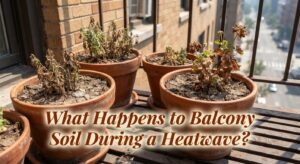
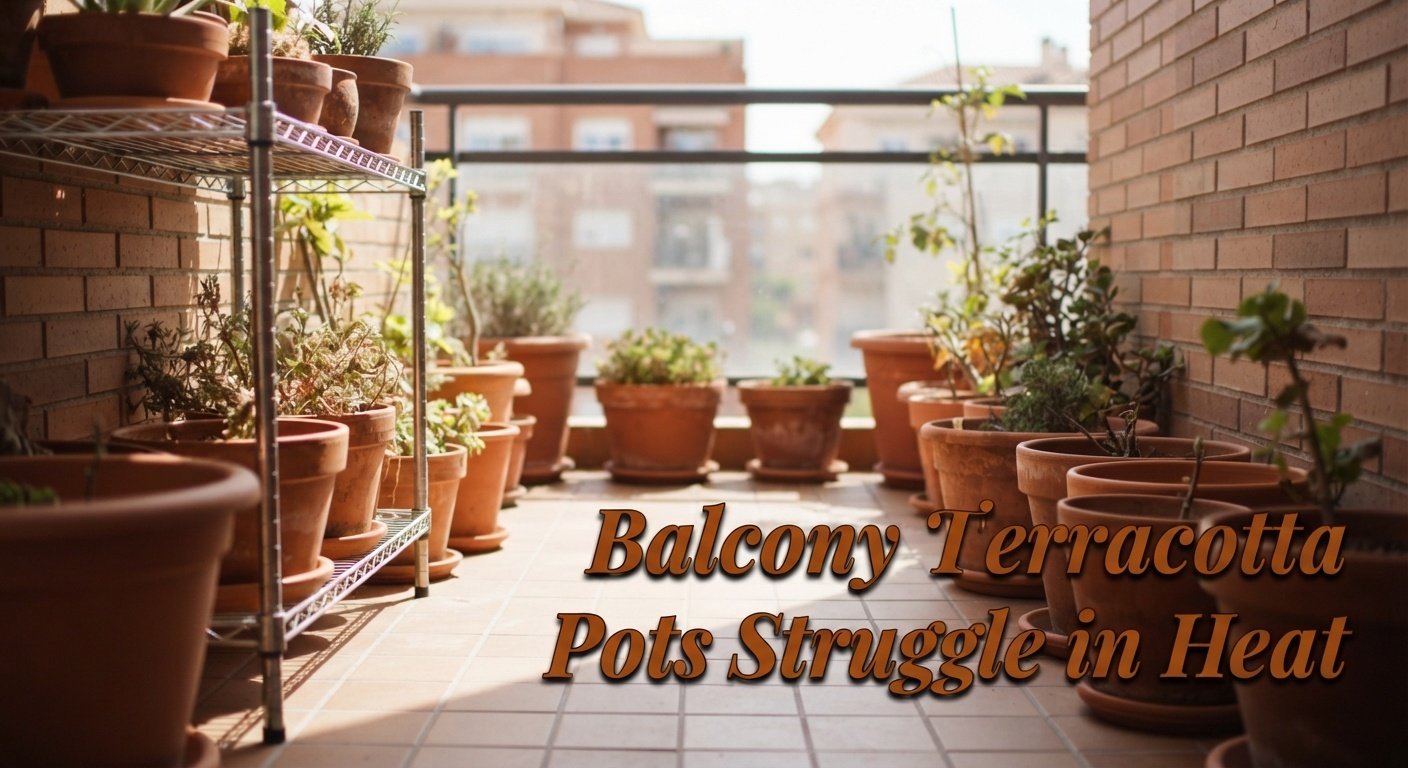
I killed three basil plants in terracotta before I figured out what was actually happening. Not from underwatering, which is what I assumed at the time. From the pot itself, baking in direct August sun on a south-facing rail, turning the root zone into something closer to a kiln than a container. I’d watered them the same way I watered everything else that summer. It wasn’t enough, and it took me embarrassingly long to understand why.
Terracotta gets recommended constantly for balcony gardens, and there’s a real reason for that. It’s breathable, it looks good, it’s been used for container growing for centuries. But breathable cuts both ways, and on a hot, exposed balcony, that same porosity that helps roots avoid waterlogging also lets heat and moisture escape fast enough to stress a plant within a single afternoon.
1. Why Terracotta Behaves Differently Under Direct Sun
Unglazed clay is porous. Water moves through the walls of the pot, not just out through the drainage hole, and that’s normally a feature. It lets excess moisture evaporate, which helps prevent root rot, especially for plants that hate sitting in soggy soil.
The tradeoff shows up the moment you put that same pot in six or more hours of direct, reflected balcony sun. The clay itself heats up, sometimes considerably more than the surrounding air, and it holds that heat right against the root zone. A plastic or glazed ceramic container in the same spot would trap moisture longer and heat up less on the surface. Terracotta does the opposite on both counts, and most planting guides don’t mention it because they’re written with backyard conditions in mind, not a slab of concrete and a glass railing throwing extra light back at the plant.
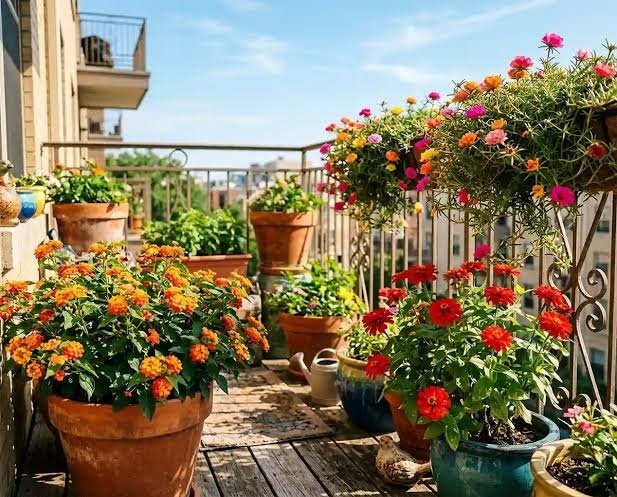
I’ve measured the difference with a cheap soil thermometer more than once, out of curiosity more than anything else. On a ninety-degree afternoon, unglazed terracotta sitting in full sun ran noticeably hotter at the root zone than a plastic container of the same size placed right next to it. That’s not a small variance. That’s the difference between a plant that’s merely stressed and one that’s cooking.
2. The Two Failure Modes I See Most Often
There are really only two ways this goes wrong, and once you can name them, you can usually catch the problem before it kills anything.
The first is straightforward moisture loss. Terracotta wicks water out through its walls constantly, not just when the soil surface dries. In a hot, sunny, windy balcony spot, a terracotta pot can need water twice a day during peak summer, and if you’re watering on a backyard-container schedule, once daily or every other day, the plant is running dry for hours before you notice.
The second is subtler, and it’s the one that actually killed my basil. Root-zone overheating doesn’t always show up as wilting first. Sometimes it shows up as stalled growth, or leaves that look fine in the morning and scorched by afternoon even though the soil wasn’t bone dry. People water more, assume it’s a moisture problem, and the plant keeps declining anyway. Here’s where people usually go wrong: they treat every symptom of heat stress as a watering problem, when the pot material itself is working against them regardless of how often they water.
3. What Actually Helps a Terracotta Pot Survive a Hot Balcony
None of this means abandoning terracotta. It means managing around what it does.
Pros of sticking with terracotta on a hot balcony:
- Genuinely reduces overwatering risk for plants that hate wet feet
- Weighs enough to resist tipping in wind, which matters on high-rise balconies
- Ages well and looks better over time instead of degrading like plastic
- Widely available in sizes that fit tight balcony footprints
Cons worth taking seriously:
- Heats up faster and holds more heat than plastic or glazed ceramic
- Dries out significantly faster, sometimes needing water more than once daily
- Can crack in freeze-thaw cycles if left outside in cold climates
- Heavier when wet, which matters if you’re already tight on weight capacity
If you’re working through how much weight your balcony can actually hold, that’s worth sorting out before you commit to a row of large terracotta containers, since a few full ones add up fast. We’ve walked through that math in more detail in our piece on calculating your balcony’s weight load, and it’s worth doing before, not after, you fill anything.
The single biggest fix, and the one I lead with every time someone asks me about this, is shade at the pot itself, not just the plant. Grouping containers together so they shade each other’s walls helps. So does placing terracotta pots where something, a railing, another plant, a small trellis, blocks direct afternoon sun from hitting the container surface even if the plant above still gets light. You’re not trying to shade the leaves. You’re trying to keep the clay itself from turning into a heat source.
Double-potting works too, and it’s the trick I use most now. Set the terracotta pot inside a slightly larger plastic or ceramic outer pot, with a little space or a layer of gravel between them. It breaks the direct heat transfer from sun-baked clay straight into the root ball, and it costs almost nothing to set up with containers you probably already have sitting around.
4. Matching Terracotta to the Right Plants and Spots
Some plants tolerate terracotta’s quirks better than others, and matching wisely saves a lot of frustration.
Mediterranean herbs, rosemary, thyme, oregano, sage, actually do well in terracotta even in hot conditions, because they evolved in dry, well-drained, heat-tolerant environments to begin with. The fast drying that stresses a tomato barely registers with these.
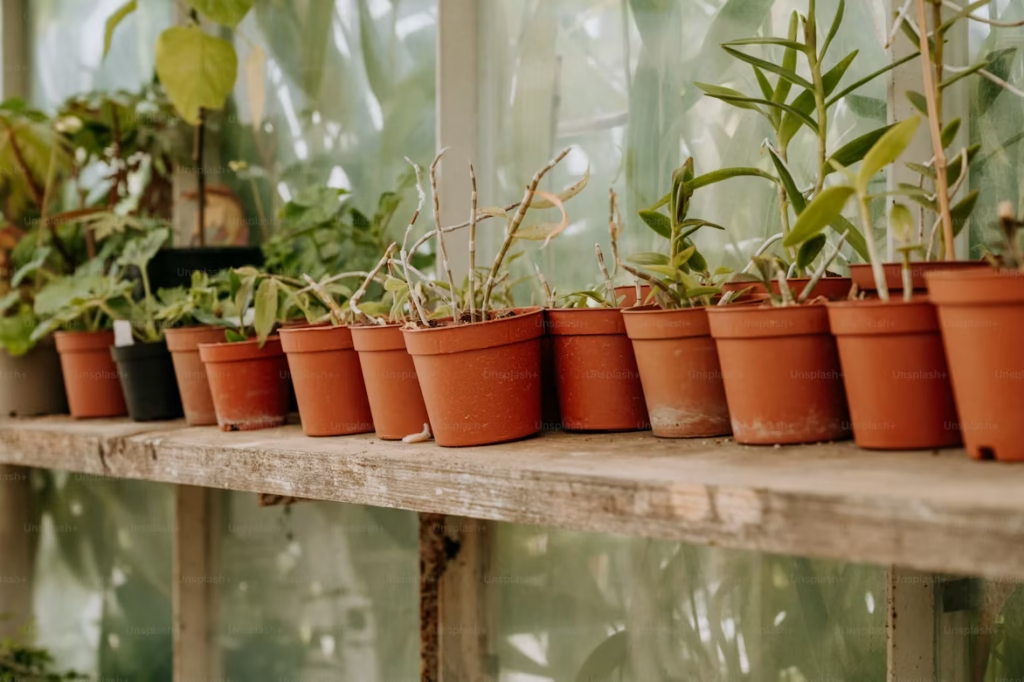
Leafy greens and shallow-rooted herbs like basil and parsley are the ones that struggle most, which is exactly what happened to me. Their root systems sit closer to the pot walls by proportion, so they feel the heat and moisture swings faster and harder than a deep-rooted plant would.
If your balcony gets fewer than four hours of direct sun, a lot of this becomes moot, since the pot never heats up enough to create the problem in the first place. That’s a different conversation from the one most people need, though, since most of the terracotta complaints I hear come from full-sun, south or west-facing setups.
For anyone still working out how much light their specific balcony actually gets before deciding on pot material at all, our guide on reading your balcony’s sun before planting covers how to track that properly across a full day, and it’s genuinely worth doing before you buy pots, not after. Container sizing matters just as much as material once you’ve got the light figured out, and our piece on container size versus plant choice walks through picking the right volume for what you’re actually growing.
I still use terracotta on my own balcony, just not everywhere, and not without a plan for the hottest stretch of summer. That’s really the whole lesson. It’s not a bad material. It’s a material with a specific weakness that most people don’t hear about until they’ve already lost a plant to it.
FAQs
Is terracotta a bad choice for a hot, sunny balcony overall? Not bad, but it needs management that plastic or glazed ceramic doesn’t. If you’re not prepared to water more often or add some shade for the pot itself, a less porous material will be more forgiving for full-sun spots.
Can I glaze or seal a terracotta pot to reduce heat and moisture loss? Sealing the interior with a pot liner or a coat of pot sealant reduces water loss through the walls, though it doesn’t do much for surface heat absorption. It’s a partial fix, not a complete one.
Why did my terracotta plant look fine in the morning and wilted by afternoon even though the soil wasn’t dry? That pattern points to root-zone heat stress rather than a moisture problem. Check the pot’s surface temperature in the sun. If it’s hot to the touch, that’s likely the real issue, not underwatering.
Do darker-colored terracotta pots make this worse? Yes, somewhat. Darker glazes and stains absorb more heat than the natural light orange-tan color of unglazed clay, so a dark terracotta pot in full sun will typically run hotter than a lighter one of the same material and size.
Should I switch everything to plastic instead? Not necessarily. Plastic solves the heat and moisture-loss problem but reintroduces overwatering risk for plants that need to dry out between waterings. It’s a tradeoff either way, and the right call depends on what you’re actually growing.
For more background on how container material affects root zone temperature, the University of Illinois Extension has a solid technical rundown worth reading if you want the deeper horticultural explanation behind what’s described here.