
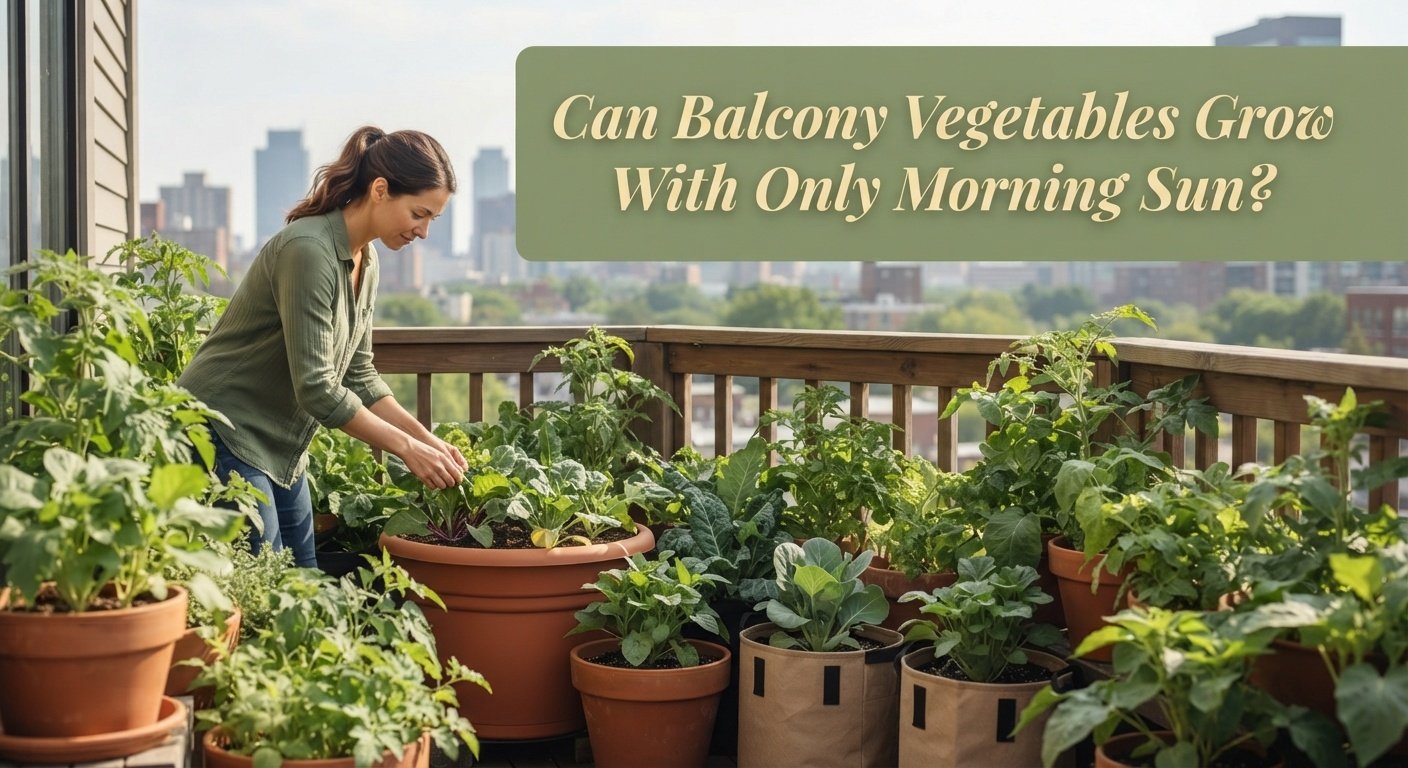
Most people assume morning sun is the consolation prize of balcony gardening. The apartment didn’t come with a south-facing rail, so you got soft, early light instead, and somewhere along the way you decided that meant your vegetable dreams were smaller too. That belief is wrong more often than it’s right, and it costs people a whole growing season before they figure that out.
I’ve had readers write in convinced their east-facing balcony was basically useless for anything but herbs. Then they’d send a photo three months later of cherry tomatoes doing just fine, because it turns out morning sun is not the weak sibling of afternoon sun. It’s just different, and different vegetables respond to it differently. Some actually prefer it.
1. What “Morning Sun Only” Actually Means in Hours
Before sorting out what will grow, you need to know what you’re working with, and “morning sun” isn’t a fixed quantity. On some balconies it means two hours between 7 and 9 AM before a neighboring building swallows the light. On others it stretches to five or six hours, ending around 1 PM when the sun swings past whatever’s blocking the west side.
That range matters enormously. Two hours of direct light puts you in shade-tolerant territory no matter how you slice it. Five to six hours of morning sun, though, functions almost like full sun for a lot of crops, just shifted earlier in the day. The plants don’t know or care what time it is. They care about total light energy received, and cooler, gentler morning intensity actually means less water stress than the same number of hours baking in afternoon heat.
So the first move, always, is tracking your actual hours rather than guessing from the direction your railing faces.
2. The Myth: Morning Sun Can’t Support Fruiting Vegetables
Here’s where people usually go wrong, and it’s an understandable mistake. Tomatoes and peppers get labeled “full sun” plants in every seed catalog, and full sun gets shorthand-translated into “needs afternoon sun,” which isn’t quite the same claim.
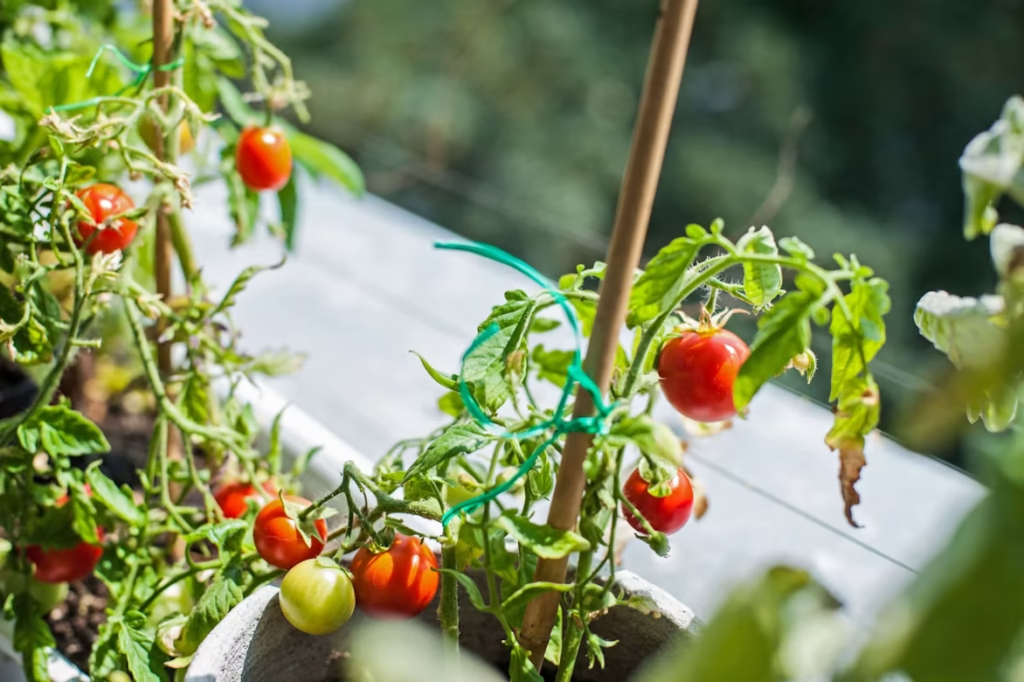
What tomatoes actually need is six or more hours of direct light and warm root temperatures. A balcony with five to six hours of strong morning sun, especially one that holds heat into early afternoon even after direct light fades, can produce a genuinely solid tomato harvest. Determinate varieties and smaller-fruited types like cherry and grape tomatoes tend to do better here than large beefsteak varieties, which really do want that extra intensity.
Peppers are more forgiving than people expect too. They’re slower to ripen in morning-only light, and you might be picking two or three weeks later than a south-facing garden, but they get there.
Where the myth holds real water is with crops like eggplant and full-size squash, which genuinely struggle without long stretches of intense heat and light. If your morning window is under four hours, those two are probably not worth the container space.
3. What Actually Thrives With Only Morning Light
This is the part that surprises people the most, honestly. A whole category of vegetables performs better with morning sun and afternoon shade than they would with the reverse.
Lettuce, spinach, and other leafy greens bolt to seed fast once afternoon heat sets in, so a balcony that gives them cool morning light and shade later in the day is close to ideal. Same story with most herbs, especially cilantro and parsley, which turn bitter and go to seed quickly under harsh afternoon sun. Radishes, bush beans, and peas also do well, and beans in particular tend to set pods reliably as long as they’re getting four-plus hours of direct light somewhere in that morning stretch.
| Crop | Minimum Morning Hours Needed | Notes |
|---|---|---|
| Lettuce, spinach | 3-4 hours | Prefers this over afternoon sun |
| Cilantro, parsley | 3-4 hours | Bolts fast in afternoon heat |
| Bush beans | 4-5 hours | Reliable pod production |
| Cherry tomatoes | 5-6 hours | Smaller varieties, not beefsteak |
| Peppers | 5-6 hours | Slower ripening, still workable |
| Eggplant | 6+ hours, afternoon heat helps | Struggles without it |
If you’re still working out your exact light window, our piece on reading your balcony’s sun before planting walks through the hour-by-hour tracking method, and it’s worth doing before you commit to seedlings based on a guess.
4. Adjustments That Make a Bigger Difference Than People Think
A few small changes stretch morning-only light further than most gardeners realize.
Reflective surfaces help more here than they would in a full-sun setup. A white wall or light-colored railing behind your containers bounces extra light onto the plants during those morning hours, which can meaningfully extend the effective exposure window. Dark pots absorb and hold heat longer into the afternoon too, which partly compensates for the lack of direct afternoon sun, though you’ll want to watch soil moisture more closely since dark containers dry out faster.
Timing your watering matters differently as well. Morning-sun balconies tend to stay cooler overall, so soil dries out more slowly than on a west-facing setup, and overwatering becomes the more common mistake rather than underwatering. Check the soil before assuming your plants are thirsty just because the calendar says July.
And this is a bit of a side note, but worth mentioning. Container placement within the balcony matters as much as the balcony’s overall orientation. I’ve seen people crowd their tomato pot into a back corner that gets an hour less light than the front rail, then wonder why their harvest is underwhelming compared to a neighbor with the identical setup. Move things around during your tracking period, not just once and forget it.
For anyone still setting up their space from scratch, small balcony gardens: a simple guide to your first pots covers container sizing decisions that pair well with whatever light plan you land on.
5. When Morning Sun Genuinely Isn’t Enough
None of this means every balcony works for vegetables. If your actual tracked light comes in under two hours, even the leafy greens and herbs will struggle, and you’re better off with shade-tolerant ornamentals or houseplants that summer outdoors. There’s no workaround for that, and pretending otherwise just wastes a season and some money on seedlings that were never going to make it.
But two hours is a lower bar than most people assume disqualifies them, and a surprising number of balconies people have written off as “shade only” turn out to have three or four usable hours once someone actually counts instead of guesses.
Common Questions
Can I still grow tomatoes with only four hours of morning sun? You can try, but expect a smaller harvest and slower ripening compared to five or six hours. Cherry or grape varieties will handle it better than large slicing tomatoes, and supplementing with a reflective surface behind the pot can help close the gap.
Do vegetables need direct sun specifically, or does bright indirect light count? Direct sun and bright indirect light are not interchangeable for fruiting vegetables like tomatoes and peppers, which need the intensity of direct rays to set fruit properly. Leafy greens and herbs are more flexible and can do reasonably well with strong indirect light supplementing a few hours of direct sun.
Is it worth using grow lights to extend a short morning window? For a hobby-scale balcony garden, a basic clip-on grow light can extend usable hours for seedlings or leafy greens, though it won’t fully replace direct sun for fruiting crops. It’s more useful for getting transplants established early than for carrying mature plants through fruiting season.
Will my morning-sun balcony change much between spring and summer? Often yes. As the sun’s angle shifts higher through early summer, morning light can start later or end earlier depending on what’s blocking your view, so it’s worth rechecking your hours around the solstice rather than relying on a single spring reading.
What’s the biggest mistake people make on morning-sun balconies? Choosing plants based on the “full sun” label without accounting for when those hours happen. A tomato that would thrive with six afternoon hours might sulk with the same six hours split earlier in the day, and matching variety choice to your specific window matters more than the general sun category.
If you want a broader reference point on sun categories and how nurseries define them, the Old Farmer’s Almanac guide to sun requirements is a decent starting place for cross-checking plant tags against your own tracked hours.