Last July I watered a pot of basil at 8am, went to work, and came home to find it wilted flat by 6pm. The soil looked fine on top. Underneath, it was bone dry two inches down, and the roots had basically stopped trying. That’s the moment I started paying attention to what heat actually does to container soil, as opposed to what it does to soil in the ground, because the two behave nothing alike.
Balcony containers heat up faster, dry out faster, and recover slower than garden beds. If you’ve ever wondered why your plants seem to suffer more during a heatwave than a neighbor’s backyard garden, the soil itself is usually the reason, not just the air temperature.
1. Container Soil Heats From More Than One Direction
In the ground, soil is insulated by the earth around it. A pot has no such protection. Sun hits the surface, but heat also radiates in through the sides of the container, especially if it’s a dark plastic or thin terracotta pot sitting against a hot railing or concrete floor.
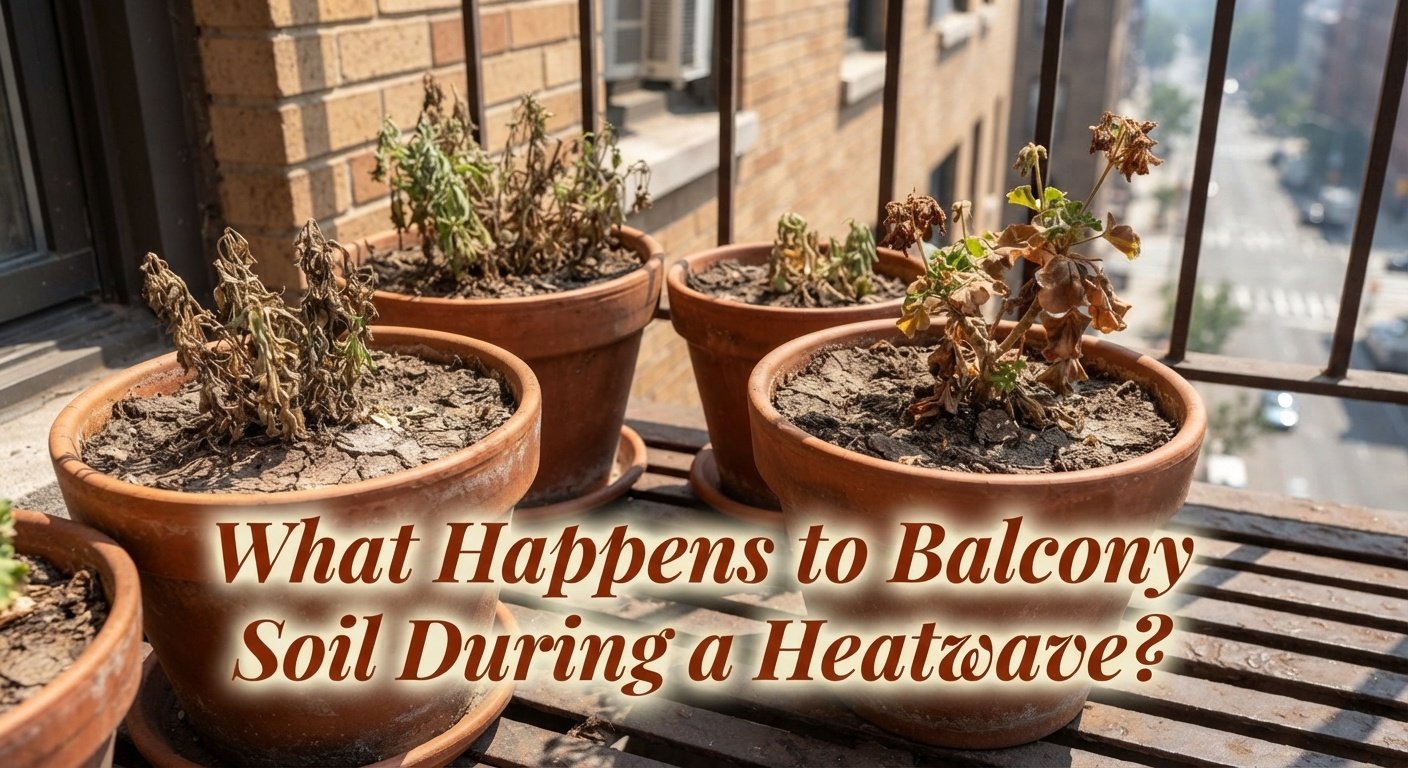
This matters because root damage from heat doesn’t require the soil to look dry. Roots can start struggling once soil temperature climbs past roughly 85°F (29°C), and dark containers on a sun-facing balcony can hit well above that on the surface layer within a couple of hours of direct afternoon light. If you’ve never checked, a cheap soil thermometer is genuinely worth the ten dollars. It tells you more than a moisture meter does during a heatwave.
If you’re still working out how much direct sun your space actually gets before you plant anything, reading your balcony’s sun exposure properly first will save you from guessing wrong on pot placement later.
2. Water Moves Through Fast, But Not Evenly
Here’s where people usually go wrong. They assume that because they watered heavily that morning, the plant is set for the day. In a heatwave, container soil can lose moisture unevenly, drying out at the edges and top layer within hours while staying slightly damp at the very bottom, especially in larger pots. That uneven pattern tricks people into thinking the plant has enough water when the active root zone, which is mostly in the upper half of the pot, has already gone dry.
Smaller containers are worse for this. A 6-inch pot has almost no thermal mass to buffer against heat, so during a heatwave it can dry out twice a day. This is one of the reasons container size ends up mattering more than plant choice once temperatures climb. A tomato in an 18-inch pot and a tomato in a 10-inch pot are effectively living in different climates during the same heatwave.
Quick reference: how fast different pot sizes typically dry out in 90°F+ heat
| Pot diameter | Material | Approx. time to dry (full sun) |
|---|---|---|
| 6-8 inches | Plastic | 4-6 hours |
| 6-8 inches | Terracotta | 3-4 hours |
| 12-14 inches | Plastic | 8-12 hours |
| 12-14 inches | Terracotta | 6-9 hours |
| 18+ inches | Plastic or glazed ceramic | 12-24 hours |
These are rough figures, not a guarantee. Wind exposure changes this a lot too, and if you’re on a balcony that already runs hotter than expected, it’s worth understanding why your balcony feels hotter than a backyard in the first place, since reflected heat off railings and walls plays a bigger role than most people assume.
3. Soil Structure Actually Breaks Down Under Repeated Heat Stress
This part surprises people. Repeated heating and drying cycles change the physical structure of potting mix over a season, not just its moisture content. Organic matter breaks down faster in high heat, and the mix can start to shrink away from the pot’s edges, creating a gap that lets water run straight down the sides and out the drainage holes without ever soaking into the root zone. If you’ve noticed water pouring out the bottom of a pot almost immediately after watering, even though the plant still looks thirsty, this is usually why.
The fix isn’t complicated but it does take a minute. Press the soil back against the pot walls with your fingers before a heatwave hits, and if the mix has visibly shrunk or compacted, top it up. A thin layer of mulch, even just shredded bark or dry leaves, cuts surface evaporation noticeably and slows this whole cycle down.
4. Watering Timing Matters More Than Watering Amount
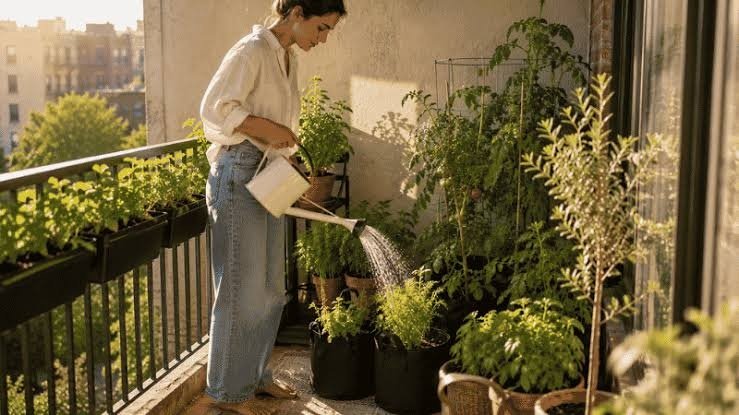
There’s a persistent idea that watering in the evening is better because it gives plants “all night” to absorb moisture. In practice, evening watering during a heatwave can leave soil damp and warm overnight, which isn’t great for root health and can encourage fungal issues in humid climates. Early morning watering, ideally before the soil has had a chance to heat up, tends to work better for most balcony setups, because the plant gets water into its system before the worst heat of the day hits.
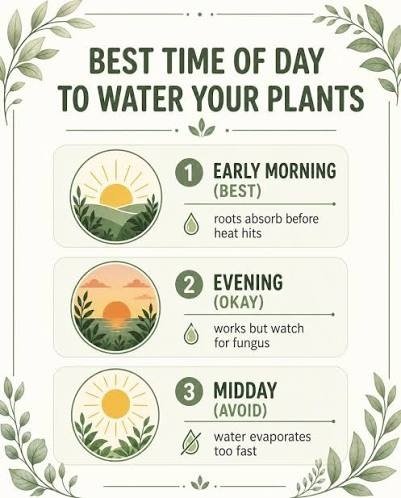
On the hottest days, one watering often isn’t enough. Small containers especially may need a second light watering in early afternoon, not a full soak, just enough to keep the top layer from crossing that dry threshold where roots start pulling back.
And this is where I’ll admit something. For years I watered on a fixed schedule, every other day, because that’s what a plant tag told me once. It took an actual heatwave killing off a pepper plant for me to realize that fixed schedules and container gardening in extreme heat just don’t mix. The soil tells you what it needs. The calendar doesn’t.
5. Some Plants Handle This Far Better Than Others
Not every plant on your balcony experiences a heatwave the same way. Deep-rooted, heat-tolerant plants can ride out a few rough days that would flatten something shallow-rooted and thirsty. If you’re rebuilding a balcony setup with heat resilience in mind, it’s worth testing new plants before giving them a permanent spot, because a plant that struggled last summer probably will again unless the setup itself changes.
Pros and cons of common heat-response strategies:
- Moving pots to partial shade during peak hours: effective, but time-consuming daily, and not possible with heavier containers
- Adding mulch: low effort, meaningfully reduces evaporation, doesn’t help with root zone overheating in small pots
- Switching to larger containers: solves multiple problems at once, but costs money and isn’t quick to do mid-heatwave
- Self-watering inserts or reservoirs: helpful buffer, but won’t fix a container that’s baking in full afternoon sun regardless of moisture
None of these are wrong choices. They just solve different pieces of the same problem, and most balconies end up needing two or three of them combined rather than one fix.
Where small balcony garden setups tend to fall apart during a heatwave isn’t usually plant selection. It’s the assumption that a routine built for normal weeks will hold during an abnormal one. It won’t, and adjusting for a week or two of extreme heat isn’t the same as overhauling your whole approach.
If your balcony has been through a rough stretch and plants are still recovering, checking your setup against a basic first-pots guide can help you spot whether the container itself, rather than anything you did wrong, was working against you the whole time.
FAQs
Does mulch actually make a measurable difference, or is it mostly a nice-to-have? It makes a real difference. A one to two inch layer of mulch can cut surface evaporation significantly, which in small containers can mean the difference between watering once a day versus twice.
My plants look fine in the morning but wilted by afternoon even though the soil isn’t dry. What’s going on? That’s usually heat stress, not drought stress. The plant is losing water through its leaves faster than the roots can pull it up, even with adequate soil moisture. It typically recovers once temperatures drop in the evening. If it doesn’t bounce back overnight, then soil moisture is worth checking properly.
Is it safe to water in the middle of the day during a heatwave if a plant is visibly wilting? Yes, watering midday won’t scorch the leaves the way old garden folklore claims, and if a plant is stressed, getting water to the roots matters more than waiting for a “better” time.
Should I repot into a bigger container in the middle of a heatwave, or wait? Wait if you can. Repotting is stressful for roots on its own, and doing it during extreme heat compounds that stress. If a plant is truly outgrowing its pot, early morning or an overcast day is a better window once temperatures ease.
How do I know if the soil itself needs to be replaced rather than just watered more? If it’s pulling away from the pot edges, feels hard and compacted when dry, or seems to repel water rather than absorb it, that’s a structural problem, not a watering one. That soil usually needs to be refreshed or replaced before the next heatwave hits, not during it.
Extreme heat exposes whatever was already marginal about a container setup. A pot that was borderline too small, a mix that had already started breaking down, a spot with more reflected heat than anyone accounted for. It doesn’t create new problems so much as it puts a spotlight on the ones that were already there, and that’s usually a more useful thing to look at once the heat passes than trying to fix everything in the middle of it.
For more on how soil temperature affects root function generally, the University of Maryland Extension has a solid technical overview worth reading if you want the underlying science.