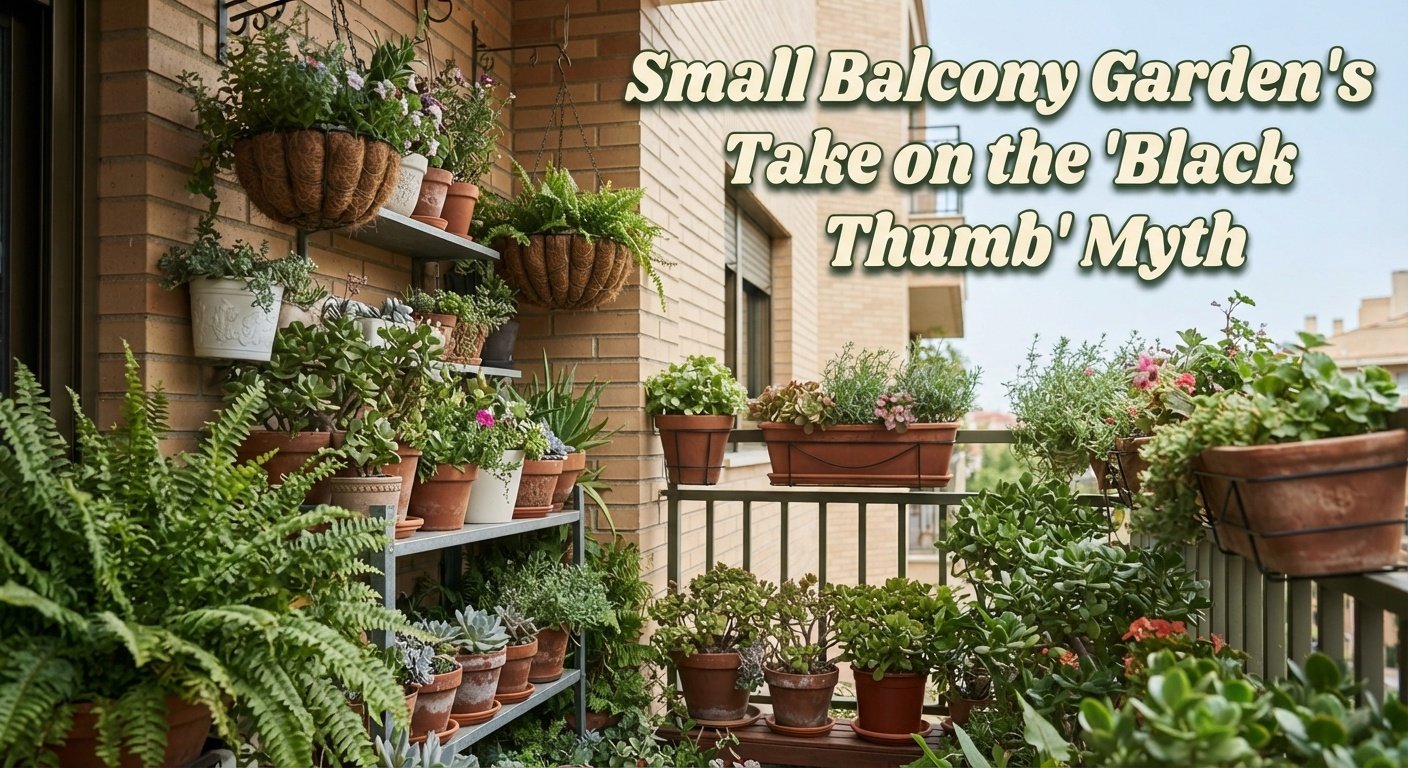
For years I kept a small list, mostly in my head, of people who told me some version of the same sentence. “I just don’t have a green thumb.” “Plants die on me no matter what I do.” I heard it enough times that I started asking follow-up questions instead of nodding along, and almost every single time, the actual story underneath had nothing to do with an innate lack of ability and everything to do with a handful of specific, fixable habits.
There’s no such thing as a black thumb. There’s unlucky pot choice, wrong light assessment, a watering routine copied from someone else’s completely different balcony, and plant selection based on what looked pretty at the store rather than what the space could actually support. Those things compound over a season or two, someone loses four plants in a row, and the story they tell themselves is that they’re simply bad at this. They’re not. They just never got the actual diagnostic information.
Here’s What Usually Happened, Every Single Time
I started keeping informal notes on this a few years back, mostly out of curiosity, whenever someone described their “I kill everything” history to me in enough detail to actually dig into. A pattern showed up almost immediately.
Most of the deaths traced back to one of four things. Overwatering out of anxiety, because a wilting plant reads as thirsty even when it’s actually drowning. Buying a plant with no idea what light conditions it actually needed, based purely on how it looked in a nursery display that had nothing to do with the buyer’s own balcony. A pot with no drainage, often a decorative one bought specifically because it looked nice, with the actual growing pot meant to sit inside it, except nobody explained that part. And plant choice driven entirely by aesthetics rather than any match to the space, which sets a plant up to fail before it’s even potted.
None of these are character flaws. They’re information gaps, and once someone gets the actual information, the outcome changes almost immediately. I’ve watched people who described themselves as hopeless keep a rosemary plant alive for two full years once they understood it needed to dry out almost completely between waterings, which ran directly against their instinct to water anything that looked slightly droopy.
The Overwatering Trap Deserves Its Own Section, Because It’s the Biggest One
If I had to point at a single habit responsible for more “black thumb” stories than anything else, it’s watering out of guilt rather than actual need. A plant droops, the assumption is thirst, more water goes in, and the roots, already sitting in soil that hadn’t dried out yet, start to suffocate and rot. The plant droops more. More water goes in. This cycle repeats until the plant is beyond saving, and the person walks away convinced they have some fundamental incompatibility with keeping things alive.
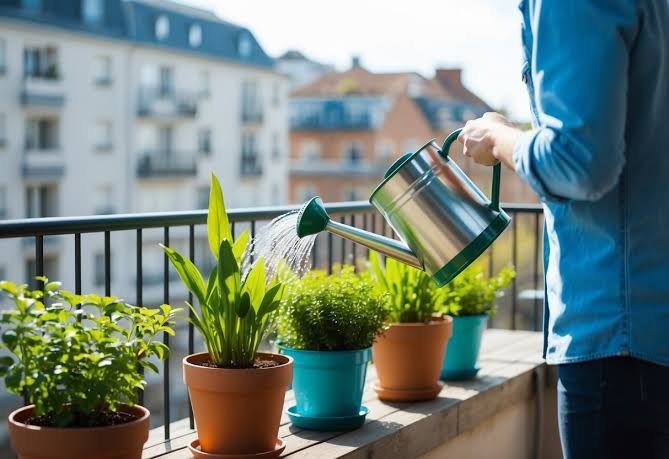
Root rot from overwatering can look almost identical to underwatering from the outside. Wilted leaves, a generally unhappy appearance, sometimes yellowing. The actual test takes ten seconds and gets skipped constantly: stick a finger two inches into the soil before watering anything. If it’s still damp down there, the plant doesn’t need water regardless of how it looks on the surface.
At-a-glance checklist: before you water anything on a balcony
- Finger test two inches down, not just surface appearance
- Check the pot has actual drainage holes, not just a saucer underneath
- Confirm the plant isn’t sitting in standing water in its saucer
- Consider whether recent weather (heat, wind) has changed the normal schedule
- When in doubt, wait a day rather than water preemptively
This single habit shift, checking before watering instead of watering on instinct, resolves more plant deaths than any product or fertilizer ever will.
Light Mismatch Is the Second Biggest Culprit, and It’s Rarely Diagnosed Correctly
The second pattern shows up just as often but gets misread more frequently, because light problems present slowly rather than as a dramatic collapse. A plant that needs six hours of direct sun placed somewhere it gets two hours of bright but indirect light won’t necessarily die right away. It’ll just get progressively leggier, produce fewer flowers or less fruit, and generally look like it’s struggling without anyone identifying why.
This is where an honest assessment of the actual space matters more than most people expect going in. A lot of new growers guess at their light conditions rather than actually tracking them, and the guess is usually optimistic. Reading your balcony’s sun properly before planting anything sounds like an obvious first step, but it’s the step almost everyone skips in favor of just buying something that looked appealing and hoping for the best.
And to be fair, plant tags don’t always help here either. “Full sun” on a tag can mean different things depending on climate and intensity, which is part of why understanding what full sun ratings actually mean on a balcony matters more in container growing than it does in a backyard bed, where soil and root depth buffer some of the intensity that a small pot simply can’t.
Starting With the Wrong Plants Sets the Whole Story Up to Fail
Here’s where people usually go wrong before they’ve even bought soil. They pick plants based on what’s attractive at the garden center, without any real filter for whether that plant is suited to a small container, a specific light exposure, or the wind and heat conditions of an actual balcony as opposed to an open backyard bed. Then when the plant struggles, the assumption becomes personal rather than practical.
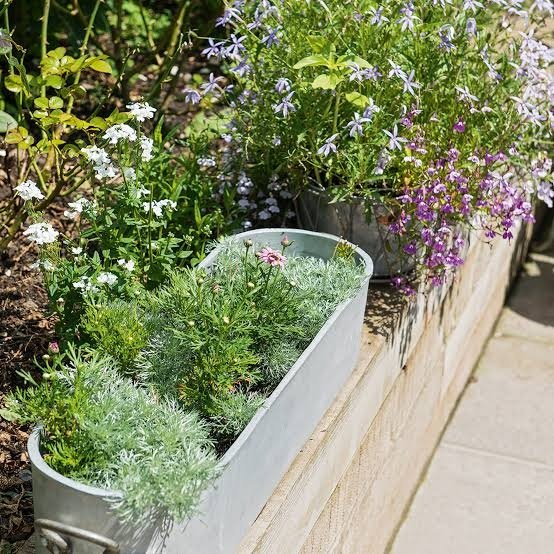
If someone new to this wants a genuinely different first-season experience, starting with plants that are forgiving of minor mistakes changes everything. Herbs like rosemary, thyme, and oregano tolerate inconsistent watering far better than delicate annuals do, and they give visible feedback quickly when something’s off, which makes learning faster. For anyone rebuilding their confidence after a rough first attempt, small balcony garden’s basic guide to first pots is a genuinely useful starting point, not because it oversimplifies anything, but because it filters out the choices most likely to end in disappointment for a first attempt.
I’ll admit something here that I don’t usually put in writing. My first apartment balcony killed three plants in one summer before I figured out that I was the common variable, not the plants. It wasn’t a lack of ability. It was a lack of the specific, unglamorous information that nobody had bothered to explain to me clearly, and once I had it, the pattern reversed almost completely within a single season.
FAQs
Is there actually such a thing as someone who just can’t grow plants? No, not in any meaningful sense. What looks like an inherent inability is almost always a specific, identifiable gap, usually watering habits, light mismatch, or plant selection, and all three are learnable rather than fixed traits.
How long does it usually take to turn this around once someone identifies the real problem? Faster than most people expect. A single growing season, sometimes even a few weeks with fast-feedback plants like herbs, is often enough to see a completely different outcome once the actual issue is addressed instead of guessed at.
What’s the single best plant to rebuild confidence with? Rosemary or thyme are hard to beat for this. Both tolerate inconsistent watering, don’t demand perfect soil, and give visible, honest feedback if something’s genuinely wrong, which teaches observation skills without punishing small mistakes too harshly.
Does container size play into this “black thumb” pattern too? It does, more than people realize. A too-small pot dries out fast and stresses roots regardless of how well someone waters, and that stress can look identical to a watering mistake even when the actual issue is container size mattering more than plant choice in the first place.
I’ve lost plants before. How do I know if I’ve actually fixed the underlying issue or just gotten lucky with an easier plant? Try the same plant type that failed before, but change one specific variable this time, whether that’s watering habit, pot drainage, or light placement. If the outcome changes, that confirms which factor was actually responsible, and that piece of information is worth more than any general encouragement.
Most of what gets called a black thumb is just an unread instruction manual, and once someone actually reads it, the whole identity tends to quietly dissolve on its own.
For more on the actual physiology behind overwatering and root rot, Cornell’s Home Gardening resources have solid, research-based explanations worth reading if you want the deeper mechanism behind why it happens.