
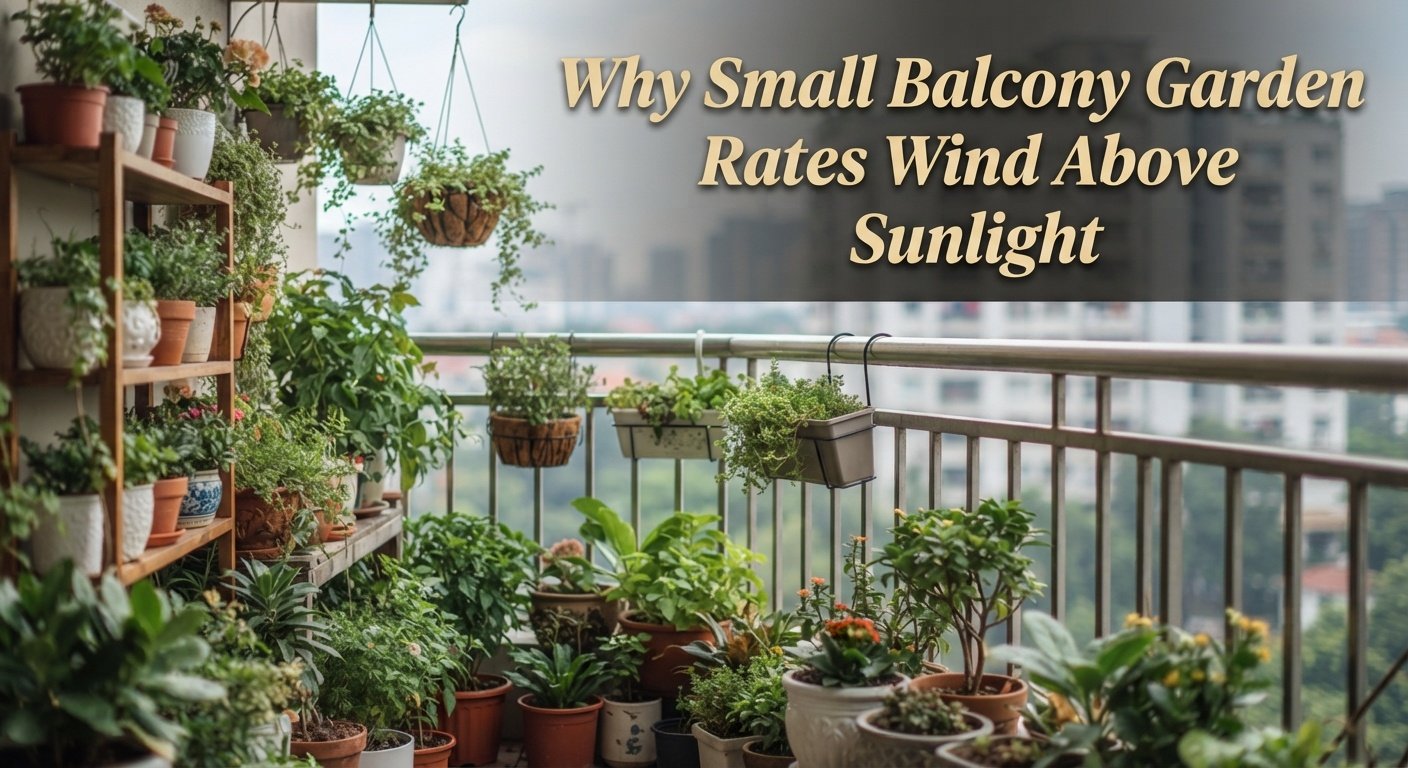
A reader wrote in last month asking why her basil kept dying even though her balcony gets six hours of direct sun a day. She’d read every sunlight guide she could find, moved her pots twice, and still watched the leaves curl brown by July. The answer had nothing to do with light. Her balcony sits on the fourteenth floor, facing a gap between two towers that funnels wind like a chute. Nobody had told her that mattered more than her exposure rating.
That’s the pattern we keep running into. Gardeners obsess over sun charts and forget that wind is doing most of the damage.
1. Sunlight Gets All the Attention Because It’s Easy to Measure
Sun exposure is simple to explain. You watch a spot for a day, count the hours of direct light, and match that number to a plant tag. It photographs well for guides too, which is probably why so many balcony resources lead with it. We’ve done it ourselves in reading your balcony’s sun before planting, because sun really does matter and it’s worth getting right.
Wind is harder to quantify. It shifts by the hour, changes with the seasons, and depends on things a plant tag can’t account for, like which floor you’re on and what’s built around you. So most advice skips it or mentions it as an afterthought. That’s backwards for balcony growing specifically, because a balcony is an exposed structure attached to a building, not a patch of ground with some structures nearby to block the worst of it.
2. What Wind Actually Does to a Plant
Wind doesn’t just knock pots over, though that happens too. The bigger issue is moisture. Air moving across a leaf pulls water out through the stomata faster than the roots can replace it, even when the soil underneath is damp. This is why a plant can look thirsty and wilted on a breezy afternoon despite being watered that same morning. The plant isn’t out of water. It’s losing water faster than it can pull it up.
Persistent wind also causes what growers sometimes call mechanical stress. Constant flexing of stems and leaf stalks diverts energy the plant would otherwise put into growth, and it can crack woody stems at the base over a season. Tomatoes and peppers show this early, with stems that thicken oddly at soil level or snap in a gust that wouldn’t bother a plant in a sheltered yard.
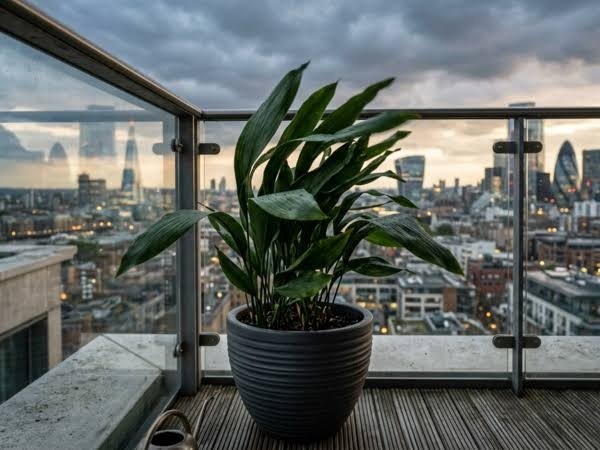
And then there’s the drying effect on soil itself, which compounds the whole problem. A pot on a windy balcony can lose moisture two to three times faster than an identical pot in a calm spot with the same sun exposure. We cover the mechanics of that in more depth in why balcony pots dry out faster, but the short version is that wind and sun work together against you, and wind is usually the bigger multiplier.
3. Sun Damage Is Often Wind Damage in Disguise
This is where people get tripped up. Scorched leaf edges, crispy tips, sudden wilting in the heat of the day, these all get blamed on too much sun. Sometimes that’s accurate. Often it isn’t.
A leaf under wind stress shows nearly identical symptoms to one under heat stress, because both come down to water loss outpacing water uptake. The difference is in the pattern. Sun scorch tends to show up on the side of the plant facing the light and worsens through the hottest part of the day. Wind damage shows up on whichever side faces the prevailing gusts, regardless of where the sun is, and it can happen on a cool, overcast afternoon if the wind is strong enough.
If you’ve been treating what looks like sun damage and nothing’s improved, it’s worth reading is your balcony too windy for a garden, here’s how to tell before you change anything else about your setup.
Here’s a rough comparison of how the two show up, side by side:
| Symptom | Sun Stress | Wind Stress |
|---|---|---|
| Timing | Worsens midday, peak sun hours | Can happen any time wind picks up |
| Leaf pattern | Concentrated on sun-facing side | Concentrated on wind-facing side |
| Soil moisture | Often still damp underneath | Frequently bone-dry even after watering |
| Stem condition | Usually unaffected | Thickened base, bent growth, cracking |
| Fix that works | Shade cloth, repositioning away from direct light | Windbreak, denser planting, repositioning out of wind tunnel |
4. Where Balcony Gardeners Usually Go Wrong
The most common mistake is choosing plants based purely on a sun rating printed on a nursery tag. That tag was written for ground-level gardens. It assumes still air and consistent humidity, conditions a balcony rarely offers, especially above the third or fourth floor where wind speed increases noticeably. A plant labeled “full sun, easy care” might be genuinely easy care in a backyard and a constant struggle fifteen floors up
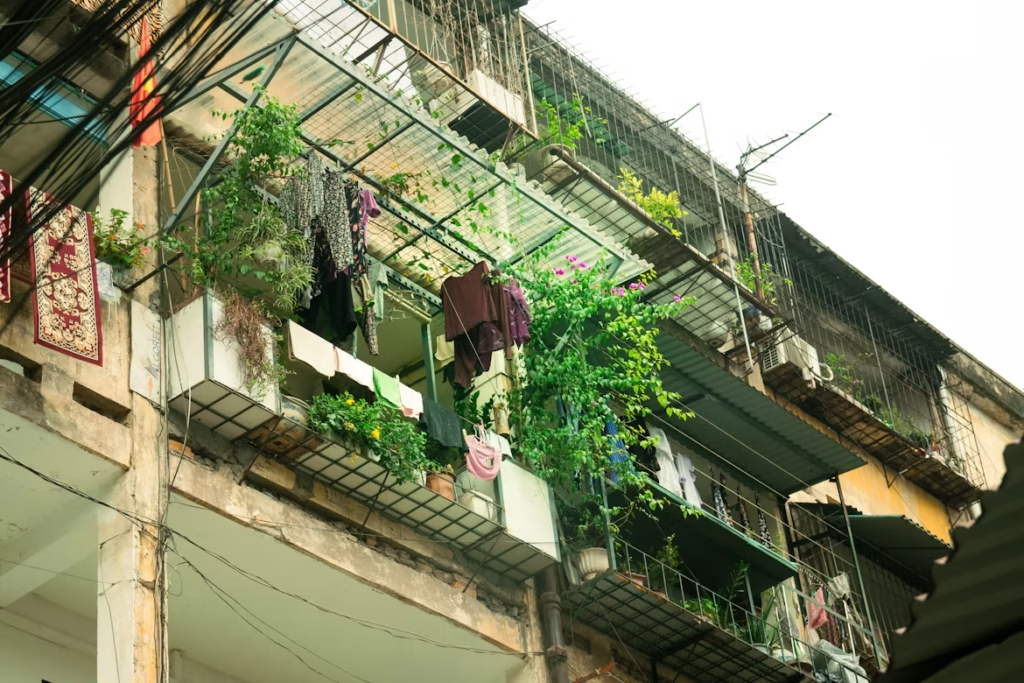
The second mistake is treating wind as a seasonal problem. People brace for winter gusts and relax in summer, but a hot, dry summer wind does more damage to soft new growth than a cold winter one, because the plant is actively transpiring at a much higher rate. We see this most with herbs. If your basil has been wilting by mid-afternoon no matter how much you water it, why your balcony basil wilts by afternoon walks through why that’s very likely a wind problem wearing a sunlight costume.
The third mistake, and this one’s sneaky, is assuming a windbreak solves everything permanently. It helps enormously, but wind direction shifts with the seasons on most balconies, and a screen that blocked the worst of it in spring might be facing the wrong way by autumn. Worth rechecking twice a year rather than setting it once and forgetting it.
5. What Actually Works
Dense, layered planting helps more than most people expect. Plants block wind for each other, so a balcony with staggered pot heights and some deliberate crowding handles gusts better than the same plants spaced far apart. This runs counter to spacing advice written for ground gardens, but balconies aren’t ground gardens.
Pot weight and material matter too. Heavier ceramic or concrete containers resist tipping, and materials that don’t wick moisture out as fast give roots a slightly better buffer against the drying effect of wind. If you’re still working out your container setup, 4 balcony pot materials that survive wind best covers which materials hold up and which ones you’ll be replacing within a year.
Physical barriers, even simple ones, cut wind speed dramatically. A slatted screen or a row of taller, sturdier plants along the exposed edge can reduce wind force hitting the more delicate plants behind it by a significant margin, often more than people expect from something that modest. You don’t need a solid wall. Solid walls actually create turbulence on the leeward side, which can be worse than the open wind you started with. Gaps that slow air without stopping it outright tend to work better.
And check your watering schedule against wind, not just heat. On a gusty day, even a cloudy sixty-degree one, container soil can dry out at a pace that matches a sunny, still ninety-degree day. If you’re watering on a fixed schedule regardless of conditions, that’s worth revisiting.
6. A Quick Mental Checklist Before You Choose a New Plant
- Have you stood on the balcony during a windy afternoon and actually felt the airflow, not just estimated it from memory
- Does the plant’s stem thickness suggest it can handle flexing, or is it delicate and floppy by nature
- Is there anything upwind that could funnel air, like a gap between buildings or a corner
- Are you planning to water based on soil feel, or on a fixed schedule that ignores wind
- Does your pot have enough weight and root room to anchor against gusts
If more than one of those gives you pause, it’s worth reading through the full assessment in balcony full sun ratings, what they actually mean before you commit to a plant that a nursery tag called easy.
None of this means sun doesn’t matter. It absolutely does, and getting your orientation right is still step one for most people starting out. But on a balcony specifically, wind is the variable that quietly wrecks otherwise well-chosen plants, and it’s the one almost nobody checks for first. Once you start reading your space for airflow the same way you read it for light, a lot of mystery deaths stop being mysterious.
FAQs
Does wind exposure change much between floors in the same building? Yes, noticeably. Wind speed generally increases with height, and balconies above the fourth or fifth floor often deal with gusts that a ground-floor patio never sees, even on the same building and same side.
Can I fix a windy balcony without giving up on flowering plants? Mostly, yes. Choose varieties with sturdier stems, keep them in heavier pots, and group them with a windbreak plant or screen on the exposed side. Delicate, tall-stemmed flowers are the ones that really struggle.
Is a mesh screen enough of a windbreak, or do I need something solid? Mesh or slatted screens usually work better than solid barriers. A solid wall can create turbulence behind it, which sometimes stresses plants more than the open wind did.
How do I tell if my plant is wilting from wind or from underwatering? Check the soil first. If it’s still moist and the plant is wilting anyway, especially on a breezy day, wind is the more likely cause. Genuinely dry soil points to underwatering, though the two often happen together.
Should I move pots every time the wind direction changes? Not every time, but it’s worth reassessing your layout at the start of each season, since prevailing wind direction on most balconies shifts between summer and winter.
For more on reading your specific balcony’s conditions before you plant anything, the full breakdown is at smallbalconygarden.online.