
A reader wrote in last month asking if she could screw a set of railing planters into her balcony rail before her landlord came for the annual inspection. She’d already bought the brackets. She just hadn’t checked her lease. That question, more than any gardening technique, is the one that actually determines whether a renter’s balcony garden survives past its first season.
Drilling into a railing feels like a small decision. It usually isn’t. Railings are structural, they’re often shared property even when they look like yours alone, and a hole that seems harmless to you can be a liability issue for a property manager. Before anyone reaches for a drill, it helps to separate what’s actually allowed, what’s actually safe, and what just feels obvious but turns out to be wrong.
1. Check the Lease Before the Bracket
Most leases don’t mention balconies specifically, which is exactly why people assume they’re free to do what they want out there. In practice, a clause about “alterations to the property” almost always covers exterior fixtures too, including anything attached to a railing. Some property managers treat a drilled hole the same as a hole in drywall: something you’ll be billed for at move-out, whether the plant survived or not.

It’s worth calling the property manager directly rather than relying on the written lease alone. Written leases lag behind actual policy more often than people expect, and a five-minute call can save a security deposit. If the answer is no, that’s not the end of the conversation. Many buildings that ban drilling will still approve clamp-on systems because those leave no structural mark.
2. Understand What the Railing Is Actually Rated For
This is the part people skip. A railing is built to code for fall prevention, not for hanging weight. Codes vary by location, but railings are generally engineered around a lateral load requirement, meaning force pushing outward or sideways, not a static vertical load hanging off the top rail. A row of drilled planter brackets loaded with wet soil adds weight the railing was never tested against, and it adds it at the worst possible point: the top edge, where leverage is highest.
Before checking planters against a railing, it’s worth reading through calculating your balcony’s weight load, since railing capacity and floor capacity are two separate problems that get lumped together constantly.
3. The Alternatives Nobody Mentions First
Clamp-on railing planters have gotten genuinely good over the last few years. The better ones use a tensioned bracket system that grips the rail from two sides, and they hold securely enough that most renters can’t tell the difference from a drilled version once it’s installed. Over-the-rail hanging baskets work the same way, just with hooks instead of clamps.
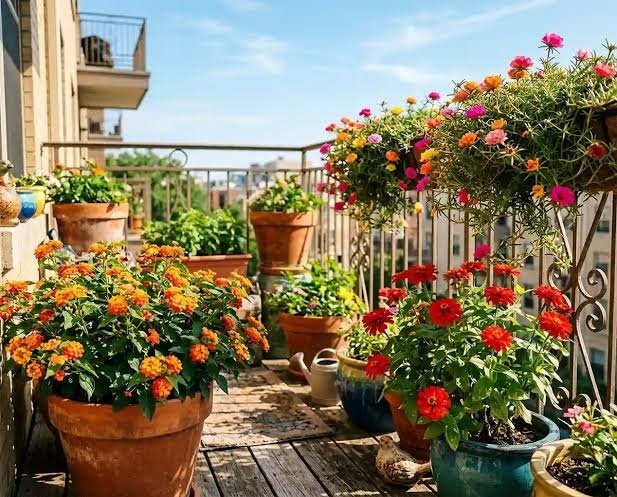
For anyone who wants more than a single row of planters, a freestanding trellis or shelving unit set against the wall, not the railing, sidesteps the whole issue. It also tends to hold more plants than a rail ever could, which matters more than people expect once they’ve actually tried to fit more than four pots along one strip of railing.
| Option | Damage to Railing | Weight Handling | Typical Cost |
|---|---|---|---|
| Drilled brackets | Permanent holes | Poor to moderate, depends on railing type | Low |
| Clamp-on planters | None | Good, self-distributing | Moderate |
| Over-rail hanging baskets | None | Moderate | Low |
| Freestanding shelving | None (floor-rated instead) | Best, if floor load is checked | Moderate to high |
4. Where People Usually Get This Wrong
The most common mistake isn’t drilling without permission. It’s assuming that because a bracket “came with hardware” it was engineered for railings specifically. A lot of planter brackets sold online are rated for wood fencing, not for the thinner aluminum or wrought iron rails common on apartment balconies. The screw might go in fine and hold for a month, then start working loose as the metal flexes with wind and temperature changes. By the time it fails, there’s usually a plant, some soil, and sometimes a piece of the railing itself on the ground below.
Wind matters more here than most renters expect, and if you haven’t already checked how exposed your space is, is your balcony too windy for a garden is worth ten minutes before you buy anything for the rail at all.
5. If You Do Get Permission to Drill
Assuming the lease allows it or the landlord approves it in writing, a few things separate a safe installation from a risky one. Use stainless steel hardware, not the zinc-coated screws that often ship with cheap bracket kits, since those corrode faster with outdoor moisture exposure. Drill into the vertical balusters where possible rather than the horizontal top rail. Balusters are typically better anchored into the structure below and distribute load more predictably. And always test with an empty pot first, then add soil and plants gradually over a week rather than loading everything at once.
This is also a good moment to think about which plants actually belong on a rail-mounted system in the first place. Heavy trailing plants in large pots are the wrong candidates. Lighter herbs and compact flowering plants make more sense, and pairing that decision with something like best balcony herbs for windy spots keeps both the plant and the railing happier.
A Quick Note on Shared Balconies
Anyone in a building where the balcony is technically shared property, even if only one unit uses it, should expect a different answer entirely. Shared structural elements usually require written approval from a property manager or HOA regardless of what an individual lease says, and skipping that step can affect insurance coverage in the event of a fall or structural failure. It’s an unglamorous detail, but it’s the one that actually matters if something goes wrong later.
For renters just getting their setup figured out from scratch, starting with small balcony gardens: simple guide to your first pots is a more forgiving entry point than jumping straight to rail-mounted systems.
None of this means renters should give up on a full, layered balcony garden. It just means the railing itself usually isn’t the right place to start building one.
FAQs
Can my landlord charge me for drilled holes even if I patch them before moving out? Often yes. Many leases treat any structural alteration as chargeable regardless of whether it was reversed, especially on shared or exterior fixtures like railings.
Are clamp-on planters actually strong enough for real gardening, or just decorative? Good ones hold real weight. Look for models rated for at least 15 to 20 pounds per foot of rail and made with a metal frame rather than plastic clips.
What railing materials are worst for drilling? Thin aluminum and hollow wrought iron are the most common problem materials on apartment balconies, since both can crack or strip under repeated stress from drilled hardware.
Does renters insurance cover a railing failure caused by added weight? Usually not if the damage stems from an unauthorized alteration. This is one more reason to get written approval before adding any permanent hardware.
Is there a weight limit I should assume if my building won’t give me a number? No safe assumption exists without a number. If the property manager can’t provide one, the safer approach is to avoid rail-mounted weight entirely and use freestanding options instead.
For anyone weighing their full setup before making any permanent changes, small balcony garden has a broader walkthrough on getting the basics right at balcony gardening 101.