Most balcony deaths in winter have nothing to do with frost. They come from wind whipping across an exposed railing, roots sitting in a pot that never quite drains, or a gardener assuming that “hardy” on a plant tag means the same thing on the ninth floor as it does in a backyard bed. It doesn’t. A balcony is its own microclimate, and once you understand that, choosing plants that actually make it to spring gets a lot easier.
1. Why Balcony Winters Are Harder Than Ground-Level Winters
A container garden is more exposed than a garden bed in almost every way that matters for cold survival. Soil in the ground is insulated by the earth around it, which buffers temperature swings. Soil in a pot has cold air on all sides, so root temperatures can drop far faster and lower than the surrounding air temperature would suggest. A plant rated hardy to USDA zone 6 in the ground might only reliably survive zone 7 or 8 conditions once it’s sitting in a container above street level.
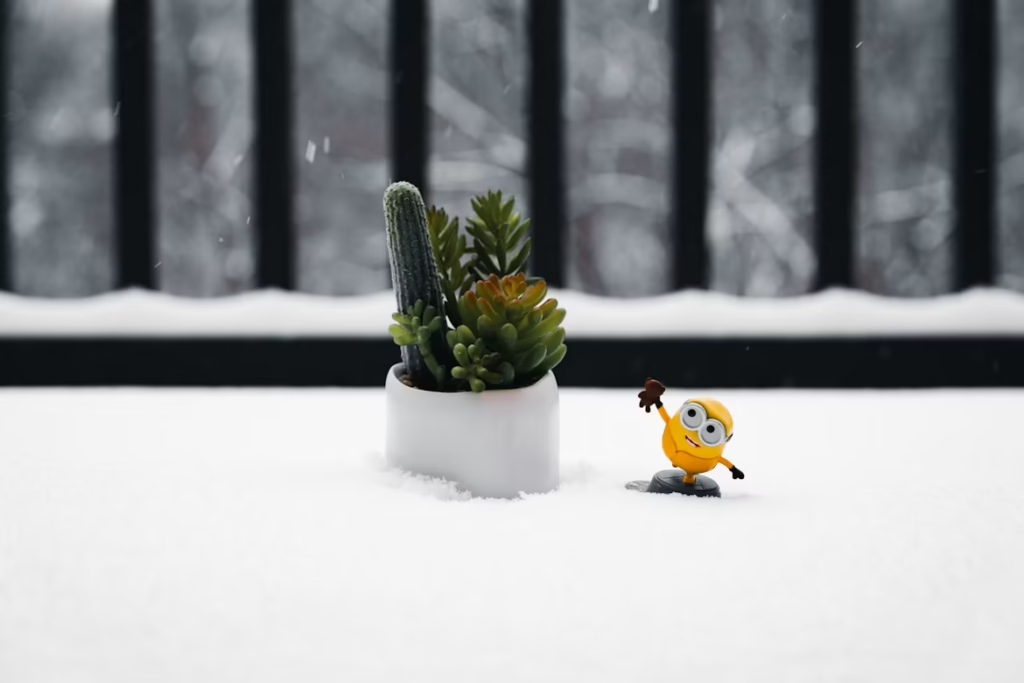
Wind makes this worse. Balconies, especially higher ones, catch gusts that a ground-level garden never sees, and wind pulls moisture out of leaves and stems faster than cold alone ever could. This is worth understanding before you even get to plant selection.
2. Evergreens That Actually Hold Up
Structural evergreens are the backbone of a balcony that still looks alive in January. A few that consistently perform in containers:
- Boxwood (Buxus sempervirens) — slow growing, dense, and tolerant of pruning, which matters when space is tight
- Dwarf Alberta spruce — a classic container conifer, though it wants shelter from direct winter wind to avoid needle browning
- Skip laurel (Prunus laurocerasus ‘Schipkaensis’) — broadleaf evergreen, handles part shade, holds color through cold snaps
- Holly (Ilex cornuta or Ilex crenata cultivars) — tougher than people expect, and some cultivars stay compact enough for a large pot
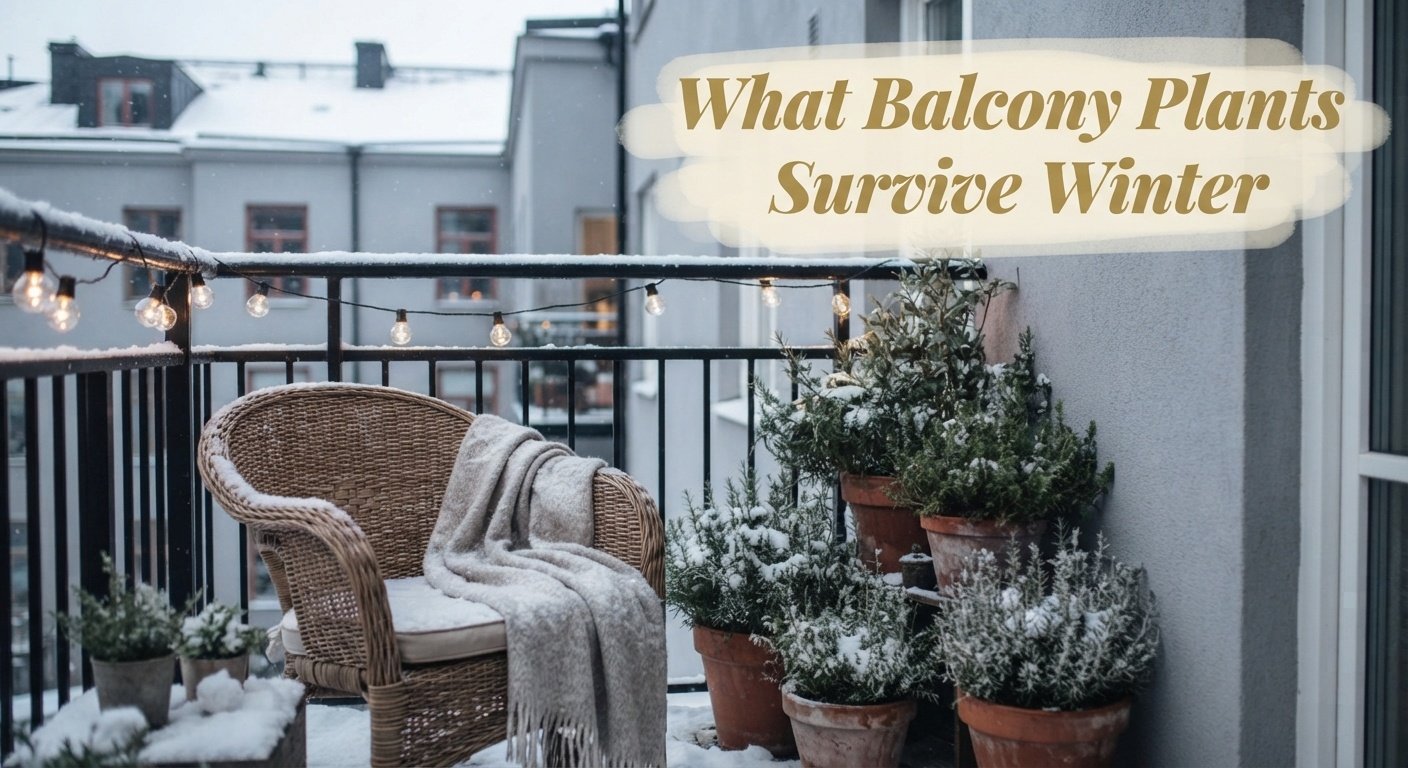
None of these are fussy about a light frost. What they need is a pot heavy and insulated enough that the root ball doesn’t freeze solid, and a spot out of the harshest gusts.
3. Perennials That Go Dormant and Come Back
Some of the best winter-surviving balcony plants aren’t green at all in January. They die back to the crown and reappear in spring, which confuses first-year gardeners who assume a bare pot means a dead plant.
Sedum, coral bells (Heuchera), lavender in milder zones, and ornamental grasses like dwarf fountain grass all fall into this category. The trick with these isn’t keeping them green through winter, it’s keeping the crown from freezing solid and keeping the pot from waterlogging during winter rain. A perennial that would survive fine in ground soil can rot in a container that holds standing water against its roots for a week straight. <br>
Where people usually go wrong: they treat a dormant-looking pot as finished for the season and stop paying attention to it entirely. A pot that looks empty still needs the same drainage checks as one that’s actively growing. Ice sitting on top of waterlogged soil is one of the fastest ways to lose a perennial that would otherwise have sailed through the cold.
4. Cold Hardy Annuals for Color
If you want actual color through winter rather than just structure, a short list of annuals genuinely tolerates cold rather than just surviving it:
| Plant | Cold Tolerance | Notes |
|---|---|---|
| Pansies / Violas | Down to about 25°F | Rebloom after freezes, best winter color option |
| Ornamental kale | Handles hard frost | Colors intensify as it gets colder |
| Snapdragons | Light frost tolerant | Best in milder winter zones |
| Dianthus | Moderate frost tolerant | Reliable, low maintenance |
| Swiss chard | Frost tolerant | Doubles as an edible |
Pansies in particular are underrated. They’ll look wilted and sad after a hard freeze, then bounce back within a day once temperatures climb even a little. That resilience is exactly what a balcony needs.
5. Matching the Plant to Your Actual Conditions
None of this matters much if it’s chosen without checking what your specific balcony is doing. A south-facing balcony with a solid railing behaves completely differently in winter than a north-facing one with open rails and constant crosswind, and it’s worth working through how to read your balcony’s sun exposure before committing to a winter plant list. A spot that gets strong afternoon sun even in December can support plants that would struggle elsewhere on the same building.
Wind is the other variable people underestimate, and it’s often the actual cause of death that gets blamed on cold. If your railings are exposed, it’s worth reading through why balcony plants die from wind, not cold before assuming a plant failed because of temperature alone.
6. Pot Choice Matters More in Winter Than Summer
Terracotta looks good, but it cracks in freeze-thaw cycles because it’s porous and absorbs water that then expands as it freezes. Glazed ceramic, resin, or thick plastic pots handle winter far better. If you’re deciding on containers specifically with cold in mind, which pot materials actually hold up to wind and weather is worth a look before you buy anything new.
Pot size matters too. Bigger pots have more soil mass, and more soil mass means the root zone takes longer to freeze and thaws faster once temperatures rise. A small 8-inch pot offers almost no insulation and is genuinely risky for anything you want to overwinter outdoors.
7. Reading the Signs Before It’s Too Late
A plant that’s struggling with cold stress doesn’t usually just die overnight. It shows warning signs first, and yellowing or browning leaves are often the earliest sign something’s wrong at the root level, whether that’s cold, waterlogging, or both together. If you’re noticing this on any of your winter containers, it’s worth checking what yellow leaves on balcony plants are actually telling you rather than assuming it’s simply the season taking its course.
8. A Few Practical Steps for Overwintering
For anything borderline hardy for your zone, a handful of small interventions make a real difference:
- Group pots together against a wall. Shared thermal mass and wind blocking helps more than people expect.
- Wrap pots (not the plant) in burlap or bubble wrap to insulate roots, especially for anything in a thin-walled container.
- Water sparingly but don’t let the root ball go bone dry. Dry roots are more vulnerable to freeze damage than moist ones.
- Raise pots off the balcony floor slightly to stop them sitting in trapped meltwater.
- Move anything genuinely tender indoors or into an unheated stairwell rather than gambling on a hard freeze.
None of this needs to be elaborate. Most of it is just reducing the number of stresses hitting the plant at once.
Small Balcony Garden readers who’ve gone through a full winter with containers tend to land on the same conclusion eventually: the plants that make it aren’t necessarily the ones with the fanciest hardiness rating, they’re the ones matched honestly to how exposed a particular spot actually is. Once you’ve been through one winter and watched what survived and what didn’t on your own balcony, the second year gets a lot easier to plan for.
FAQs
Do I need to bring container plants indoors every winter? Not always. True hardy evergreens and dormant perennials rated for your zone or colder can usually stay outside. Anything borderline for your zone, or in a small thin-walled pot, benefits from being moved somewhere sheltered during the coldest stretches.
Will pansies survive a hard freeze? Yes, generally. They’ll look flattened and limp after a freeze, sometimes almost dead, then recover within a day or two once temperatures rise even slightly. This is normal and not a sign of failure.
Is it better to keep pots dry or watered through winter? Slightly moist, not soaked and not bone dry. Waterlogged soil freezes and damages roots more severely, but completely dry roots are also more vulnerable to cold injury. Check the pot every week or two rather than following a fixed schedule.
Can I use the same pot for a winter plant that I used for summer annuals? Only if it drains well and isn’t a thin, porous material like plain terracotta. Freeze-thaw cycles crack porous pots over a season or two, so if you’re planning to overwinter something long term, a glazed or resin pot is a safer bet.
What’s the single biggest mistake with balcony winter gardening? Blaming cold for something that was actually wind or drainage related. Once those two variables are under control, a surprising number of plants handle the actual cold just fine.
Small Balcony Garden has more on reading your specific balcony’s conditions before choosing plants, which is worth doing before any winter list gets applied blindly to a space it wasn’t written for.